
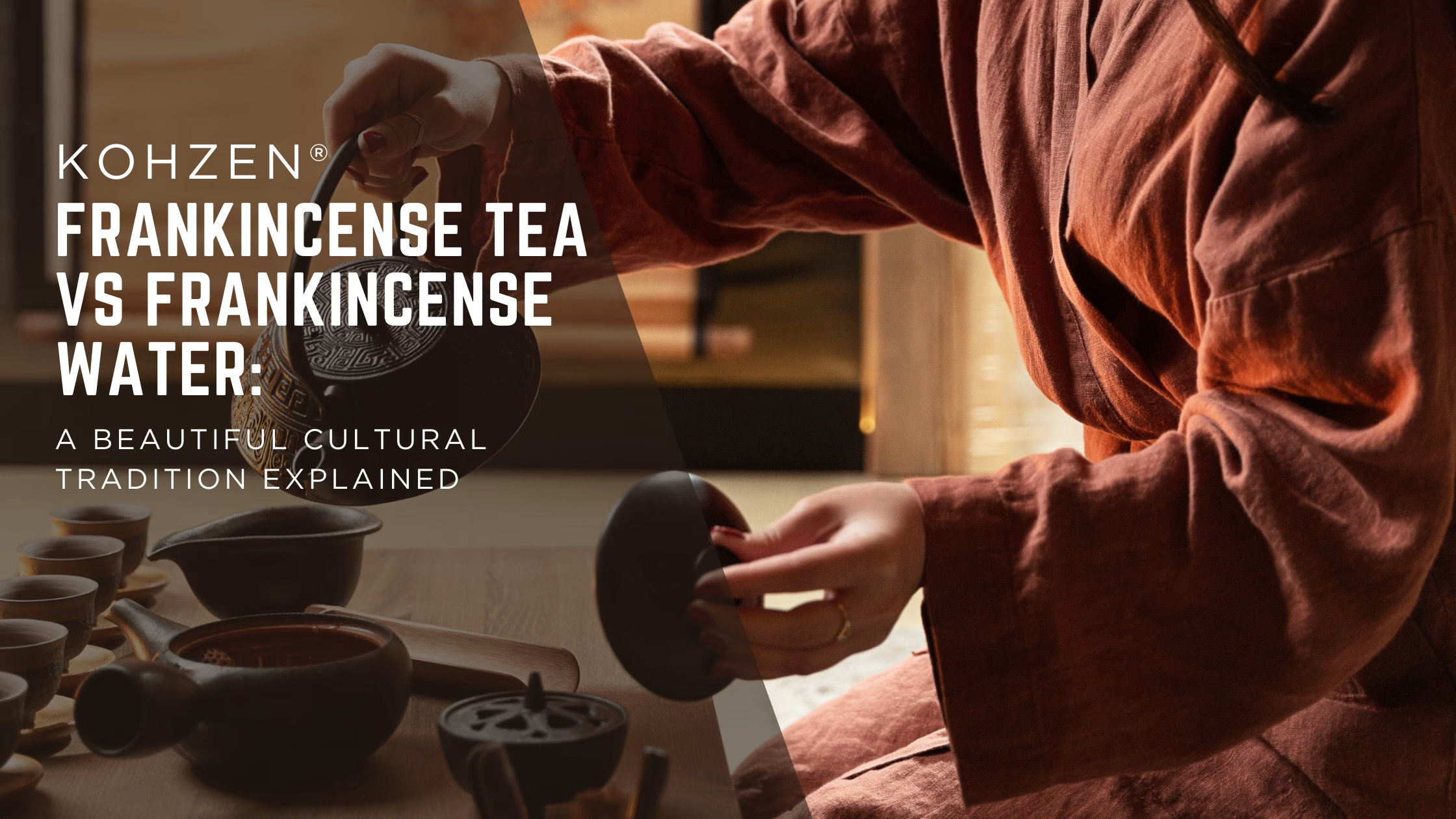
For centuries, frankincense resin – especially the prized Boswellia sacra (Omani Hojari) – has been used not just as incense but as a soothing beverage. In many Middle Eastern, African, and South Asian cultures, people steep its aromatic tears in water as part of daily ritualskohzen.com justeas.com. Ancient Egyptians even prized frankincense in both sacred ceremonies and everyday life kohzen.com. Today, “frankincense tea” and “frankincense water” often refer to very similar infusions of resin in water, but their preparation and history have subtle differences. In all cases, the emphasis is cultural and sensory – a gentle, grounding drink to sip slowly, not a medicine or cure kohzen.com kohzen.com.
Cultural and Regional Traditions
Frankincense has a rich heritage from Arabia to Africa and India. For example, Oman’s Dhofar region supplies the world’s finest Royal Hojari resin kohzen.com. In Oman, trading and sharing frankincense is woven into local customs justeas.com. Elsewhere in the Levant and Egypt, resin infusions were offered as refreshing drinks or ritual gifts kohzen.com justeas.com. Indian Ayurvedic tradition also embraced frankincense as part of balance and well-being practices.
Across these cultures, people would sip infused frankincense during hospitality, prayer, or quiet reflectionkohzen.com justeas.com. In all cases the focus was on aroma, flavor and ritual: a cup of cloudy, milky liquid that carries a hint of woodsy‐citrus scent, much like teajusteas.com kohzen.com. (The word “lubān” in Arabic even means “that which yields milk,” referring to the pale infusion of resin kohzen.com.)
Tea and Water: Definitions and Preparation
In practice, “frankincense tea” usually means a hot-water brew in a single cup, whereas “frankincense water” (sometimes called a frankincense infusion) refers to a larger batch steeped for longer. Frankincense Tea: Crush or break 2–3 small tears of edible-grade Hojari frankincense and briefly steep them in boiling water (around 5–10 minutes)sacraandspice.com justeas.com. The water will turn slightly cloudy as the resin softens, releasing a subtle taste. You can strain out bits of resin and drink it warm, perhaps adding honey or lemon to taste. (Some recipes even suggest soaking the tears overnight before heating to soften them saltoftheearthfarm.org.)
Frankincense Water: By contrast, make a gentle infusion by placing a handful (3–5) of resin tears into a pitcher or jar of cool or warm water and letting it soak 8–12 hours (often overnight)sacraandspice.com kohzen.com. No heat is needed. The resulting liquid is mild – more aromatic than strongly flavored – and traditionally sipped slowly, like an herbal tea. After steeping, you simply pour off the cloudy liquid to drink (any floating resin bits can be discarded or even chewed lightly). In either method, use high-quality resin.
Kohzen’s Etsy store has a range of wild harvested, Omani, Royal Hojari Frankincense resin which are great for these infusions. According to Kohzen’s guides, steeping about 2–3 grams of pure Hojari resin in 750 ml of water yields a clean, enjoyable brew kohzen.com. You can even reuse the softened resin for a second brew or chew it to slowly release more aroma.
- Key Differences: Frankincense tea is quick (hot water, short time) and usually made cup-by-cup sacraandspice.com. Frankincense water is slow (room-temp or cooled water, steep overnight) to make a jug to sip over timesacraandspice.com kohzen.com. Both give a similar mild, milky drink with a faint woodsy-citrus scent, but the “water” method tends to be more diluted and gentle, while the “tea” is a bit more concentrated. Importantly, neither is an essential oil or medicine – they are simple resin infusions enjoyed for flavor and tradition kohzen.com kohzen.com.
Sensory Experience
Good frankincense infusions are very subtle. The aroma is gently woody, sweetly citrus-like, and slightly resinous justeas.com. High-grade Hojari resin produces a delicate, clean taste and uplifting scent kohzen.com. You might notice a hint of pine or lemony wood, but it’s never harsh. Because the flavor is faint, people often flavor their brew with honey, ginger or lemon rind. (Folklore notes that drinking it slowly after meals or before bed became a calming ritual in many homes kohzen.com kohzen.com.)
For beginners, think of frankincense tea/water like a very mild herbal brew. It should taste mostly of clean water with a whisper of sweet pine-citrus. If the resin pieces haven’t dissolved completely, don’t worry – just strain or filter them out. And be aware: some varieties of frankincense (like Boswellia serrata from India) are more earthy or bitter, while Boswellia sacra (Arabian/Dhofari) is prized for its paler, smoother profile kohzen.com. Even if the flavor is subtle, the ritual of brewing and sipping is what many people treasure – a quiet moment connecting to ancient traditions kohzen.com justeas.com.
Getting Started: Tips for Beginners
- Choose a clean resin: Only use high-quality frankincense, such as Kohzen’s Royal Green or Pure White Hojari resin. These are harvested and processed for purity. Store the resin in an airtight glass jar away from light to keep it dry and non-sticky kohzen.com.
- Use the right tools: You don’t need fancy equipment – just a clean pot, jar or teacup. For frankincense tea, brew in a small teapot or cup; for frankincense water, use a glass jar with a lid. (Avoid plastic or metal that could crack with boiling water.)
- Brew gently: Boil water then let it sit 30 seconds before pouring over the resin (to avoid thermal shock). Steep for 5–15 minutes for a cup, or 8–12 hours for a pitcher infusion kohzen.com.
- Reuse and adjust: You can steep the same resin tears multiple times – the second cup will be milder. Start with a small amount (a few bits of resin) and increase if you want stronger aroma.
- Enjoy mindfully: Sip your frankincense brew slowly, appreciating its aroma. Many people use a tiny amount as a sensory break or as part of a quiet ritual (for example, sipping it while listening to music or after meditation).
For any ritual, quality matters. At Kohzen we always say, “the experience is only as good as the resin itself” kohzen.com. Pure Hojari frankincense yields the most pleasing infusion – lower-grade resins may not yield a clear color or a nice scent. In other words, start with the best frankincense you can find to make an enjoyable tea/water.
Frankincense Water FAQ
Q: What exactly is frankincense tea or water?
A: Simply put, it’s an infusion of frankincense resin in water. “Frankincense tea” usually means a hot-water brew (a cup steeped 5–15 minutes), while “frankincense water” is an overnight cold-water infusion in a jug. In both cases you’ll end up with a faintly milky drink scented with the resin’s pine-citrus aroma.
Q: Which frankincense should I use?
A: Only certain resins are suitable to drink. Kohzen recommends Royal Green Hojari (and similar high-grade Boswellia sacra tears) for infusions. These are edible-grade, wild-harvested resins from Oman. Avoid essential oils or unknown resin grades. A few grams of resin (about a teaspoon) is plenty per batch.
Q: Can I flavour it?
A: Yes. By itself frankincense infusion is mild, so people often add honey, lemon, ginger or even other teas for taste. For example, adding a slice of lemon or a spoonful of honey can complement the resin’s subtle pine-citrus note.
Q: How long does it keep?
A: Treat the infusion like fresh herbal tea. Store any leftover frankincense water in the fridge and use it within 1–2 days to preserve flavor. Always cover it to keep out contaminants.
Q: Where can I get frankincense resin?
Kohzen offers premium frankincense resins on our Etsy shop, including Royal Green Hojari Frankincense for drinking or burning. All our resins are sustainably wild-harvested from Dhofar, Oman. You can also explore more about frankincense on our Kohzen Ultimate Guide to Frankincense or learn about frankincense water infusions in our blog.
Q: Where did frankincense come from?
A: It comes from Boswellia trees native to the Arabian Peninsula, East Africa, and India. The milky resin (called olibanum or luban) has been traded along ancient incense routes for thousands of years. Today Oman, Somalia, Yemen and India still produce distinct varieties. The finest grades – like Oman’s white or green Hojari – are known for their bright, citrusy fragrance
Q: Does frankincense water have healing properties?
A: Remember that frankincense tea/water is about tradition and mindfulness, not medicine. Enjoy the calming ritual, the gentle flavour, and the connection to ancient cultures. As Kohzen emphasizes, this practice is “a way to connect with heritage” and appreciate a timeless, natural ritual. Frankincense water should never replace any medical treatment. If you have health concerns, treat it like any herbal infusion: and enjoy it lightly.
Experience the warm, grounded clarity of true Frankincense resin. Limited Offer: Save 25% when you buy 3 or more packs of Real Frankincense Incense Sticks at KohẓenOfficial
Ready to experience the difference? We invite you to explore Kohẓen’s offerings on our Etsy shop. Check out KohzenOfficial on Etsy where you can find our Premium Hojari Frankincense Resin (Royal Green & Pure White). Treat yourself to the crown jewel of frankincense and discover why quality and ethics matter. With the tips in this guide and the right resin in hand, you’ll be well on your way to burning frankincense resin the right way – a truly enriching wellness ritual.
