25% OFF 3+ ITEMS AT THE KOHZEN SHOP NOW

Tag: frankincense incense sticks

  • Spiritual Sticks, Joss Sticks & Natural Incense: A Guide to Meditation Incense, Cleansing, and Finding the Best Products

    Spiritual Sticks, Joss Sticks & Natural Incense: A Guide to Meditation Incense, Cleansing, and Finding the Best Products

    The gentle curl of incense smoke has been a companion to spiritual practice for centuries. Walk into a meditation space or sacred temple and you’ll likely catch the soothing aroma of burning sticks – whether it’s a bundle of sage, a slender joss stick, or resinous frankincense. Spiritual sticks, like all other forms of incense (when natural and high quality), have a remarkable ability to calm the mind, cleanse negative energy, and set the stage for prayer or mindfulness.

    But with so many options out there, how do you choose the right incense for your needs? This comprehensive guide will demystify spiritual and joss sticks, explain how to use them for meditation and cleansing, and help you find the best products – with an expert eye on quality and authenticity. We’ll also shine a light on one outstanding choice that stands above the rest for a truly sacred experience.

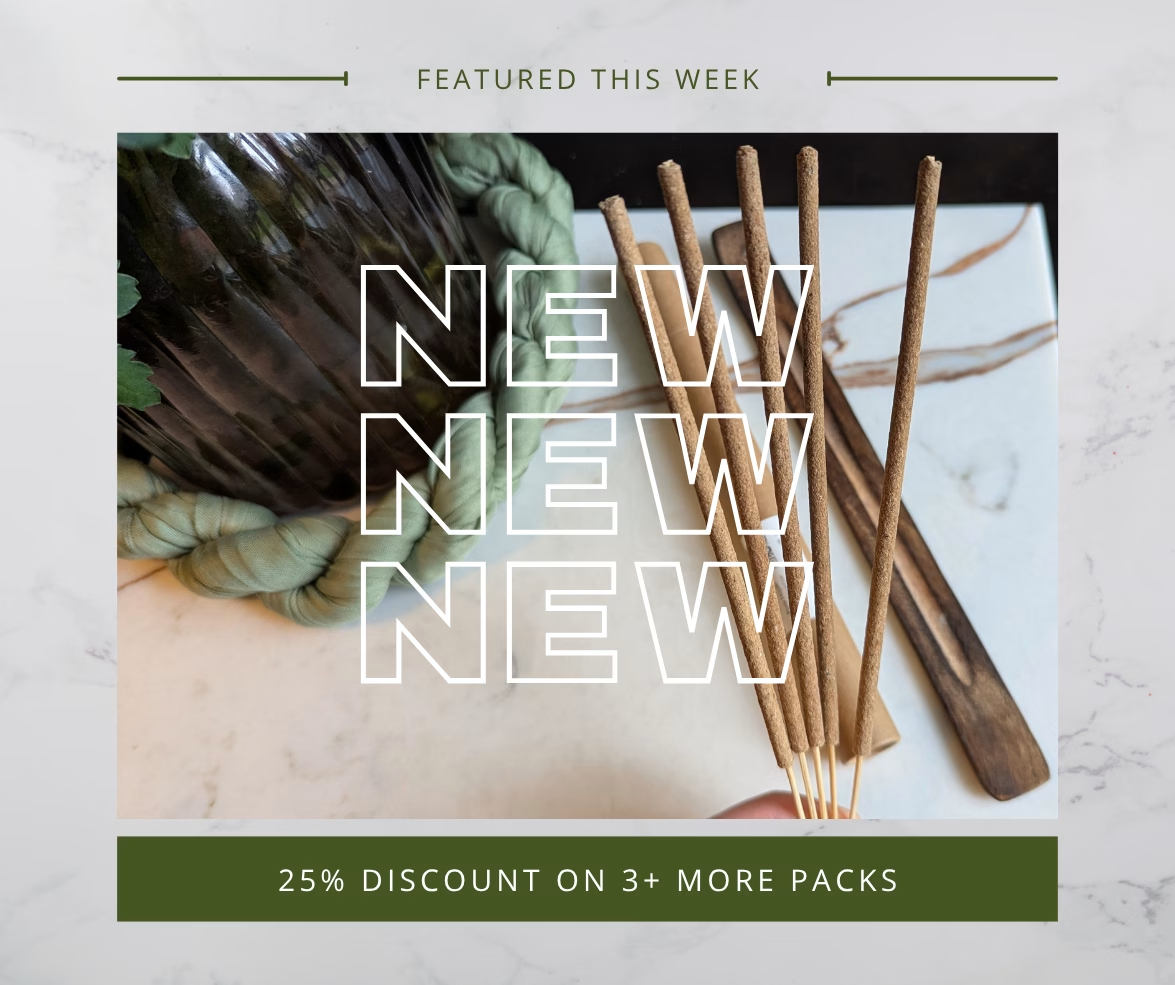
    Limited Offer: Save 25% when you buy 3 or more packs of Real Frankincense Incense Sticks at KohẓenOfficial.

    What Are Spiritual Sticks, Joss Sticks & Natural Incense?

    Spiritual sticks generally refer to any incense or herb bundle used with spiritual intention. This could mean traditional smudge sticks (like sage or palo santo bundles) burned in cleansing rituals, or simply incense sticks marketed for meditation, healing, or even manifestation. (In fact, a recent product line has popularised “Spiritual Sticks” labelled for goals like money, sleep or confidence – essentially incense with big promises.) At their core, however, spiritual sticks are tools to focus intent and create a sacred atmosphere through scent. It’s not the logo on the box that makes an incense “spiritual”, but the way you use it in your practice.

    Joss sticks, on the other hand, are essentially incense sticks by another name. The term “joss” comes from a pidgin English word for deity, reflecting the sticks’ traditional use as offerings in East Asian temples. In Chinese and Indian cultures, incense sticks (often called agarbatti) are burned before altars and shrines as a sign of reverence.

    A joss stick is typically a thin stick of incense (sometimes with a bamboo core, sometimes solid) that you light to release fragrant smoke during prayer, meditation, or ceremony. In short, joss sticks = incense sticks, especially in parts of Asia where they’ve long been integral to spiritual life. If you’ve ever lit a stick of sandalwood or Nag Champa and watched the smoke waft upward with your wishes, you’ve used a joss stick.

    Natural incense simply means any incense made from pure botanical ingredients – woods, resins, herbs, oils – rather than synthetic perfumes or chemical fillers. High-quality natural incense might take the form of sticks, cones, loose resin, or smudge bundles. What matters is that it’s derived from Mother Earth: think frankincense resin tapped from ancient trees, cedar and sage gathered for their cleansing power, or hand-rolled sticks using only plant-based binders.

    You can find our full range of Natural Frankincense Products at KohẓenOfficial.

    Natural incense tends to have a richer, more authentic aroma and cleaner burn than cheap drugstore incense that might be doused in artificial scents. When you’re seeking a spiritually uplifting or healing experience, you’ll want to reach for natural incense sticks over the bargain petrol-station variety. The difference in purity and vibe is night and day.

    In summary: Spiritual sticks is a broad, modern term for incense used in mindful practices; joss sticks are traditional incense sticks (the same thing by a cultural name); and natural incense denotes quality, plant-based products without the chemicals that can mar your experience. Now that we’ve clarified the basics, let’s explore how these aromatic tools can enhance meditation and cleansing rituals – and what to look for when choosing the best incense for your own spiritual journey.
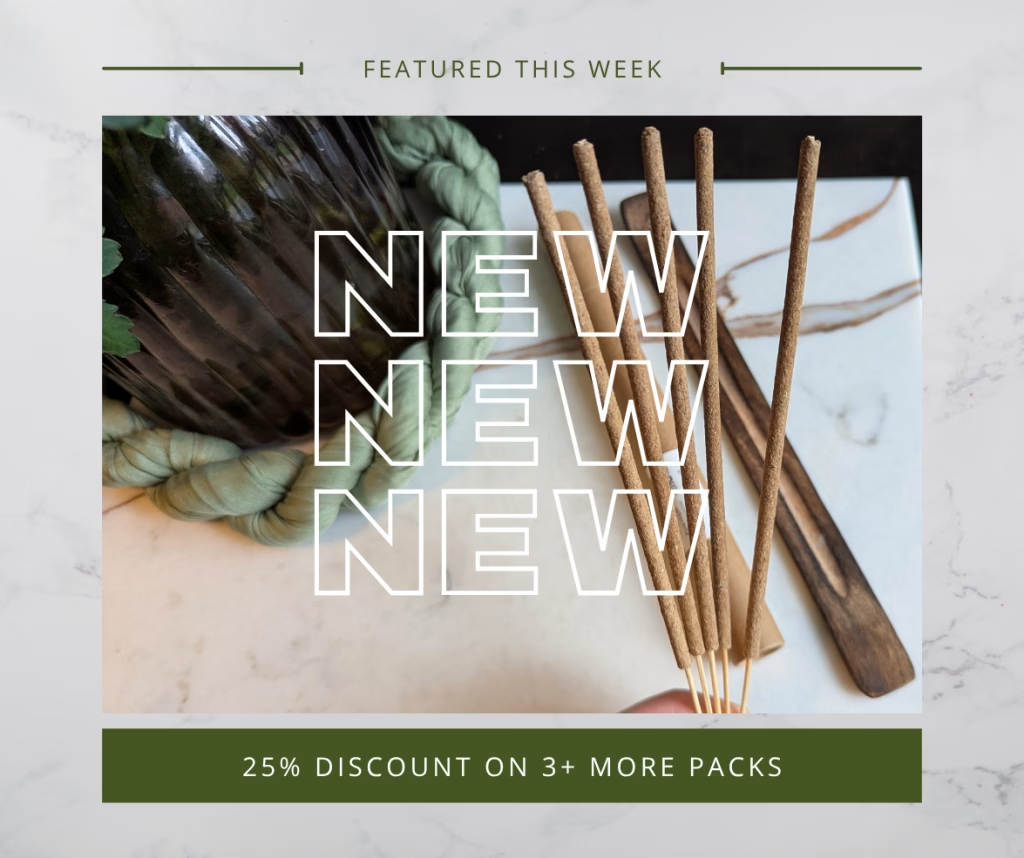
    Real Frankincense Incense Sticks Kohzen

    Incense in Spiritual Traditions: A Brief History

    To appreciate why quality is key, it helps to understand incense’s sacred history. Incense – usually grains of aromatic resins, woods, or herbs that burn with a fragrant smoke – has been used by humans for thousands of years as a bridge between the earthly and the divine. The very word “incense” comes from the Latin incendere, meaning “to burn,” reflecting its early ritual use in temples and shrines.

    Read More in our blog post about the Spiritual Meaning of Frankincense.

    Across the ancient world, burning incense was a sign of reverence. In Egypt, priests offered resins like frankincense and myrrh to honour the gods, believing the fragrant smoke carried prayers to the heavens. In India’s Vedic ceremonies and later Hindu pujas, incense was (and is) offered to deities as a symbol of devotion and to purify the air. By 2000 BC, incense had also spread to China, where it became central to ancestral offerings and Taoist and Buddhist rituals. Thin sticks of incense (what many today call joss sticks) became especially popular in East Asia for their convenience and steady burn.

    In Chinese culture, incense is so vital that entire festivals incorporate it. During the annual Hungry Ghost Festival in late summer, for example, families burn incense sticks and joss paper to appease restless spirits and honor ancestors. In these rituals, the gentle curling smoke is believed to convey nourishment and comfort to the unseen souls, showing how deeply incense is woven into spiritual life. (Imagine the evening streets of Hong Kong or Singapore during this festival, the air hazy with spiritual sticks sending up prayers and comfort for the departed.)

    Japan too developed a sophisticated incense tradition. History records that incense wood first arrived in Japan around the 6th century along with Buddhism, and the Japanese refined its use into an art form. By the 14th–15th centuries, the samurai and aristocracy practiced Kōdō, the “Way of Incense,” turning the appreciation of incense into a ceremony as nuanced as the tea ceremony Japanese incense history.

    Participants would heat precious incense woods and play “incense games,” guessing scents and reciting poetry. This wasn’t about masking odours – it was about experiencing incense with all the senses and an open spirit. Notably, the incense sticks we know today (bamboo sticks coated in aromatic paste) also rose to popularity in these eras, prized for their ease of use and elegant form.

    Through these cultural lenses, one thing becomes clear: incense was always much more than a room fragrance. It was a ritual tool, a spiritual technology connecting humans with something higher. And the ingredients mattered. Historically, the finest incenses were made from pure resins like frankincense and myrrh, aromatic woods, barks, and herbs gathered from nature’s bounty – no petrochemical perfumes, no cheap fillers incense. When you burn what our ancestors burned, you partake in an ancient, powerful tradition. It’s a good reminder that choosing quality incense isn’t just about a nicer smell – it’s about authenticity and keeping a sacred link alive.

    Find Out More about in our Ultimate Guide to Frankincense blog post.

    Using Incense for Meditation & Cleansing Rituals

    Fragrant smoke has been intertwined with spirituality for millennia. Incense in meditation is not a new wellness trend but a time-honoured practice spanning from ancient monasteries to modern yoga studios. The reason is simple: aroma has a profound effect on the mind and energy of a space. When you light a natural incense stick, you’re not just adding a pleasant scent – you’re setting an intention and atmosphere.

    For meditation, certain aromas can help quiet mental chatter and deepen focus. For example, lighting a stick of pure sandalwood or frankincense before you sit down to meditate creates a gentle signal to your brain that it’s time to turn inward. The act of watching the wisps of smoke rise and dissipate can itself be a meditative focus. Many practitioners find that incense helps anchor their attention to the present moment – each breath you take is infused with a sacred fragrance, keeping you centered.

    Frankincense in particular has been burned for centuries to invite calmness, enhance concentration, and even induce a prayerful mood. In fact, modern science suggests that frankincense’s aroma isn’t just placebo: a compound in real frankincense resin (incensole acetate) has been shown to ease anxiety and gently elevate mood in studies. No wonder churches and temples around the world have used frankincense smoke to uplift the spirit – and why you’ll often find people today burning it during meditation or yoga to foster a sense of sanctity and peace.

    When it comes to spiritual cleansing, incense and smudge sticks are like a deep breath of fresh air for your space’s energy. Burning incense for cleansing is a common ritual across cultures: the idea is that the smoke attaches to negative or stagnant energy and carries it away, purifying the environment (and one’s aura) for a fresh start. Smudging with sage is one well-known example – the pungent white sage smoke is traditionally used by Native Americans to cleanse people, places, or objects of unwanted vibes. In a similar vein, waving the smoke of frankincense resin or palo santo wood around a room is thought to banish negativity and invite protection.

    Ancient Egyptians burned frankincense in funeral rites to sanctify the space and guard against evil influences during transitions. Today, you might burn a spiritual incense stick with the intention of clearing negativity after an argument, or to consecrate a new home so it feels imbued with peace and positivity. The key is your intention: as you walk the incense through each room or around your body, visualize the curling smoke sweeping away stress, illness, or any heavy energy, leaving the atmosphere light and sacred.

    A beautiful thing about using incense in these ways is the small ritual it creates in your day. Striking a match, lighting the stick, and gently blowing out the flame to let it smolder – this simple act can become a mindful ritual of letting go and refocusing. As the room fills with the natural fragrance, you may notice your breathing slow and deepen. It’s a sensory cue that you’re entering a different headspace, whether for meditation, prayer, or just a quiet moment with yourself. By engaging our sense of smell, incense provides a pathway to relaxation that complements the mental practice of meditation or the symbolic act of cleansing. It engages body and spirit alike.

    Tip: Always burn your incense or smudge stick with care. Use a proper holder or fireproof bowl to catch ash (safety first!), and ensure some ventilation so you’re not inhaling too much smoke. A little goes a long way – you don’t need to choke on thick smoke to cleanse a space. In fact, the most pleasant incense experiences usually involve a gentle wisp of smoke that slowly infuses the air, rather than an overpowering cloud. Quality incense will burn with a subtle, steady smoke that carries the scent without setting off the fire alarm.

    Learn More here in our popular blog post How to Use Frankincense Resin Like a Pro

    How to Spot Quality Incense (and Why It Matters)

    Not all incense is created equal. If you’ve ever been turned off by incense that smells like burning chemicals or left you with a headache, you were likely using a low-grade, synthetic product. Unfortunately, many mass-market “scented sticks” fall into this category – they might be doused in cheap perfume oils or even contain charcoal and saltpetre to force them to burn. These can produce acrid smoke and frankly do the opposite of what you want (who can meditate with stinging eyes and an artificial smell lingering?). Quality matters greatly when it comes to choosing incense for spiritual purposes. Here’s what to look for, and what to avoid:

    • 100% Natural Ingredients: The best incense sticks are made from real plant-based materials: resins, herbs, spices, woods, and essential oils. If the package just says “fragrance” or has a chemical list a mile long, steer clear. Natural incense will proudly mention ingredients like “sandalwood powder, frankincense resin, botanical gums” etc., whereas inferior sticks rely on synthetic fragrances to mimic real scents. Always opt for natural incense sticks to ensure you’re getting the true aroma and vibration of the ingredients, not a lab imitation.
    • No Charcoal or Hidden Fillers: Incense that includes charcoal or artificial binders can burn harsher and produce more smoke (and potentially toxins like benzene or formaldehyde in the air). A pure masala incense (made by rolling paste of natural ingredients onto sticks) or dhoop stick (solid incense without a core) will burn cleaner. You can often tell by the ash – a good natural incense leaves a fine, soft ash, whereas a synthetic stick might leave dark, sooty residue. High-quality incense also tends to have a lighter, natural colour (from the herbs/resin), not unnaturally bright or greasy-feeling sticks.
    • Handmade or Traditional Craftsmanship: This isn’t a must, but generally, incense made in the traditional ways (hand-rolled in small batches, often by artisans or monks) has a certain quality and intention imbued in it. When incense is made with mindfulness and prayer, it carries that energy. In contrast, mass-produced incense from factories can feel “empty” or inconsistent. Look for brands that are transparent about their sourcing and process – for instance, incense coming from a monastery, or a family that’s been making incense for generations, or a company that directly sources from indigenous communities. This usually indicates a higher level of care in production (and often more ethical sourcing as well).
    • Aroma Profile: Trust your nose. Quality incense will smell pleasant even before lighting – you might get a hint of its character when you sniff the unlit stick or cone. If it smells like synthetic perfume or is excessively strong out of the package, that’s a red flag. When burning, natural incense gives off layered, nuanced scents. For example, a true frankincense stick might start citrusy-pine, then reveal a honeyed amber note as it burns, and leave a gentle sweetness in the room after. A fake “frankincense-scented” stick, by contrast, might just have one flat perfumey note all the way through (and it usually doesn’t smell anything like real frankincense tears burning). Authenticity of scent is a giveaway: if it smells like the real herb or resin (even in a subtle way), it’s likely natural; if it smells like a cologne or “air freshener”, it’s likely doused in fragrance oils.
    • Burn Performance: Top-notch incense will burn evenly and for a decent duration, producing pale or white smoke rather than a thick black plume. It shouldn’t irritate your nose or throat. Many cheap sticks burn up too quickly or give a chemical whiff as they go – not enjoyable, and not great energetically either. A quality stick might burn slower, and you can even stop and relight it later without a nasty char smell (a trick that inferior sticks often can’t do – they’ll smell awful if you try to relight halfway). Consistency is also a sign of quality: one stick to the next should smell and behave roughly the same. If one batch of your incense smells radically different or some sticks fizz and others don’t, it’s a sign of low-grade manufacturing.

    Why does all this matter? Because if you’re using incense or smudge sticks as part of your meditation or cleansing routine, the last thing you want is to introduce toxic smoke or jarring scents into your sacred space. The incense should be supporting your practice, not sabotaging it. High-quality, natural incense aligns with the very purpose of these rituals: it’s clean, healing, and conducive to relaxation. Meanwhile, poor-quality incense can create chaos – energetically and literally (imagine trying to “cleanse” a room with something that leaves a chemical smell; it’s counterproductive). Think of it this way: if you’re investing time into spiritual self-care, it’s worth investing in incense of equal calibre that enhances the experience.

    Lastly, be aware of marketing gimmicks. As mentioned, some modern products sell “spiritual sticks” claiming to attract money or love magically. It’s wise to approach those claims with skepticism. Incense can certainly support your intentions – for instance, a soothing scent can put you in a positive mindset that’s more open to abundance or romance – but it’s not a magic wand. Be wary of any incense that’s exorbitantly priced just because it’s labelled with grand promises.

    Often, you can find the same natural ingredients (e.g. jasmine for love, or cinnamon for prosperity) in a normal pack of incense without the markup. In other cases, those pricey “intention” sticks might even be synthetic (ironically undermining the spiritual aim). Focus on quality and tradition over hype. A pure frankincense or sandalwood will do more for your spirit than a chemically scented stick claiming to manifest cash.

    In summary, choosing quality incense ensures that your meditation or cleansing ritual is supported by pure, positive energy. It’s an investment in your practice’s effectiveness – and in your own well-being, since you’ll be breathing it in! Now, with this savvy sense of what makes a great incense, let’s move on to some product guidance: what are the best options out there, and which one stands out as the ultimate incense stick for spiritual use?

    Finding the Best Incense Products for Your Practice

    Walking into the incense aisle (or browsing online) can be a bit overwhelming – so many scents, brands, and forms of incense vie for attention. To make it easier, start by narrowing down what you want from your incense. Are you primarily using it to accompany meditation sessions? To cleanse your home periodically? For a specific ambiance like yoga, prayer, or stress relief? Having a clear intention will guide your choice of scent and type.

    For example, lavender or chamomile sticks might be lovely for meditation and sleep, while sage or copal incense might be favoured for heavy-duty space cleansing. However, across almost all spiritual uses, one type of incense consistently earns praise for its deeply grounding, purifying, and transcendent qualitiesfrankincense.

    Kohẓen’s Real Frankincense Incense Sticks: Made from Hojari Frankincense in Oman

    When it comes to choosing the best of the best, our top recommendation is Kohẓen’s Real Frankincense Incense Sticks. This incense exemplifies everything a spiritual practitioner could want: it’s 100% natural, profoundly aromatic, long-burning, and rooted in ancient tradition. In fact, these sticks are made in Oman from genuine Hojari frankincense – often considered the highest grade of frankincense in the world. Hojari frankincense comes from the Boswellia sacra trees of Dhofar (southern Arabia), harvested in small droplets of resin that have been used in sacred ceremonies for thousands of years.

    What Kohzen has done is take that pure resin and craft it into a convenient stick form, without adding any synthetic perfumes or charcoal. The result is extraordinary: when you light one, you’re greeted by the bright citrus and soft pine notes characteristic of real frankincense, followed by a warm, honey-like sweetness as it continues to burn. The scent is often described as “churchy” or deeply spiritual – indeed it’s the same aroma you’d smell wafting through an old cathedral or temple, but now in your own living room.

    Why do we make this frankincense stick the focal point?

    Simply put, it delivers an experience that surpasses ordinary incense products on multiple counts:

    • Authenticity of Aroma: 
      Because these sticks contain actual frankincense resin (not just an oil or synthetic imitation), the fragrance is wonderfully authentic and multi-layered. As one reviewer put it, “the scent is pure, potent and feels truly calming, filling your space with positive energy.” When you burn one, it’s like tapping into an ancient ritual – the room gradually smells like a sacred sanctuary. In contrast, many so-called “frankincense” incense on the market have never been near a frankincense tree; they’re usually perfumed sticks that might smell vaguely sweet or woody, but lack that recognisable sacred scent. Once you experience the real deal, those cheap imitations will feel flat by comparison. Kohzen’s frankincense sticks have a sparkling citrus-pine top note (a signature of Hojari resin) and no cloying, perfumey undertone at all. There’s nothing chemical in the smoke – it’s the same kind of pure incense that ancient monks and priests would use to uplift prayers. If you close your eyes while it’s burning, you could imagine yourself in a holy place.
    • Clean, Long Burn: 
      Each Real Frankincense Incense Stick burns for about 90 minutes, which is remarkably long for an incense stick. And it does so cleanly – you’ll notice a gentle pale smoke (no billowing black clouds, no harsh charcoal smell). This means you can use it in a small flat or meditation room without overwhelming the space. The sticks are a bit thicker and denser than standard joss sticks, owing to all that resin, which is why they last so long. A neat feature is that you can extinguish and relight a Kohzen frankincense stick later, and it won’t smell bitter or “used” when you light it the second time. That’s a sign of high quality. Many lower-grade incense sticks, if you try to save half for later, will stink when relit (or just refuse to stay lit). With these, you have the flexibility to do a short session or a long one. They also produce minimal ash that tends to drop in a neat, compact way – no messy crumbling.
    • Spiritual Potency & Calm: 
      Frankincense has long been valued for its spiritual potency – it’s associated with purification, protection, and meditation across numerous cultures. Users of Kohzen’s sticks often report a notable sense of peace when burning them. It’s not just about a nice smell; it’s about how that resinous aroma shifts the energy. Because the scent is so pure and natural, it doesn’t just mask odours or add fragrance – it seemingly transforms the atmosphere. If you’re doing mindfulness practice, the gentle resinous smoke can deepen your breathing and encourage a more meditative state (indeed, as mentioned earlier, there is scientific reasoning behind frankincense’s calming effect). If you’re performing a cleansing ritual, frankincense has that ancient reputation of banishing negativity and calling in a divine presence. In practical terms, people often describe that after burning these sticks, the room feels lighter, calmer, and even “blessed.” It’s the kind of incense that both scent-lovers and spiritually sensitive individuals appreciate for its high vibration.
    • Quality & Trust: 
      Kohẓen, is a brand known for sourcing frankincense directly from Omani harvesters and upholding ethical standards. There’s a comfort in knowing that what you’re burning is not only good for you, but also supports traditional communities and is sustainably harvested. Each tube of the Real Frankincense Incense Sticks comes with a handful of sticks (5 or 10 per pack), and a portion of proceeds supports humanitarian aid in West Asia. Our incense isn’t a mass-produced commodity – it’s an artisanal product born of a specific heritage. In a world of dime-a-dozen incense brands, ours stands out as something crafted with integrity. And while it might be a bit pricier than the $2 bargain incense at your local market, the difference is evident from the moment you open the package. You won’t burn through them as quickly either, given each stick’s length and burn time

    Our Deep Dive: Kohẓen Real Frankincense Incense Sticks made with Royal Hojari: A Comprehensive Review

    Now, you might wonder: “Is this the right incense for me?” Indeed, personal preference for scent plays a role. Frankincense has a resinous, slightly citrusy incense profile; if you absolutely know you dislike “church incense” smell, you might lean towards other natural options (like a high-grade sandalwood stick, or a floral like jasmine for meditation).

    However, even those who aren’t familiar with frankincense often fall in love with these sticks once they try them – it’s a gentle, not overpowering aroma, and it creates an aura of clarity and sacredness that’s hard to match. It’s also universally appropriate: it won’t clash with any particular tradition or intent. You can use frankincense incense for practically anything – mindfulness meditation, yoga, chanting, prayer, space clearing, or simply to unwind after a stressful day. It’s like the multi-tool of spiritual scents.

    (If you’re ready to experience them, you can find Kohzen’s Real Frankincense Incense Sticks on their official site or Etsy store – they often have deals for multi-packs, which is great because you will likely want more once you’ve tried them!)

    A Note on Other Great Incense Options

    While the frankincense stick above is our top recommendation (and the focal point for a truly elevated practice), it’s worth mentioning that there are other wonderful natural incenses you might explore, especially if you like to rotate scents or target specific vibes:

    • White Sage or Palo Santo: 
      For those specifically interested in energy cleansing, you can’t go wrong with these classics. White sage smudge sticks, when sourced ethically, are powerful at clearing out negativity from a space. Palo santo (holy wood) from South America has a sweet, woody fragrance and is often used to welcome positive energy. They don’t burn as continuously as incense sticks (you have to relight sage bundles frequently), which is why many people complement smudging with incense like frankincense that continues to smolder. Some incense brands even make sage or palo santo incense sticks (using the real oils/essence) as a convenient alternative to burning the raw plant. Just ensure they are natural and not “scented” with synthetic versions.
    • Sandalwood: 
      Regarded as a meditation aid in many Eastern traditions, real sandalwood incense has a warm, soft, woody aroma that is deeply comforting. It’s excellent for creating a tranquil atmosphere and is often used in Buddhist and Hindu practices. High-quality sandalwood sticks (for example, authentic Mysore sandalwood or Japanese ones like Baieido or Shoyeido brands) can be a bit expensive, but the aroma is unrivaled for inner peace. If you prefer something less resinous than frankincense, sandalwood might be your go-to for daily meditation incense.
    • Lavender, Jasmine, or Rose: 
      If your focus is on relaxation, sleep, or heart-centred practices, natural floral incense can be lovely. There are incense sticks made with real lavender buds, jasmine sambac, or rose petals/essence. These tend to produce a gentle, sweet fragrance that can soothe emotional tension. Just be careful – florals are where a lot of synthetic fragrance sticks try to pass as natural. Look for indications that essential oils or actual flower powders are used. A true lavender incense, for instance, will smell herbaceous and not like a bottle of perfume.
    • Myrrh or Copal Resins: 
      In the realm of resin incenses, myrrh (often paired with frankincense) and copal are other spiritually potent choices. Myrrh has a grounding, bittersweet aroma used historically for protection and healing, and copal (a resin from the Americas) has a bright, clearing smoke often used in ceremonies. These can be burned on charcoal or found in stick form blended with wood powders. They are great for deep cleansing and ancestral or devotional work. If you enjoy frankincense, exploring its “cousins” like myrrh might enrich your practice too.

    Whichever incense you choose, remember our earlier advice: opt for natural and high quality. It truly makes a difference. One way to ensure you’re getting quality is to buy from reputable suppliers or brands known in the spiritual community (reading reviews can help). Sometimes small metaphysical shops carry hand-made incense that’s excellent. And if you’re buying online, look for clear descriptions of ingredients. Don’t hesitate to treat incense like any other wellness product – check what’s in it, where it’s from, and if the maker seems trustworthy.

    Watch Out For Gimmicks (Choose Substance Over Hype)

    Before we wrap up, it’s worth reiterating a gentle warning about the more “gimmicky” incense products out there. In recent times, we’ve seen incense marketed as almost supernatural solutions – e.g. sticks that promise to attract wealth or cause weight loss just by lighting them. It can be tempting to believe there’s a shortcut like that, but at best these are clever marketing with a nice smell, and at worst they’re overcharging you for incense that’s no different (or inferior) to standard ones. 

    Fact Check: burning a “money attraction” incense stick isn’t going to drop £1000 in your lap. What it can do is put you in a positive, abundance-focused mindset – but so can a good meditation with any pleasant incense you love. Likewise, a “weight loss” incense might claim to reduce stress (since stress can affect weight), but you could get the same benefit from burning a calming lavender or frankincense while doing your workouts or meal prepping, without paying a premium for the label.

    We’re not here to knock anyone’s product, and certainly the idea of combining aromatherapy with intention-setting is valid. Just know that you don’t need a special branded stick for each life problem. What you need is your own intention and a supportive atmosphere. Incense can absolutely be part of that support – but you are the main ingredient in your spiritual growth, not any object. By choosing incense that is authentic and resonates with you, you empower your practice far more than by choosing one because it has a flashy claim.

    So if you come across incense that seems overpriced due to marketing, you now have the knowledge to discern if it’s truly something unique or just repackaged common ingredients. Ghosting those low-quality competitors (the ones that puff up claims but use perfume on cheap sticks) is as simple as not giving them your attention or money. Instead, invest in incense that has real substance: pure ingredients, cultural wisdom behind it, and positive reviews from real users.

    Closing Thoughts

    During the serene dance of fragrant smoke, there is an invitation: breathe, slow down, and reconnect with the sacred. Whether you’re a seasoned meditator, a curious beginner, or someone seeking to energetically refresh your home, incense sticks offer a timeless aid. By now, you should feel confident about the basics – you know the difference between incense marketed as spiritual sticks, joss sticks and smudge sticks, you understand why natural incense is non-negotiable for a truly uplifting experience, and you’ve learned how to spot quality (and avoid the duds).

    We’ve also highlighted Kohẓen’s Real Frankincense Incense Sticks as a standout choice that embodies what “the best” looks like: all-natural, steeped in tradition, highly effective, and loved by those who use it. Making this your go-to incense could very well elevate your meditation and cleansing rituals to a new level.

    Light a stick in the morning as you do yoga or journal – the royal frankincense aroma gently fills the air, and you feel a wave of calm focus. Or in the evening, after a long day, you burn half a stick while soaking in a bath; as the soft smoke twirls, you sense the day’s worries clearing out, replaced by a subtle sense of sanctuary. This is the kind of experience quality incense can create. It’s not just about “smelling nice”; it’s about engaging with a tool that countless generations before us have used to connect with the divine, with nature, and with their own inner stillness.

    As you incorporate these spiritual sticks into your life, do so with respect and intention. A small ritual of lighting incense can become a cherished habit of self-care and spiritual hygiene. Explore different scents and see how they affect your mood and space. You might reserve certain incenses for certain activities (perhaps sage for New Moon cleansings, jasmine for creativity sessions, frankincense for daily meditation – you create your own correspondences that feel right). Over time, the very act of lighting that stick will signal to your psyche that it’s time to enter a sacred mode.

    Lastly, always ensure safety – never leave burning incense unattended and keep it away from flammable items or curious pets. Use a proper holder, and don’t forget to ventilate now and then. The goal is to enjoy the aroma, not to inhale smoke excessively.

    We hope this guide has been both informative and empowering. The world of incense is rich and rewarding, bridging the earthy and the spiritual with each tendril of smoke. By choosing the best products and understanding their use, you set yourself up for truly transformative moments. Whether it’s a deep meditation, a peaceful home, or simply a mindful pause in a hectic day. Light your incense with love, and let your intentions rise with the smoke.
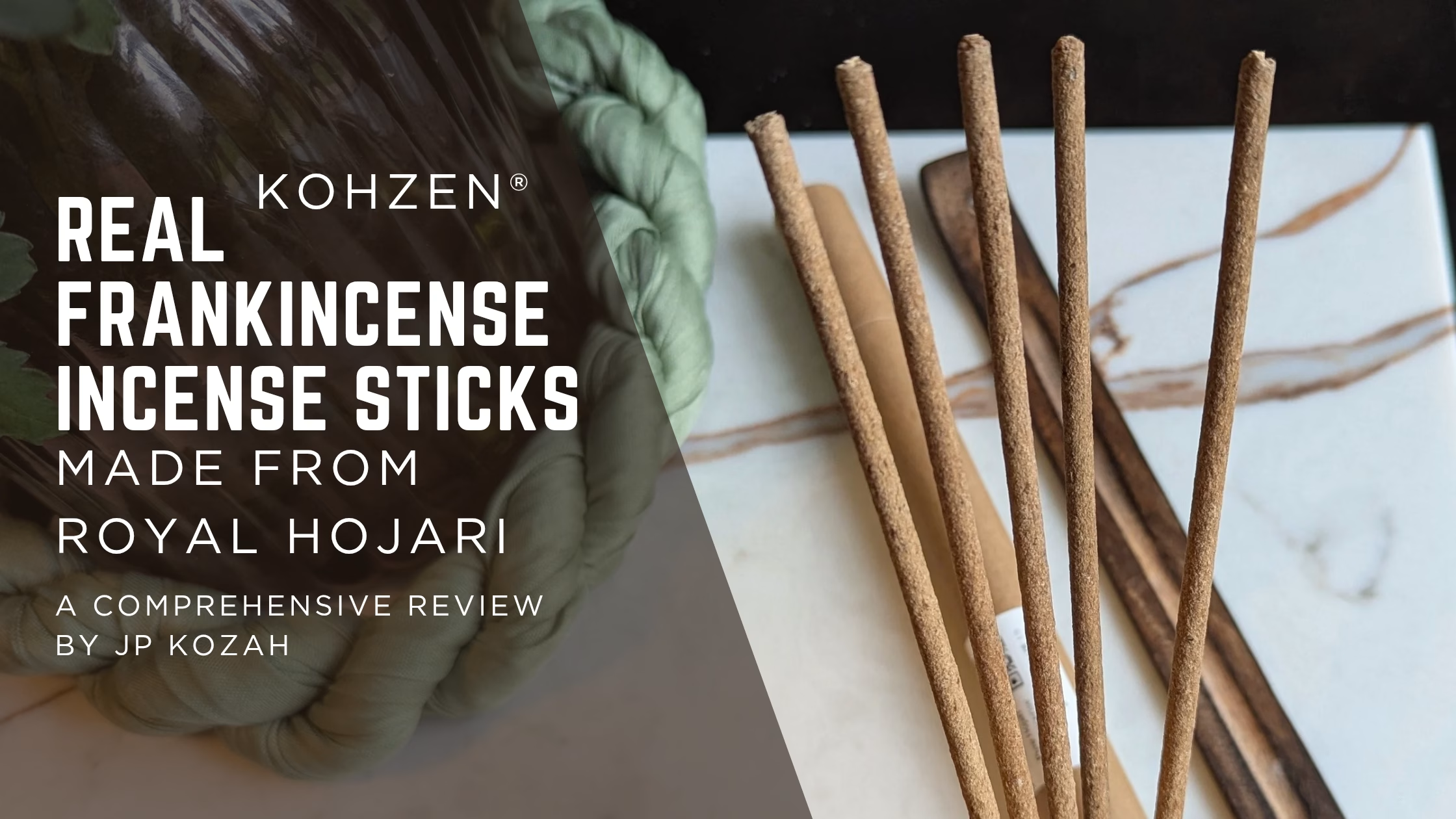
  • Real Frankincense Incense Sticks made with Royal Hojari: A Comprehensive Review by JP Kozah (Kohẓen®)

    Real Frankincense Incense Sticks made with Royal Hojari: A Comprehensive Review by JP Kozah (Kohẓen®)

    If you’re looking for Real Frankincense Incense Sticks that actually smell like frankincense, the sacred, resinous clarity you recognise from churches, mosques and temples, this is your guide. I’m JP Kozah, founder of Kohzen. I source these Real Frankincense Incense Sticks directly from Oman. They are made in Oman using genuine Hojari Boswellia sacra resin from Dhofar, the UNESCO-listed Land of Frankincense. Hojari is widely considered the gold standard: bright, clean, unmistakably fragrant.

    Limited Offer: Save 25% when you buy 3 or more packs of Real Frankincense Incense Sticks at KohẓenOfficial


    Quick verdict

    • Authentic, ritual-grade aroma. These Real Frankincense Incense Sticks carry the bright citrus lift, soft evergreen clarity, and warm honeyed base that define Hojari frankincense.
    • Made at source, with real resin. Sourced from Oman where they’re produced using real Hojari frankincense resin.
    • Clean, convenient use. About 90 minutes per stick, gentle smoke, stop–start relight with no bitterness or sourness: perfect for modern flats and daily rituals.
    • Ethical in nature. 10% of sales support humanitarian aid initiatives across West Asia.
    • Excellent value. With the 25% multi-buy, you get hours of calm at a very fair cost per session, for real Hojari frankincense resin.

    Ready to try the real thing? 25% off when you buy 3+KohẓenOfficial


    Real Frankincense Incense Sticks Kohzen

    What “Real” means here (and why it matters)

    “Pure”, “Natural” gets thrown around a lot in incense marketing, however very rarely do you find incense that uses the raw ingredients described. For me, Real Frankincense Incense Sticks means three things:

    1. Real resin. These sticks use genuine Royal Hojari Boswellia sacra resin from Dhofar, Oman; not a perfume that imitates frankincense.
    2. Real provenance. They’re made in Oman. I source them at origin and bring them to the UK; no vague white-label, or Chinese or Indian replicas.
    3. Real, sacred profile. Because they use authentic Hojari resin, the scent is the one you know from churches, mosques and temples, clean, uplifting, ritual-grade, not powdery perfume, or cheap fragrance oils.

    The result is simple: when you light these Real Frankincense Incense Sticks, they smell like rich, organic, Hojari frankincense, not like something pretending to be it.


    Ancient Origins of Incense Sticks

    Incense – aromatic plant materials that release fragrant smoke when burned – has been used by humans for thousands of years. The very word incense comes from the Latin incendere, meaning “to burn,” reflecting its early ritual uses. In ancient Egypt, priests burned incense resins like frankincense and myrrh during fumigations and religious ceremonies, even placing these precious resins in tombs to honor the dead.

    Incense also took on spiritual importance in ancient India and China. The practice can be traced to India’s Vedic period, where offerings of incense were thought to carry prayers and wishes to the divine realm. By around 2000 BC, incense burning had spread to China for use in worship and prayer, with blends of herbs and woods like cinnamon and sandalwood perfuming early temples.

    Over time, different cultures innovated new ways to enjoy incense. Indirect-burning incense (like raw resin on charcoal) was common in the ancient world, but it requires constant heat. Eventually, the idea of direct-burning incense sticks emerged, likely in South Asia, to make incense more convenient. An incense stick (often called a joss stick or agarbatti) is a slim stick – traditionally of bamboo – coated in a mixture of ground aromatic materials and a binding paste.

    This format, which may have originated in ancient India, allows the incense to smolder on its own once lit. Incense sticks gained popularity because they are easy to light, safe, and continuously release fragrance for an extended period. Burning a single stick became an integral part of Hindu puja rituals and Buddhist and Taoist practices across Asia. By the 14th century, even Japanese samurai were known to perfuse their helmets with incense, and the Japanese developed Kōdō, the art of incense appreciation. In short, incense sticks took hold because they provided a simple, self-contained way to enjoy the mystic aromas that people had valued for millennia – whether to purify spaces, please the gods, or simply relax the mind.


    Unboxing & First Impressions

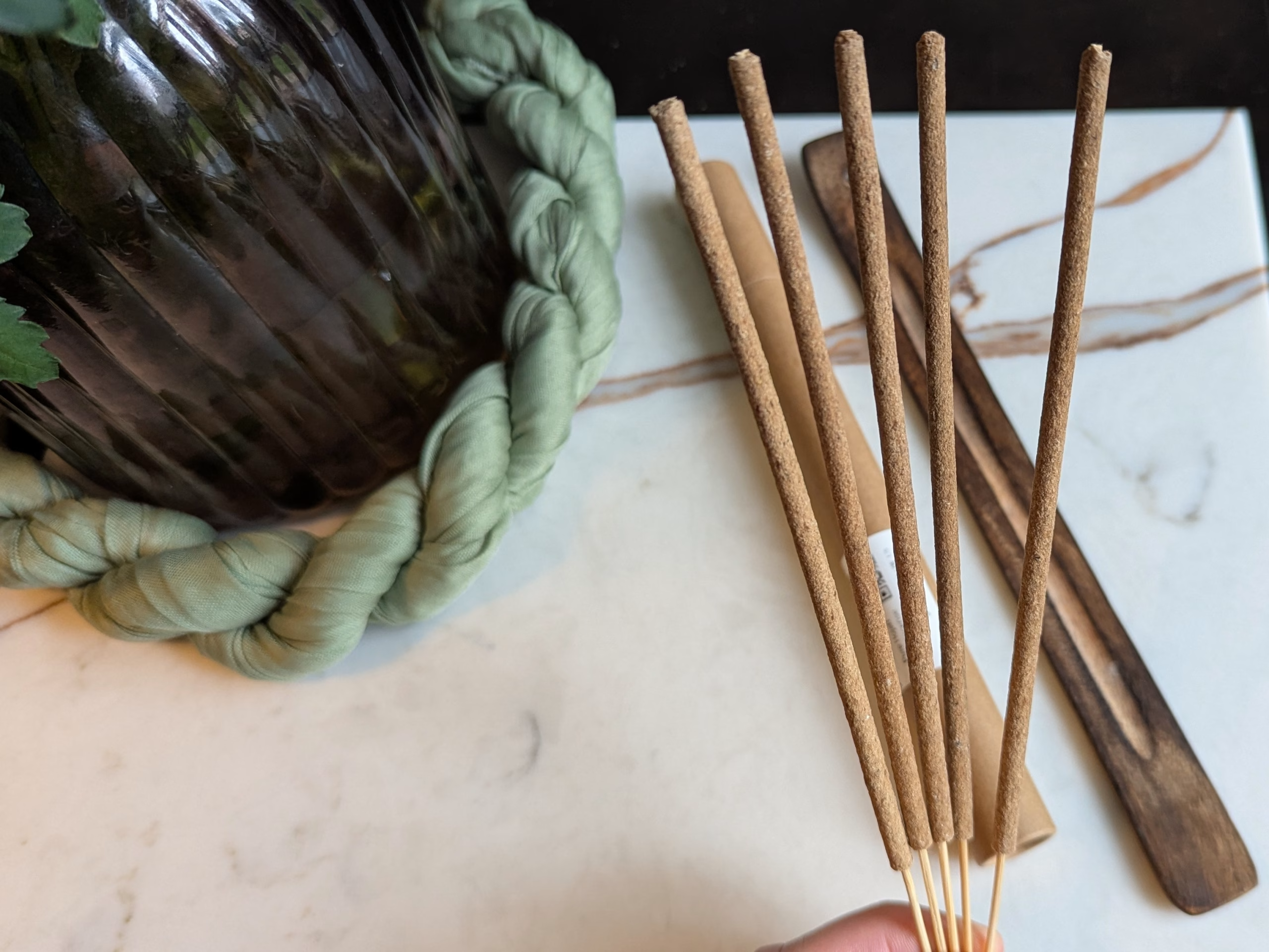
    Image 1 — Close-up of the sticks

    Opening the tube, you immediately catch a subtle citrus-resin sparkle even before lighting — a tell-tale sign of real frankincense resin content.

    Real Frankincense Incense Sticks — close-up of textured Omani Hojari frankincense resin sticks
    A close look at Real Frankincense Incense Sticks sourced from Oman. The fine resin texture supports a slow, clean ember and a faithful Hojari aroma.

    Frankincense: The King of Incense Resins

    Among all incense materials, frankincense has long stood out as the most esteemed. Frankincense is the dried aromatic resin from Boswellia trees native to the Arabian Peninsula and parts of Africa. In particular, the species Boswellia sacra grows in Oman, Yemen, and Somalia, producing the resin known as frankincense (or olibanum, luban in Arabic). Throughout antiquity, frankincense was not only treasured – it was treasure.

    At certain points, this resin was literally worth its weight in gold: in the ancient world frankincense was valued even more highly than gold. Its trade brought immense wealth to Arabian cities. By around the 6th century BC, a vast Incense Trade Route was carrying frankincense from southern Arabia (modern Oman/Yemen) by camel caravan to the Mediterranean and beyond. Egyptian pharaohs, Babylonian kings, and Roman emperors all coveted its sweet smoke. In fact, Oman became legendary as the land of frankincense – a place so abundant in this “white gold” that its very air was said to be perfumed by the resin-bearing trees.

    Why was frankincense so prized? Part of the answer lies in its rich spiritual heritage. Frankincense was a key ingredient in sacred ceremonies across numerous ancient religions. The Hebrew Bible records frankincense as a component of holy incense offered in the Temple of Jerusalem (Exodus 30:34–38), and it was burned to accompany prayers, with its white smoke believed to carry messages to the heavens.

    In Christianity, frankincense famously appears in the New Testament: the Gospel of Matthew recounts that one of the gifts brought by the Magi (wise men) to the infant Jesus was frankincense, symbolizing divine worship. Early Christians adopted its use; to this day, Catholic and Orthodox churches burn frankincense during Mass and other rites, swinging ornate censers that release the resin’s fragrant smoke in a visual metaphor of prayers rising upward. The scent of frankincense thus became deeply associated with divinity, healing, and solace across cultures.

    Frankincense’s appeal is not only spiritual but also sensorial. Good frankincense resin, when burned, emits a uniquely uplifting aroma – a warm, balsamic sweetness with notes of citrus and pine. Ancient descriptions and modern perfumers alike have struggled to capture its complex profile, often describing it as “honeyed but not cloying, with an austere note of pine…rich yet slightly astringent, with hints of lime and amber”.

    This inimitable fragrance, instantly recognizable once experienced, helped carry the fame of Arabian frankincense across three continents over thousands of years. Small wonder that Oman’s frankincense was regarded as a gift of the gods – even the trees that produce it were seen as sacred. In Oman, where frankincense trees grow wild on rocky hillsides, the resin is considered a divine blessing; historically, anyone whose land hosted a Boswellia tree was considered specially favoured by Providence.


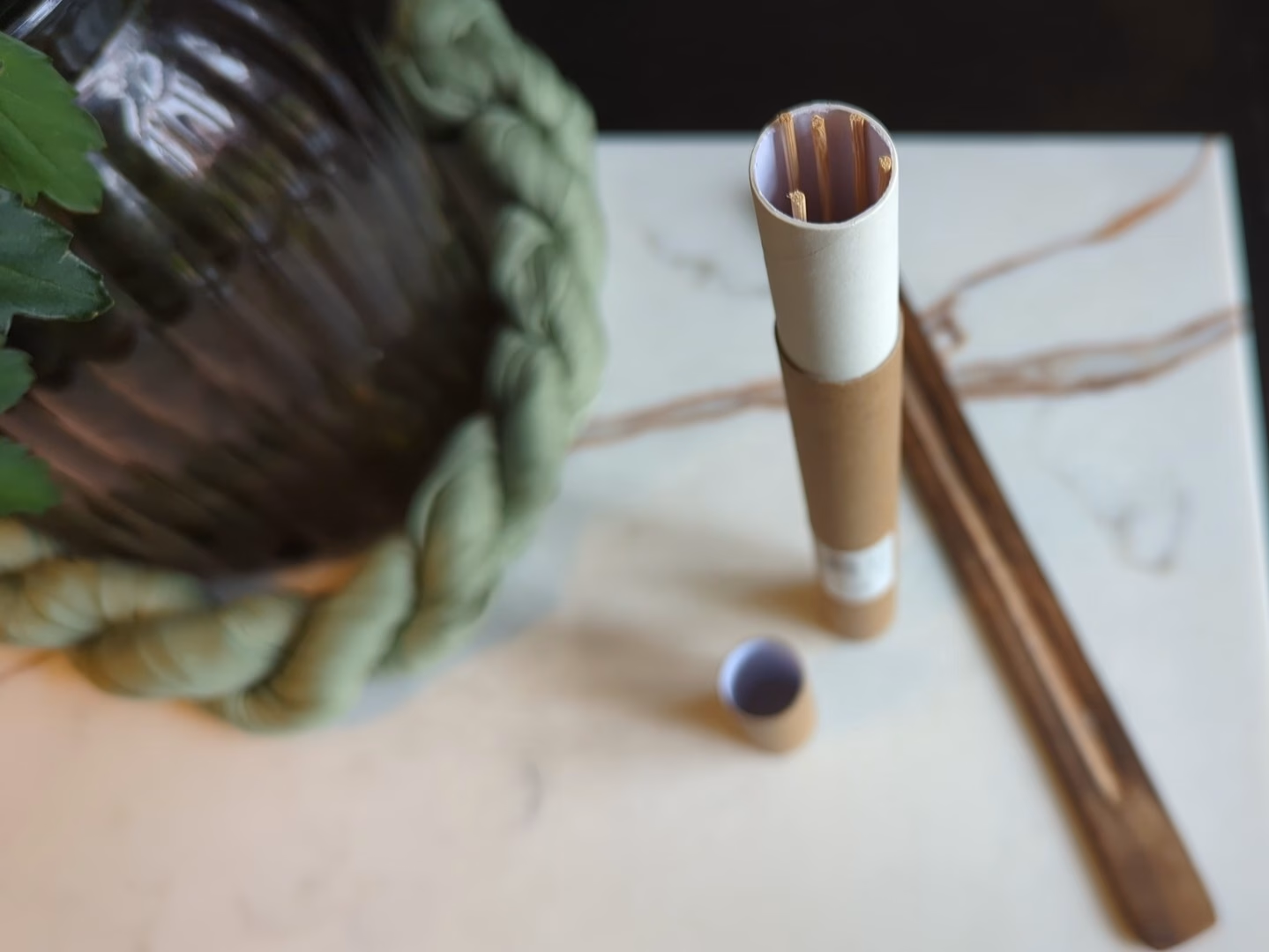
    Image 2 — Eco tube packaging

    The tube keeps the frankincense sticks safe from knocks and stray odours; handy for a desk drawer or travel bag.

    Kohzen eco tube with Real Frankincense Incense Sticks — recyclable packaging
    Each pack contains 5 or 10 Real Frankincense Incense Sticks in a recyclable tube that protects against humidity and keeps the aroma pure.

    Hojari: The Gold Standard

    Just as wine has its Grand Crus and coffee its specialty grades, frankincense too has different varieties and qualities. Hojari (also spelled Hougary or Hawjari) is widely acclaimed as the finest grade of frankincense in the world. This term refers specifically to top-tier resin from Boswellia sacra trees in Oman’s Dhofar region – particularly the inland highlands of that region, which have ideal conditions for producing high-quality resin.

    Hojari frankincense is characterized by its large, pale-colored tears (the dried droplets of resin). The most coveted Hojari pieces are opaque white with a slight lemon or greenish hue – sometimes called “Green Royal Hojari” – indicating extreme purity and a rich essential oil content. When burned, Hojari resin releases a brighter and more nuanced fragrance than lower grades: citrusy and ethereal at first, developing into deep amber, woody and lightly sweet balsamic tones. In essence, it is frankincense at its most exquisite.

    Omani frankincense, in general, has been esteemed for millennia, but Hojari is the cream of the crop. At the height of the incense trade, demand for Hojari was so great that the ports of southern Oman became the nexus of global frankincense commerce, funneling resin to Egypt, Mesopotamia, Greece, Rome, India, and beyond. Other regions also produce frankincense – for example, in Somalia (often called Beyo or Maydi frankincense) and in India (Salai frankincense). These are true frankincense as well, but connoisseurs have long ranked Omani Hojari at the top for its incomparable aroma and purity.

    Culturally and historically, Hojari holds a near-mythic status. It was burned in the temples of ancient Jerusalem and Babylon, carried by camels across deserts to adorn the altars of Athens and Rome, and reserved for the most sacred uses. Omani lore and regional poetry praise it as the fragrance “to which millions of hearts beat on hearing its name,” and locals proudly use it in daily life – from perfuming clothes and homes to flavoring water and even brewing tonic infusions.

    In short, Hojari is the gold standard by which all frankincense is judged. Its prestige arises from a confluence of factors: the unique geography of Dhofar (where the monsoon mist nourishes the trees just enough), centuries of trade heritage, and a role in religious rites stretching from the Old World to the New. While many substances can be called frankincense, Hojari is frankincense at its most legendary, imbued with layers of historical, geographical, cultural, and spiritual significance.


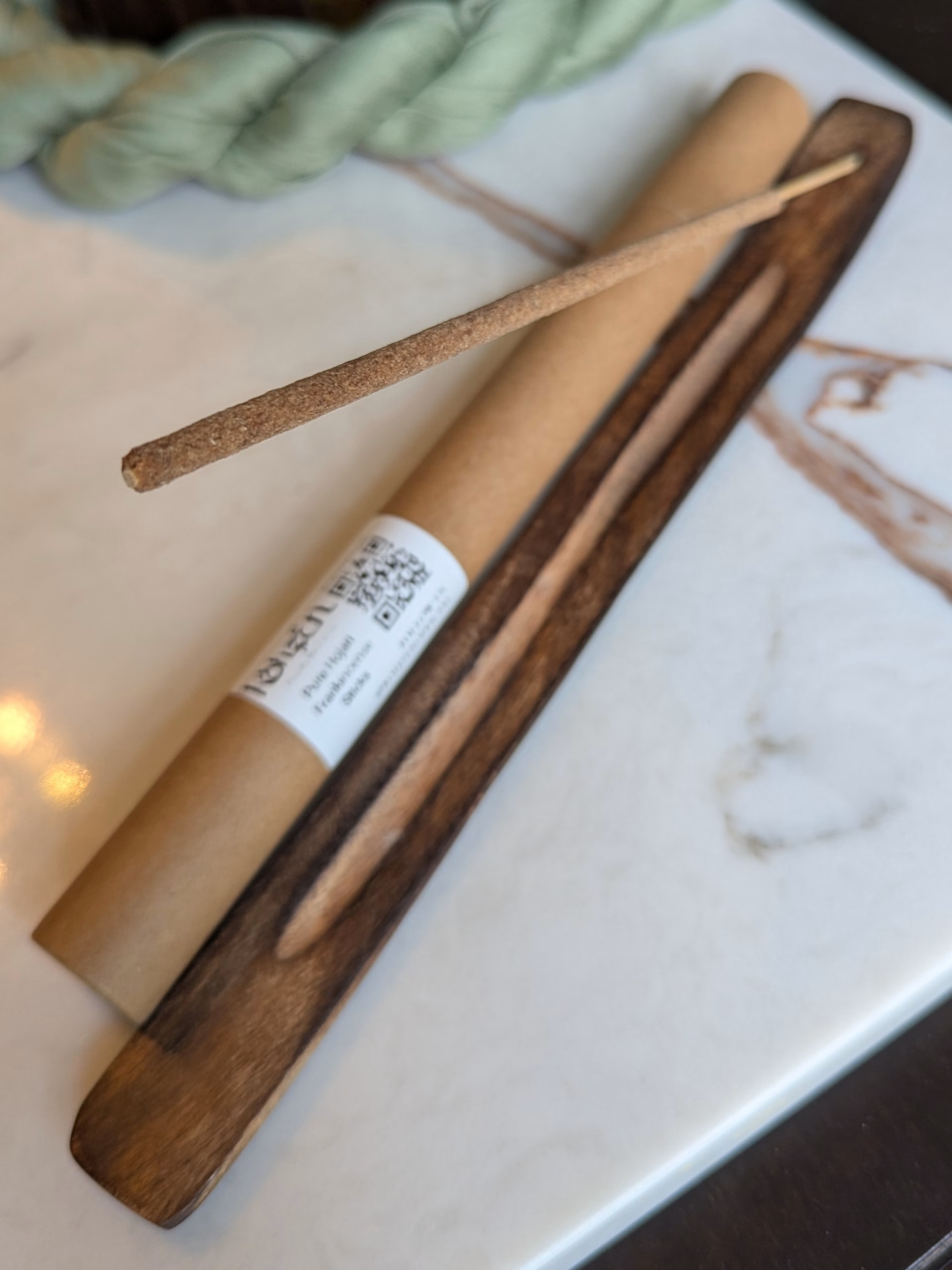
    Image 3 — On the holder

    Light for 2–3 seconds, blow out, and the ember glows steadily. No fuss, no mess.

    Real Frankincense Incense Stick on wooden holder — steady ~90 minute burn
    Caption: No charcoal, no censer. A single Real Frankincense Incense Stick burns for about 90 minutes with clean, pale smoke.

    From Resin to Stick: A Rare Omani Innovation

    If frankincense is traditionally burned as raw resin – little golden nuggets placed on hot charcoal – how did frankincense incense sticks come about? This development is surprisingly recent and quite special. In fact, it is only in the last few decades did artisans in Oman (the very heartland of Hojari frankincense) begin to combine their prized resin with the convenience of the incense stick format. One Omani entrepreneur is credited with pioneering this idea, which is why Kohzen have chosen them to source our Real Frankincense Incense Sticks.

    By grinding high-grade frankincense resin (like Hojari) into a powder and blending it with natural binders and woods, they could hand-roll it onto sticks – creating a pure frankincense stick that you can simply light and enjoy, without needing charcoal or a special burner. This is a game-changer for frankincense enthusiasts. It means anyone can experience the authentic scent of Omani frankincense in a familiar, easy-to-burn stick form, anytime and anywhere.

    These frankincense incense sticks are not your run-of-the-mill incense. As the Omani makers themselves caution, these sticks should not be confused with typical incense sticks on the market: rather these high-quality sticks provide a true, pure, frankincense resin experience. Unlike many commercial incense sticks (which often use perfumed oils or synthetic fragrances to mimic scents), genuine frankincense sticks from Oman contain no synthetic additives at all. They are made with only the frankincense resin and a touch of complementary natural wood to help it burn evenly.

    Rolled with pure aromatic resins of precious Hojari frankincense, and woods, free of essential oils and chemicals. The result is an incense stick that, when lit, smells almost indistinguishable from burning raw frankincense tears – woody citrus and sweet balsamic notes filling the air – so much so that if you close your eyes, you will have a difficult time distinguishing this stick incense from burning resin. Each stick typically burns for a long duration (often around 90 minutes per stick) given the density of resin. This slow, potent burn means you get a sustained aromatic experience akin to a resin censer, but with the ease of just lighting a stick and letting it smolder.

    Because this is a relatively new fusion of ancient resin and modern format, real frankincense incense sticks remain a rare find. Only a handful of manufacturers in Oman craft them, largely in limited batches, using traditional techniques. Outside of Oman, these sticks are coveted by incense aficionados and often have to be ordered through specialty importers or niche retailers.

    In other words, they are not mass-produced commodity incense – they’re an artisanal product born from a particular cultural context. The rarity is part of their charm: when you burn one, you’re experiencing something that few people in the world even know exists. It’s a sensory bridge between past and present, hand-made in the very region that has supplied the world’s frankincense for ages.


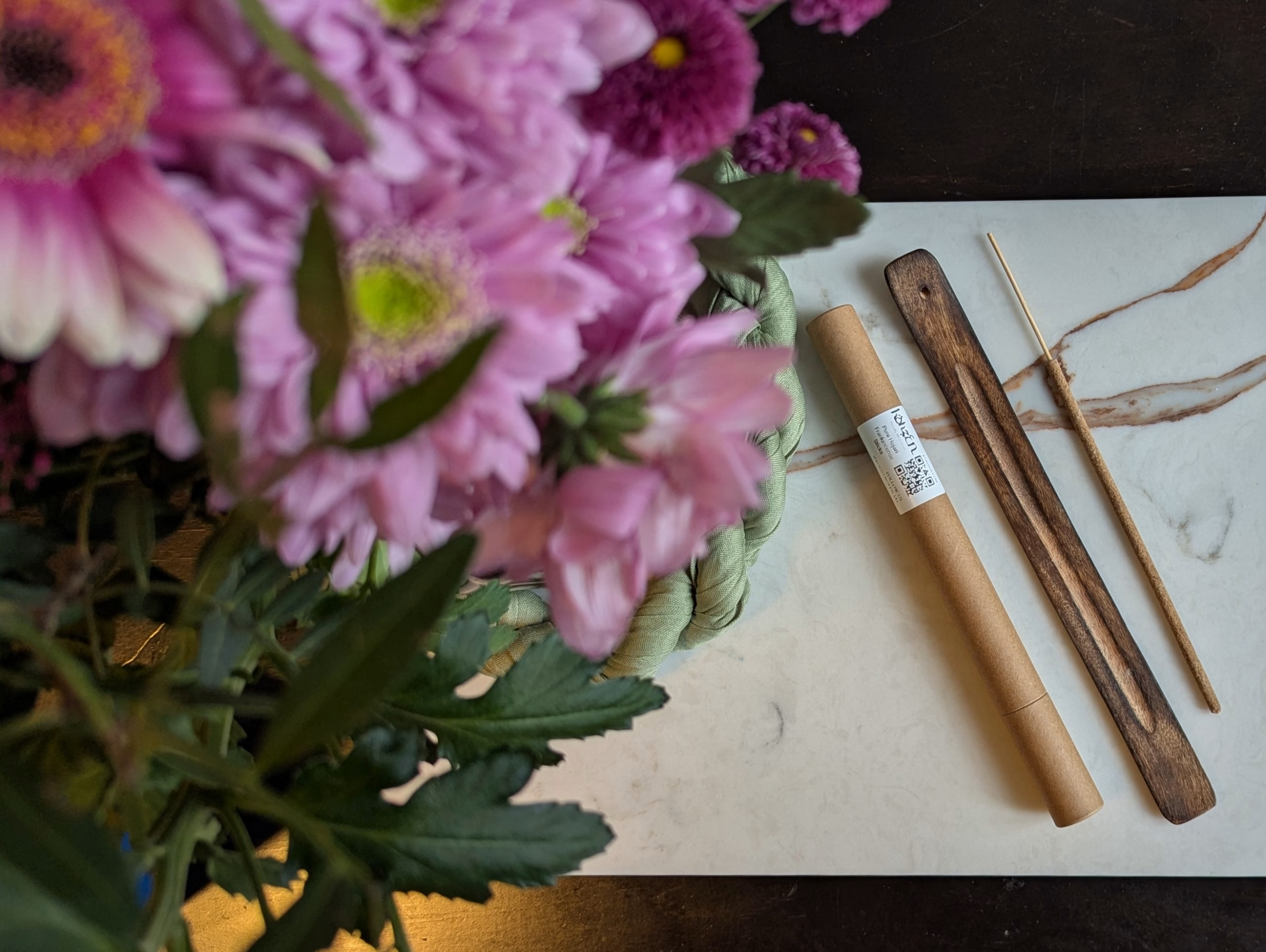
    Image 4 — Lifestyle flat-lay

    This is where frankincense resin sticks shine: modern homes and daily rituals that seek sacredness without heavy smoke.

    Kohzen Omani Hojari Real Frankincense Incense Sticks — lifestyle flat-lay with flowers
    Set a gentle ritual for reading, prayer or yoga. Real Frankincense Incense Sticks bring sacred calm to everyday spaces.

    Provenance & Ethics: from Dhofar to You

    • Botanical: Boswellia sacra (Royal Hojari)
    • Origin: Dhofar, Oman (UNESCO: Land of Frankincense)
    • Made in: Oman
    • Imported by: Kohẓen® (London)
    • Format: 5 or 10 Real Frankincense Incense Sticks per tube
    • Burn time: ~90 minutes per stick (relightable)
    • Aroma profile: Bright citrus, soft pine clarity, warm honeyed undertone
    • Social value: 10% of sales donated to humanitarian aid across West Asia
    • Packaging: Recyclable tube with Kohzen branding (holder not included)

    Bring origin-authentic Hojari into your home: KohẓenOfficial (save 25% on 3+ packs)


    Video: see the calm, steady burn

    The video shows what words can’t: no flaring, no harshness, just consistent diffusion and a clean fragrance.

    See it, then smell it: KohẓenOfficial (25% off 3+ packs)


    Aroma Deep-Dive (the Hojari scent arc)

    Kohzen’s Real Frankincense Incense Sticks deliver a sublime aromatic experience that clearly sets them apart from generic incense products. Upon lighting a Hojari frankincense stick, many are struck immediately by the “divine fragrance” it releases. The scent is refined and layered – reviewers frequently mention notes of sparkling citrus, amber-like sweetness, and an inviting spice that gently lingers in the room. Unlike heavily perfumed cheap incense, there is nothing cloying or chemical about the smell; it is pure, natural resinous smoke, the same kind that once wafted through ancient temples.

    “I have tried other frankincense incense sticks but nothing like Kohzen Hojari frankincense incense sticks. The scent is pure, potent and feels truly calming, filling your space with positive energy.”

    This speaks to a common sentiment: once you experience real Omani frankincense, most other incense will feel flat by comparison.

    Another striking aspect is the atmosphere of peace and spirituality these sticks can create. For centuries, frankincense has been burned to invite calmness, focus, and sanctity, and that tradition continues in living rooms and meditation spaces today. Users often light frankincense incense sticks during meditation or yoga, finding that the rich scent helps quiet the mind and deepen breathing.

    In fact, frankincense smoke has mild psychoactive properties that have been suggested to ease anxiety and promote a meditative state – perhaps validating why it was used in so many religious rituals as an aid to contemplation. After burning, a soft veil of fragrance remains, described as “exquisite” with lingering hints of citrus and sweet spice that can transform the ambiance of a space. It’s no exaggeration to say that a single stick can make an entire room feel like a sacred sanctuary.

    One notable different with Kohzen frankincense incense sticks is how cleanly and smoothly the high-quality sticks burn. The sticks sourced from Oman are often thicker and denser than typical incense, and they smolder slowly without producing harsh char or excessive smoke.

    “Kohzen frankincense incense sticks last long and remind me of church incense. It transports me to a place of calm and helps me with meditation”.

    Indeed, the fragrance of Hojari resin is familiar to many from church ceremonies, temples or West Asian homes and lighting these sticks at can evoke that same sense of reverence and nostalgia – minus the overwhelming smoke that charcoal burning can sometimes produce. Because the sticks are made of true frankincense resin, they smell real. There’s a depth and character to the scent that synthetic “frankincense-scented” products completely miss.

    Traditionally, enjoying frankincense meant fetching a charcoal tablet, lighting it until hot, then placing resin chunks on it – a bit of a process (though one with its own charm). Now, you can simply light a frankincense stick and achieve the same aromatic payoff with far less effort and equipment. This convenience does not come at the cost of quality; the experience remains authentic. For those who perhaps shy away from resin incense because of the fuss or the smoke, the sticks are an excellent alternative.

    “An ideal option for anyone who knows and longs for the remarkable aroma of Omani frankincense—and wishes to enjoy it without the need for an incense burner.” these sticks bring the elegant, seductive aroma of frankincense to anyone. Whether you’re a long-time frankincense lover or a curious newcomer, the sticks offer a friendly introduction to this ancient fragrance.


    Performance (burn, smoke, ash, scent throw)

    I test-burn each shipment so results stay consistent:

    • Burn time: Typically 86–94 minutes indoors with minimal draught.
    • Relight: Excellent. Extinguish halfway and relight later without sourness or bitterness in the scent.
    • Smoke: Gentle, pale smoke that carries without overwhelming.
    • Ash: Fine, compact; drops in neat segments.
    • Scent throw: Medium in a 12–20 m² room; opens beautifully in hallways and stairwells.
    • After-scent: A soft resin glow lingers for 1–2 hours post-burn.

    Prefer clean, reliable ritual over faff? Choose Real Frankincense Incense Sticks KohẓenOfficial


    Sticks vs. charcoal: which to use, and when?

    Real Frankincense Incense Sticks and raw resin on charcoal are complements, not rivals.

    Sticks (these):

    • Zero setup: No charcoal or censer — just a holder.
    • Gentle smoke: Perfect for flats and daily use.
    • Consistency: Repeatable results stick-to-stick.
    • Stop–start: Extinguish and relight cleanly for shorter rituals.

    Raw resin on charcoal:

    • Maximum impact: Big, ceremonial plume — brilliant in large spaces.
    • Traditional ritual: The censer has its place for high days.
    • More variables: Charcoal heat, resin size, airflow.
    • Commitment: Once the coal is lit, you’re in a full session.

    If you’re building a daily practice that fits around work, family and shared living, Real Frankincense Incense Sticks give you sacred clarity with no hassle — and you can still reach for charcoal when you want pageantry.


    Why Hojari frankincense is better for rituals

    Not all frankincense is equal. Hojari resin from Dhofar, Oman is prized because it gives you the sacred, recognisable aroma at low smoke, with a clean finish and reliable consistency — perfect for modern spaces and daily practice.

    • Smells sacred even in small rooms. Hojari’s bright citrus-and-pine lift “reads” clearly without thick smoke — the same profile you’ll recognise from churches, mosques and temples.
    • Clean, calm dry-down. Instead of a burnt or bitter tail, Hojari settles into a warm, honeyed note that leaves the air peaceful, not heavy.
    • Consistent by design. Omani resin is carefully graded, so every stick burns and smells reliably the same.
    • Start, pause, relight. Real resin smoulders evenly and re-lights without sourness, so you can do short meditations, readings or prayers without committing to a full session.
    • Heritage you can feel. This is the gold-standard frankincense used across faith traditions — instantly familiar, never perfumey.

    Real Frankincense Incense Sticks vs common alternatives

    What you care aboutKohzen – Real Frankincense Incense Sticks (Hojari, made in Oman)Cheap “frankincense” fragrance sticks (no real resin)Generic resin sticks (non-Hojari / unclear origin)Charcoal + perfumed sticksRaw resin on charcoal (traditional benchmark)Why this matters
    Scent authenticity✔ Real frankincense: bright citrus, soft pine, honeyed warmth (recognisably Hojari).✖ Often perfumey/soapy; doesn’t smell like frankincense.⚠ A bit resinous but dull/woody; lacks Hojari clarity.✖ Overpowering, burnt-oily tone.✔ Authentic and powerful.You get the true sacred aroma, not imitation perfume.
    Made where?✔ Made in Oman with Hojari from Dhofar.✖ Mass-made; origin rarely stated.⚠ Mixed or unknown sources.⚠ Same.✔ Depends where you buy resin.Real origin = trust and purity.
    Can I relight it?✔ Yes — stop and relight with no sourness.✖ Often no — turns acrid after stopping.⚠ Risky — can go bitter mid-stick.✖ Not effectively.✖ No — charcoal is one session.Control your session = less waste, more use.
    Smoke level✔ Gentle, room-friendly smoke.⚠ Can be sharp/irritating.⚠ Sometimes sooty.✖ Heavy smoke that clings.✖ Thick ceremonial plume.Light smoke suits modern homes.
    Consistency✔ High — graded resin + controlled make.✖ Low — perfume batches vary.⚠ Mixed — grade/source drift.✖ Unpredictable.⚠ Variable — depends on technique.Reliability builds daily habit and confidence.
    Ease of use✔ Match + holder — no charcoal, minimal ash.✔ Easy, but disappointing scent.✔ Easy, average results.✖ Messy; residue and cleanup.✖ Needs charcoal, censer, tongs, time.Simplicity = you actually use it.
    How it feels in ritual✔ Calm, pure, recognisably sacred.✖ Artificial; breaks the mood.⚠ Serviceable, not inspiring.✖ Harsh, smoky.✔ Powerful, formal.Fit for quiet reflection and daily peace.
    Value for money✔ ~90 min per stick, reusable, 25% off 3+.✖ Short burns; poor aroma = false economy.⚠ Cheaper materials, weaker scent.✖ Low value after mess/fatigue.✔ Great impact; high prep cost.Real quality gives hours of calm, not minutes of frustration.
    Ethical impact✔ 10% donated to humanitarian aid; recyclable tube.✖ None stated.✖ None.✖ None.⚠ Varies.Your purchase does good and feels good.

    In short: Most look-alike sticks are fragrance-dipped and can’t deliver the sacred frankincense experience — they’re hard to relight and often disappoint. Kohzen’s Real Frankincense Incense Sticks are made in Oman from real Hojari resin, burn cleanly, re-light beautifully, and bring the unmistakable ritual aroma into everyday life — without the faff.

    Try them with 25% off when you buy 3+ packs → KohẓenOfficial


    How I use Real Frankincense Incense Sticks (everyday rituals)

    • Morning clarity (10–15 minutes): Light while you plan the day; extinguish once your list is done.
    • Focused work (30–45 minutes): The evergreen heart supports deep reading or writing.
    • Prayer/meditation (full burn): Let a stick run to completion to mark sacred time.
    • Purifying a room: Before guests arrive or after a long day, one frankincense resin stick resets the atmosphere.
    • Evening wind-down: Dim lights, soft music, and the honeyed dry-down to close the day gently.

    Tips for best results

    1. Use a stable holder (ceramic or wood) with a long ash channel.
    2. Ventilate lightly if smoke-sensitive; even a cracked window helps.
    3. Extinguish safely by pressing the ember into clean sand or an ashtray — never water.
    4. Relight cleanly by tapping away loose ash at the tip first.
    5. Store in the tube to protect from humidity and stray odours.
    6. Pair with stillness now and then; the scent reveals more in quiet.

    Who it’s for (and who it isn’t)

    Ideal for:

    • Anyone who wants the authentic “churchy” frankincense experience at home
    • Daily practitioners (prayer, meditation, yoga) needing consistent, clean results
    • People in flats or smaller rooms who find charcoal too heavy
    • Gift-givers seeking meaningful, heritage-rich aromatics

    Maybe not for:

    • Scent maximalists trying to fill very large halls (use charcoal resin)
    • People who prefer floral or sweet perfumed incense (these are resin-led)
    • Those who must avoid any smoke (consider our Frankincense Infusion Oil instead)

    Value & Longevity (and the 25% multi-buy)

    One tube contains 5 or 10 Real Frankincense Incense Sticks~7.5-15 hours of burn time. Because you can pause and relight, a single stick covers multiple short sessions. With 25% off when you buy 3+ packs, you can keep a tube at home, one at work, and one to gift,

    Stock up while the offer runs → KohẓenOfficial


    Care & Safety

    • Burn on a heat-proof surface and never leave unattended.
    • Keep away from children, pets, flammables and draughts.
    • Ventilate lightly after use.
    • If pregnant, have respiratory conditions or use medical oxygen, seek medical advice before burning any incense.

    Sustainability & Social Value

    Kohzen is small-batch and values-driven. We tell the whole story — plants, places, people — and we donate 10% of sales to humanitarian aid across West Asia. Our packaging for Real Frankincense Incense Sticks is recyclable, and we choose partners who respect the ecology and heritage of Dhofar.


    The Enduring Allure of Authentic Frankincense

    Frankincense incense sticks represent a beautiful convergence of old and new – marrying a time-honored resin with a convenient format beloved worldwide. In each stick, there is a story. It’s the story of Oman’s windswept groves of Boswellia trees, tapped for their “tears” of aromatic sap as was done in antiquity. It’s the story of temple priests and herbalists across civilizations who kindled frankincense to cleanse spaces, honor gods, and heal the body and soul.

    It’s the same resin that perfumed the halls of Pharaohs, that Roman emperors once hoarded, and that inspired wise men to travel across deserts with gold and myrrh in tow. Now it has been given new life as a simple incense stick – easy to share, yet retaining all the depth of its heritage.

    When you light a true Hojari frankincense stick, you aren’t just “scenting a room.” You are participating in a tradition that spans continents and ages. The curl of sweet smoke rising from that stick connects you to rituals in ancient Egyptian temples, Vedic fire offerings, and the frankincense-laden air of medieval cathedrals. It’s a little bit of history ignited anew.

    And at the same time, it’s a luxury of the present moment – a chance to slow down and savor an aroma that brings peace and clarity in our hectic modern lives. Hojari frankincense, the gold-standard resin, ensures that this experience is second to none: its bright, ambered fragrance can turn an ordinary evening at home into something transcendent. No synthetic substitute or lower-grade incense can truly compare to the real thing.

    In conclusion, frankincense incense sticks offer both the novice and the connoisseur a remarkable product: one that functions as a daily pleasure and a living compendium of history. They remind us why incense became popular in the first place – for its power to transform atmosphere and mindset – and they deliver that power in its most authentic form.

    The fact that they are rare, crafted by a few specialists with Omani frankincense, only adds to their appeal as something genuine and special. For anyone seeking to deepen their appreciation of incense or simply to enrich their home with a truly legendary fragrance, these sticks come highly recommended. The Hojari frankincense incense stick is more than a product to review – it’s a little piece of ancient wisdom and luxury, bound on a stick, waiting to share its sacred smoke and storied scent with you.


    Final thoughts — why choose Real Frankincense Incense Sticks from Oman?

    Because authenticity changes everything. Real Frankincense Incense Sticks made with Hojari resin don’t just smell pleasant — they feel right. They echo the same sacred aroma used for centuries across churches, mosques and temples, translated into a modern, convenient format that you can use every day. If you’ve been let down by “frankincense” sticks that smelled like perfume, step up to the real thing.

    Experience the gold standard.
    Real Frankincense Incense Sticks — 25% off when you buy 3+ → KohẓenOfficial


    FAQ: Real Frankincense Incense Sticks

    Q1. What exactly are Real Frankincense Incense Sticks?

    A. Real Frankincense Incense Sticks are made in Oman from authentic Hojari Boswellia sacra resin (the “gold standard” of frankincense). They’re not perfume-dipped sticks; they’re frankincense resin sticks designed to burn slowly and release the true, sacred frankincense aroma recognised in churches, mosques and temples.

    Q2. What makes them “real” compared with ordinary frankincense sticks?

    A. Many “frankincense sticks” use synthetic fragrance on a base. Real Frankincense Incense Sticks contain actual frankincense resin (Hojari), so the aroma is naturally citrus-bright with pine clarity and a honeyed, devotional warmth. No imitation perfume, no harsh chemical tail.

    Q3. Why Hojari? What makes it the gold standard?

    A. Hojari frankincense grows in Oman’s Dhofar region and is famed for clarity, purity and balance: lemon-like lift, soft evergreen heart, and warm ambered dry-down. Historically and culturally it’s the benchmark frankincense—widely used in ritual and prized for its refined scent.

    Q4. Where are these frankincense resin sticks made and who sources them?

    A. They’re made in Oman and sourced directly at origin by Kohzen. We don’t perfume or white-label generic sticks; we import Omani Hojari frankincense sticks with a traceable story.

    Q5. What do Real Frankincense Incense Sticks actually smell like?

    A. Expect a three-phase arc: a sparkling citrus opening, a cleansing pine/evergreen middle, and a honeyed resin finish that feels calm and contemplative. It’s the authentic “churchy” frankincense profile—clear, uplifting and never cloying.

    Q6. How long does one stick burn? Can I pause it?

    A. Around 90 minutes per stick in still indoor air. You can extinguish and relight without sour notes: gently press the ember into clean sand/ash, let it cool, tap away loose ash, and relight later.

    Q7. Do I need charcoal or a censer?

    A. No. Real Frankincense Incense Sticks are direct-burning—just a safe holder and a match. If you want a heavy ceremonial plume, raw resin on charcoal is ideal; for daily life, these frankincense sticks are simpler and cleaner.

    Q8. How do these compare to burning raw resin on charcoal?

    A. Raw resin + charcoal gives maximum throw but needs setup, tools and cleanup. Real Frankincense Incense Sticks offer authentic scent with gentle smoke, instant lighting, stop–start control, and stick-to-stick consistency—perfect for flats and everyday rituals.

    Q9. What kind of holder should I use?

    A. A stable ceramic or wooden holder with a long ash channel. Place on a heat-proof surface away from draughts, curtains and shelves. Empty ash once cool; never move a burning stick.

    Q10. Are Real Frankincense Incense Sticks vegan and free from synthetics?

    A. Yes. These frankincense resin sticks use plant-based aromatic materials. No animal derivatives, and no synthetic perfume oils added to imitate frankincense.

    Q11. Are they suitable for small rooms and flats?

    A. Yes—smoke is gentle to moderate. For smaller rooms, crack a window slightly. One Real Frankincense Incense Stick scents 12–20 m² comfortably without the heaviness of charcoal.

    Q12. Are they safe in pregnancy or with respiratory conditions?

    A. Always seek medical advice if pregnant or if you have respiratory conditions. If approved, burn briefly with good ventilation and avoid enclosed, unventilated spaces.

    Q13. Will they trigger smoke alarms or leave residue?

    A. Any amount of smoke can activate sensitive alarms. Ventilate lightly and avoid placing sticks under detectors. With normal use, residue is minimal; keep distance from pale fabrics/walls and ventilate after burning.

    Q14. How should I store frankincense sticks and how long do they last?

    A. Store inside the tube, cool, dry and dark, away from strong odours. Properly stored, Real Frankincense Incense Sticks keep their aroma quality for 12–24 months+.

    Q15. What’s included in a pack? Is a stand included?

    A. Each tube contains 5 or 10 Real Frankincense Incense Sticks (approx. 90 minutes per stick). Holder/stand not included. Packaging is recyclable and sealed with Kohzen authenticity.

    Q16. Why are Omani frankincense incense sticks rare?

    A. Only a small number of makers in Oman produce true frankincense resin sticks in limited batches. It’s an origin craft using prized Hojari resin, very far from mass-market fragrance sticks.

    Q17. Best uses: when should I burn a real frankincense incense stick?

    A. Short meditations, prayer, yoga, reading, post-cleanse space-reset, gentle evening wind-down, or welcoming guests. Real Frankincense Incense Sticks set a calm, sacred tone without heavy smoke.

    Q18. Troubleshooting: my stick won’t stay lit—what can I do?

    A. Ensure the tip is glowing before you blow out the flame. Avoid strong draughts. If it stalls, tap off ash, relight for 3–5 seconds, and try again on a more stable, heat-proof surface.

    Q19. Do Real Frankincense Incense Sticks smell like church incense?

    A. Yes—the aroma is authentically “churchy” because it comes from real Hojari frankincense resin. The same sacred profile is recognised across churches, mosques and temples worldwide.

    Q20. What are Kohzen’s ethical sourcing practices and social impact?

    A. We source at origin in Oman with traceable supply chains and small-batch partners who respect the Dhofar ecology. Packaging is recyclable, and we donate 10% of sales to humanitarian aid across West Asia. Every tube of Real Frankincense Incense Sticks supports people, place, and cultural continuity.

    Q21. Are these suitable if I’m sensitive to strong smells?

    A. Often, yes. The smoke from Real Frankincense Incense Sticks is gentler than charcoal. Start with 5–10 minute burns, keep light ventilation, and increase gradually if comfortable. If you must avoid any smoke, consider a non-combustion option (e.g. our Frankincense Infusion Oil).

    Q22. How many frankincense incense sticks do I need for a larger space or event?

    A. For big rooms, use 2–3 sticks placed apart to distribute scent evenly. For very large halls or outdoor use, raw resin on charcoal gives the strongest plume. Indoors, one stick comfortably scents ~12–20 m².

    Q23. Do you add essential oils or fragrance oils to these incense sticks to achieve the scent?

    A. No. Unlike other cheaper incense sticks, the aroma of Kohzen Frankincense Incense Sticks comes from authentic Hojari frankincense resin itself. We don’t add synthetic perfumes or essential-oil boosters — that’s why these are Real Frankincense Incense Sticks, not fragrance-dipped imitations.


    #kohzen #proudlywestasian