25% OFF 3+ ITEMS AT THE KOHZEN SHOP NOW

Tag: frankincense resin

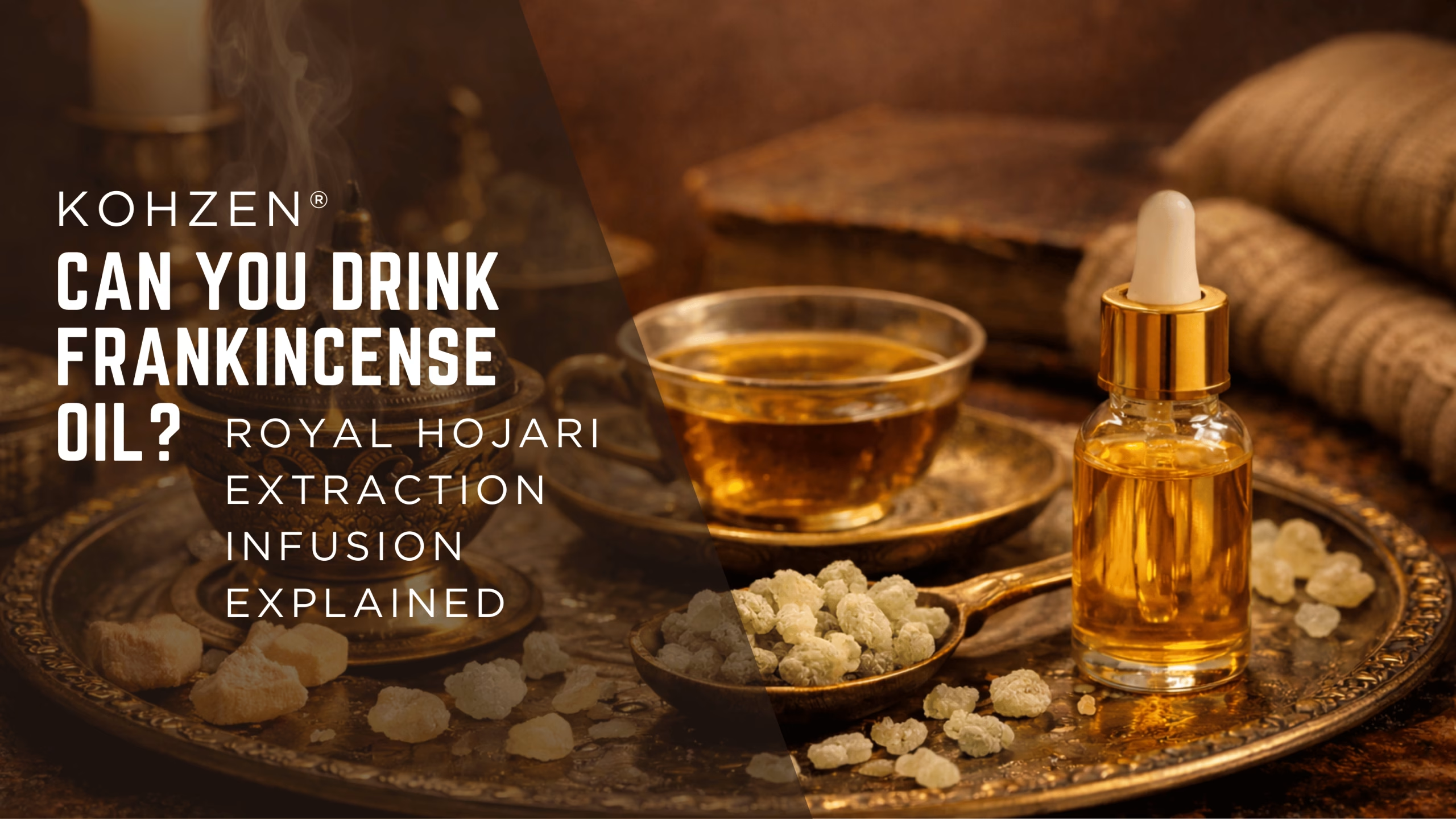
  • Can You Drink Frankincense Oil? Royal Hojari vs Extracts vs Infusions Explained

    Can You Drink Frankincense Oil? Royal Hojari vs Extracts vs Infusions Explained

    Can you drink frankincense oil? It’s a question many wellness enthusiasts ask when exploring this ancient resin’s benefits. Frankincense has a fabled history as sacred incense and traditional remedy, so it’s natural to wonder if sipping a drop of its oil might capture those benefits. In this lifestyle-ritual guide, we’ll delve into that exact query – with a friendly yet informed tone.

    Spoiler alert: while frankincense resin has been consumed in cultural rituals (think frankincense water or tea), frankincense essential oil is not something you should drink. We’ll explain why, compare Royal Hojari (the finest frankincense from Oman) vs extracts vs infusions, and show you safe, sacred ways to enjoy frankincense in your routine. (Disclaimer: This post is for educational purposes only – it’s not medical advice. Kohẓen does not recommend ingesting frankincense oil.)

    A Sacred Tradition Meets Modern Curiosity

    Imagine a calm morning in Oman: the sun is rising, and you’re sipping a glass of cool frankincense water infused overnight with resin tears. The drink is cloudy and lightly fragrant – a gentle ritual enjoyed for centuries in parts of Arabia and Africa. In these cultures, frankincense resin (often Royal Hojari, the highest grade) is occasionally steeped like tea or chewed as gum, not as a “medicine” but as a way to connect body and spirit through a soothing daily practice. This cultural backdrop is important. When people today ask “can you drink frankincense oil?”, they’re often seeking to tap into that traditional wellness experience.

    However, there’s a big difference between drinking frankincense resin infusion (a mild tea-like beverage) and ingesting frankincense essential oil (a highly concentrated extract). In modern aromatherapy, experts strongly caution against drinking essential oils. Frankincense oil can be a wonderful ally for aromatherapy or skincare, but ingesting it can be risky, potentially causing irritation or toxicity due to its potency. So, where does that leave someone wanting to safely enjoy frankincense’s benefits? Let’s explore the nuances:

    • Frankincense Water & Resin – A mild traditional infusion (more on this soon).
    • Frankincense Infused Oil – A gentle oil infusion that captures resin’s fullest properties, including Boswellic Acid.
    • Boswellia Extracts & Supplements – Concentrated resin compounds in capsules.
    • Frankincense Essential Oil – distilled extract (handle with care!).

    Each form has its place. By understanding these, you can mindfully incorporate frankincense into your lifestyle in a safe, sacred way – without putting your health at risk.

    Product Ritual Invitation: Curious to experience frankincense in your daily routine? Discover the ancient essence with our Royal Green Hojari Frankincense Oil – a slow-infused ritual oil made from Oman’s finest resin. This premium infusion preserves boswellic acids and the rich aroma of frankincense, inviting you to elevate your meditation or self-care rituals with a touch of tradition.

    Can You Drink Frankincense Oil? (Safety First)

    Let’s address the core question head-on: Can you drink frankincense oil? In plain terms, drinking frankincense essential oil is not recommended. Frankincense essential oil is an aromatic, highly concentrated substance distilled from resin – it can take pounds of resin to produce just a tiny bottle of oil. This means a single drop contains potent compounds in amounts far beyond what you’d get from a cup of frankincense tea. Ingesting essential oils (including frankincense) can be hazardous: it may irritate your mouth or gut, interact poorly with medications, or even cause toxicity. Health experts and aromatherapists caution that you should never swallow frankincense essential oil directly.

    On the other hand, frankincense resin “tea” or water – made by steeping edible-grade frankincense tears in water – has been enjoyed traditionally and is much milder. When you steep resin in water, you get a gentle infusion of some soluble compounds and a light aromatic flavor. Omanis call it “Luban drink”, and it’s sipped for its subtle woody-citrus taste and the ritual of it, not as a pharmacological dose. Importantly, this is not the same as the essential oil – the resin pieces release only tiny amounts of oils and boswellic acids into the water, making it closer to an herbal tea.

    So, if your goal is to internally experience frankincense, the only traditionally safe approach is something like frankincense water or a professionally prepared resin extractNOT dropping essential oil into your smoothie! Even then, moderation and quality are key. High-grade frankincense (like Royal Hojari from Oman) is preferred for infusions because it’s known as “food grade” resin in those regions. People might put a couple of small resin tears in a liter of water, let it sit overnight, and drink the mild, milky-white water the next day. The focus is on ritual and flavor, not dosage.

    Safety Disclaimers and Why Ingestion Is Discouraged

    To be absolutely clear, Kohẓen does not recommend ingesting frankincense oil (or any essential oil) in our products or guides. While frankincense resin itself has been used in traditional remedies and even some modern supplements, the essential oil is a different beast. It contains volatile compounds like alpha-pinene and others that can irritate mucous membranes. Moreover, frankincense essential oil lacks a crucial group of compounds – boswellic acids – that are only present in the resin, and infusion oil like our Kohzen Royal Green Hojari Infusion Oil, not distilled or essential oil.

    (Boswellic acids are heavy molecules revered for anti-inflammatory properties, but they don’t come over in steam distillation or essential oils you buy in health stores, so you won’t ingest them by drinking the oil anyway.) If someone is seeking purported health benefits of frankincense (like joint support or gut health), those typically come from resin extracts, infusions or capsules, not essential oil.

    In summary, can you drink frankincense oil? Technically, you could swallow a drop, but you absolutely shouldn’t. The risks outweigh any potential benefit. Instead, if you’re drawn to internal use, consider traditional frankincense water or professional boswellia supplements, and even then use caution:

    • Frankincense Water: A few resin pieces infused in water – aromatic and gentle. This is generally considered safe in small amounts because it’s so dilute. Many find it calming and stomach-soothing in folk use, but it’s not a medicine or cure-all.
    • Boswellia Extract Capsules: These are supplements made from resin extracts (not the essential oil), standardized for boswellic acid content. They have been studied for conditions like arthritis and IBS. If interested, use a reputable brand and consult a healthcare provider first.
    • Infusion Oil Ingestion: Best avoided unless under guidance of a certified therapist or healthcare professional. And even among professionals, many advise against it. (For example, WebMD and other sources note that not enough is known about internal use, and essential oils can be toxic if overdone.)

    Always remember, “natural” doesn’t automatically mean “ingestible.” Poisonous mushrooms are natural too! Treat frankincense oil with the same respect you would any concentrated substance. Enjoy its divine aroma in a diffuser or on your skin (diluted), but think twice before putting it in your mouth.

    Royal Hojari vs Extracts vs Infusions: Understanding the Differences

    Why do some people even think about drinking frankincense oil? Part of the confusion lies in the different forms frankincense comes in. Let’s break down Royal Hojari vs extracts vs infusions, so you know what each is and how they’re used (or not used) internally:

    Royal Green Hojari Frankincense – The Resin & the Infused Oil

    Royal Hojari refers to the cream of the crop of frankincense resin. Sourced from Boswellia sacra trees in Oman’s Dhofar region, Royal Hojari (sometimes called Green Hojari for its slight greenish hue) is revered for its purity and aroma. These are the large, pale green-white tears of resin that smell lemony and sweet when burned. In Oman, Hojari is even used to flavor water or chewed occasionally – it’s considered edible grade resin.

    Now, when we talk about Royal Hojari Oil in the context of Kohẓen, we mean a resin-infused oil, not a distilled essential oil. Our Royal Green Hojari Frankincense Oil is made by infusing crushed Hojari resin in a carrier oil (like organic grapeseed oil) for weeks, allowing all the resin’s aromatic compounds (including boswellic acids) to dissolve into the oil. The result is a golden, rich oil that smells just like the whole frankincense resin, but in liquid form. This is sometimes called a “whole-resin infusion.”

    • Usage: This infused oil is meant for aromatic and topical ritual use – for example, anointing one’s wrists, adding a few drops to a diffuser or oil burner, or rubbing on the chest (diluted) for a comforting scent. It’s gentle and holistic, carrying the full spectrum aroma of frankincense. Because it’s already diluted in grapeseed oil, it’s softer on the skin and safer than pure essential oil (though we still label it “for home fragrance use, not for internal or cosmetic use” as a precaution).
    • Ingestion?: Even though this infusion contains food-grade frankincense resin and a food-grade oil, we do not recommend ingesting it. Why? The concentration of resin in the oil is much higher than what you’d get in frankincense water. It’s intended for fragrance and ritual, not as a supplement. A review by an herbalist notes that infused oils “utilize all the plant’s benefits… in a liquid form that you can apply topically, safely” – notice topically, not internally. So enjoy our Royal Hojari Infusion for its scent and energetic qualities in your sacred space, but not in your diet.

    Royal Hojari vs Others: Royal Hojari is just one variety (albeit the most famous). There are also White Hojari, Black Hojari etc., and other species like Boswellia carterii (Somali frankincense) or B. serrata (Indian frankincense). Hojari stands out for its superior fragrance and clarity. That’s why we use it in our infusion oil – it yields an aroma that is citrusy, bright, and softly woody, ideal for meditation and ritual. If you’re curious about all the frankincense grades, see our Ultimate Guide to Frankincense which explores varieties like olibanum and luban in depth.

    Product Ritual Invitation: Want to welcome the sacred scent of Royal Hojari into your life? Try our hand-crafted Royal Green Hojari Frankincense Oil. Each bottle contains wild-harvested 2025 Hojari resin patiently sun-infused in grapeseed oil for 8+ weeks. The result is a potent, full-spectrum frankincense infusion rich in aroma and tradition – perfect for anointing candles, diffusing during yoga, or simply inhaling for a moment of calm. (Experience frankincense as Oman’s mystics have – gently and reverently.)

    Frankincense Essential Oil (Distilled Extract)

    This is likely what most people think of when hearing “frankincense oil.” Frankincense essential oil is produced by steam distillation of the resin. It’s a concentrated extract containing the volatile aroma compounds (like alpha-pinene, limonene, etc.). It tends to be a thin, clear to pale-yellow oil with a sharp balsamic scent – capturing the bright top notes of frankincense’s aroma.

    • Usage: Essential oil is prized in aromatherapy and perfumery. Just a couple drops can scent an entire room via a diffuser. People also use it (diluted with carrier oil) on skin for its earthy perfume or potential skincare benefits. It’s known for promoting relaxation, focus, and spiritual ambience when diffused, aligning with frankincense’s ancient use in prayer and meditation.
    • Internal Use: As discussed, do not ingest frankincense essential oil casually. Some alternative health advocates have experimented with internal use (a drop under the tongue or in water) for ailments, but this should only be considered under professional guidance – and even many certified aromatherapists advise against it. The essential oil simply doesn’t contain the water-soluble boswellic acids that give resin extracts their anti-inflammatory reputation, so drinking it is more likely to cause upset than deliver benefits. Plus, essential oils aren’t water-soluble; if you drop frankincense oil into water, it will float and hit your tissues at full strength – not pleasant for your mouth or throat!

    To put it in perspective, frankincense essential oil is very strong – far stronger than any traditional frankincense preparation used internally in history. Our ancestors drank frankincense water, not frankincense oil. So we honor that wisdom by using the oil for what it’s best for: aroma, atmosphere, and topical ritual, not as a beverage.

    If you’re interested in using frankincense oil safely, check out What to Look for When Buying Frankincense Oil – it covers how to choose pure oils and gentle infused oils, plus safe ways to enjoy them (like diffusion and proper dilution). Always remember to dilute essential oils before applying to skin, and do a patch test to check for sensitivity.

    Frankincense Infusions & Extracts (Water Infusion vs Resin Extracts)

    Here’s where things get interesting, because “infusion” and “extract” can mean different things in the frankincense world:

    • Frankincense Water / Tea (Infusion): This is the traditional drink we described earlier. It’s made by soaking frankincense resin in water. Think of it as an herbal infusion or tisane. The water typically turns whitish (sometimes called “milk of frankincense” because of that hue). The taste is very mild – a slight pine-lemon bitterness, often improved by adding a bit of honey or mixing with regular tea. Culturally, people drink it for general wellbeing – for instance, Omani families might serve frankincense water to guests as a sign of hospitality and for its refreshing qualities. In folk medicine, it’s been used to “soothe the stomach” or as an morning tonic. Modern research on frankincense suggests anti-inflammatory benefits for joints and gut when taken in certain forms, which perhaps echoes why traditional users felt it “eased aches” or aided digestion. However, frankincense water is not a cure-all – it’s more like a comforting ritual drink. It carries far fewer active compounds than a lab-made extract or essential oil. And that’s actually why it’s safer – it’s almost like homeopathic levels of the resin, just enough to be gentle and aromatic. If you’d like to try making it, we have a detailed guide: 7 Traditional Uses of Frankincense Water and How to Make It. In that guide, we emphasize that frankincense water is enjoyed as a connecting ritual and not a replacement for medical treatment.
    • Frankincense Resin Extract (Supplement): In modern herbal medicine, Boswellia serrata (Indian frankincense) resin is often made into an extract (via alcohol or other solvents) and put into capsules. These are marketed for joint health, inflammatory bowel support, etc., because they contain high levels of boswellic acids and other compounds. If you see “frankincense extract” as a product, it usually refers to these supplements. They are intended for internal use, but you must use them according to instructions – typically a certain milligram dosage per day. They are not the same as frankincense essential oil (they’re closer to a powdered resin concentrate). Clinical studies have indeed used Boswellia extracts internally and found benefits for conditions like osteoarthritis and ulcerative colitis. That said, these are treated like herbal medicine – always consult a healthcare provider before starting them. They can have side effects and contraindications.
    • Oil-based Infusions vs Tinctures: There are also home-made or artisanal infusions where frankincense resin is soaked in a solvent:
      • Oil Infusion: (This is what we do with grapeseed oil for our product.) Good for topical/aromatic use, not really for drinking.
      • Alcohol Tincture: Some herbalists make a tincture by dissolving resin in high-proof alcohol, yielding a solution that can be taken by drops under the tongue or in water. This is quite potent and again, only to be done by those who really know what they’re doing, as it’s easy to overdo. We mention it here just to complete the picture – not to suggest you try it without guidance.

    In essence, “extracts” and “infusions” of frankincense aim to capture the resin’s goodness in different ways. If your goal is internal use:

    • Go for water infusions (frankincense water) or reputable resin extract supplements, not essential oils.
    • Start small – even with frankincense water, a small cup is enough to experience the ritual. Listen to your body; frankincense water in excess can cause a slight stomach upset in some people (resin is resin, after all).
    • Quality matters: use pure, high-grade resin. Inferior or adulterated frankincense could have contaminants. Royal Hojari is ideal for water infusions because it’s known to be collected cleanly and is high in the soluble gum that gives the nice cloudy infusion.

    And for any internal experiment, remember our mantra: when in doubt, consult a doctor or herbalist. Especially if you are pregnant, breastfeeding, or have underlying health conditions – do not ingest frankincense in any form without medical approval.

    Frankincense as a Lifestyle & Ritual – Safe Ways to Enjoy It

    Now that we’ve been adequately stern about what not to do, let’s celebrate what you can do! Frankincense is called “the king of oils” in some traditions, not because people drank it, but because of its profound effect on the senses and spirit. Here are some wonderful, intentional ways to use frankincense in your daily life that carry on the sacred tradition without any risky chugging of oils:

    1. Aromatic Rituals for Mindfulness

    One of the simplest and most fulfilling ways to use frankincense is through its aroma. The act of inhaling frankincense – whether via incense or oil diffusion – has been a cornerstone of spiritual practice for millennia. You can:

    • Burn Frankincense Resin: Place a couple of Royal Hojari resin tears on a charcoal incense burner. As the holy smoke curls up, take slow breaths and set an intention (much like sage or palo santo rituals). This smoke has been used to “clear” spaces energetically and invite a meditative mood. Science even suggests compounds in frankincense smoke can have anxiolytic (anxiety-reducing) effects – perhaps explaining why it “feels” so calming.
    • Diffuse Frankincense Oil: Add 4-5 drops of frankincense essential oil into an ultrasonic diffuser with water. The room will fill with a gentle woody-citrus fragrance that is grounding and centering. This is fantastic for yoga, meditation, or unwinding after a long day. (Some people like to blend it with a drop of lavender or orange oil for a custom relaxing blend.)
    • Personal Inhaler or Diffuser Jewelry: If you want a more personal aromatic experience, put a drop of frankincense essential oil on a diffuser bracelet (lava stone beads) or use an essential oil inhaler stick. Whenever you need a moment of calm, inhale that scent mindfully and let your racing thoughts settle.

    The key is to use the scent as a trigger for mindfulness. Every time you smell that familiar ancient aroma, it can remind you to pause, breathe, and reconnect – whether in prayer, meditation, or simple quiet time.

    (Fun fact: Even without burning or diffusing, chewing a piece of frankincense resin releases its aroma from the inside. Some cultures chew frankincense like gum – it freshens the breath and has a bitter, piney taste. It’s also believed to help oral health by disinfecting the mouth. If you try this, make sure it’s a clean, edible-grade resin and don’t actually swallow the resin lump; just chew and discard, like chewing gum.)

    2. Topical Anointing and Self-Massage

    Frankincense has long been used to anoint the body during rituals – think of the Biblical Magi’s gift or priests anointing with holy oil. We can adapt that in a wellness context. Using frankincense-infused oil (like our Royal Hojari infusion) or a very diluted essential oil blend, you can create an anointing practice:

    • Meditation Anointing: Before meditation or prayer, rub a drop of frankincense infusion oil between your palms, cup them over your nose and inhale deeply. Then gently press your palms to the center of your chest (heart chakra) or third eye. This simple act can symbolize opening yourself to inner peace. The aroma will linger on your skin, subtly enhancing your focus.
    • Self-Massage (Abhyanga): In Ayurveda, frankincense (salai) is sometimes used in massage oils for its joint-soothing properties. You can mix a few drops of frankincense essential oil into a carrier like jojoba or sweet almond oil and use it for a self-massage on tense areas – for example, massaging your feet, neck, or knees. The touch combined with the scent is deeply relaxing. (Note: Keep the dilution around 1-2%. That’s about 1-2 drops of essential oil per teaspoon of carrier oil. Our Royal Hojari infusion oil is already perfectly diluted and enriched with resin, which makes it even better – you can use it directly for this purpose without mixing.)
    • Skincare Ritual: Frankincense has a venerable reputation in skincare (you’ll find it in many natural anti-aging creams). You can add a drop of frankincense oil to your moisturizer at night for its calming scent and traditional skin benefits. Many users find it helps promote a healthy-looking complexion. Just do a patch test first to ensure you don’t react, and avoid if you have very sensitive skin. The act of massaging your face gently with a frankincense-scented cream can also double as a nightly ritual of self-kindness.

    When anointing or applying frankincense oil, do it mindfully. Set an intention like, “May this bring me peace” or “I honor myself with this sacred scent.” It might sound a bit woo-woo, but combining intention with action is the heart of ritual.

    Product Ritual Invitation: Elevate your self-care by incorporating a touch of frankincense. Our Royal Green Hojari Frankincense Infusion Oil is a versatile companion. Try adding a few drops to a warm bath, or use it to anoint your yoga mat or meditation altar – the subtle fragrance creates a sacred ambiance. Because it’s an all-natural infusion (no synthetic fragrances), it resonates with the authenticity of ancient wellness traditions, helping you craft your own modern ritual.
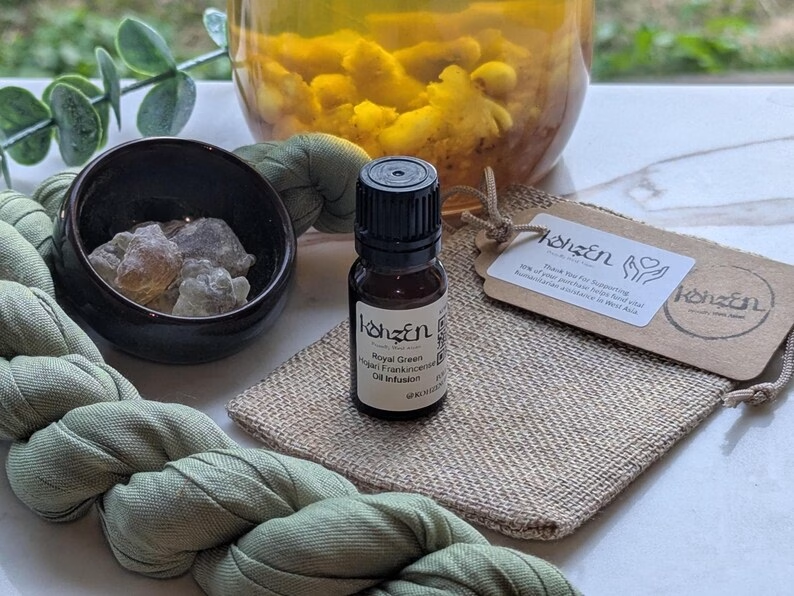
    Can You Drink Frankincense Oil, Kohzen, Royal Hojari Frankincense Infusion Oil
    A bottle of Kohẓen’s Royal Green Hojari Frankincense Infusion Oil, shown with frankincense resin tears and an infusion jar. This whole-resin infused oil captures the full aroma of frankincense – perfect for anointing and aromatic rituals.

    3. Frankincense in Daily Drinks – The Right Way

    We’ve emphasized not to guzzle frankincense oil, but you can still enjoy frankincense in a beverage – the traditional way:

    • Morning Frankincense Water: Take 2-3 small tears of Royal Hojari resin, rinse them quickly (to remove any dust), and drop them into a pitcher of clean drinking water (about 1 liter). Cover and let sit overnight. In the morning, the water will look milky. Pour a glass and sip slowly. The taste is subtle – you might sense a slight citrus or pine note. Many people, especially in Oman, enjoy this first thing in the morning as a gentle tonic. It’s believed to help clear the mind and support digestion for the day ahead, but more than anything it’s a mindful start to the day. As you drink, you’re literally consuming a piece of ancient tradition. Think about that connection – thousands of years of people doing exactly this. (Just as a precaution: don’t chew/swallow any large resin pieces that remain; if they softened, you can chew them then spit out, or simply discard them after they’ve infused the water.)
    • Frankincense Tea with Honey: If you prefer a warm drink, you can make a quick frankincense “tea.” Boil water, then drop a couple of resin pieces in the hot water and let steep 10 minutes. You’ll get a slightly stronger infusion than the cold method. Strain into a cup. Add a teaspoon of honey and maybe a squeeze of lemon. The honey sweetens and complements frankincense’s herbal notes nicely. This can be comforting in the evening or when you have a mild cough (indeed, in Yemen and Somalia frankincense water was sometimes sipped for sore throats and coughs – it’s thought to have soothing properties for the respiratory tract).
    • Herbal Blend: Frankincense water can be mixed with other herbal infusions. For instance, mix a half-cup of frankincense water with half-cup of green tea or chamomile tea. This way you get a synergy of flavors and benefits. Ginger and frankincense is another combo some enjoy (since both are used for digestion support in folk medicine).

    Always keep your usage moderate. One glass a day of frankincense water is plenty as a wellness ritual. There’s no need to overdo it – more resin won’t necessarily make you more well (and could upset your tummy). And as always, if you have any medical condition, double-check with a doctor if drinking frankincense water is okay for you. It’s uncommon to have allergies to frankincense, but not impossible.

    4. Create a Sacred Space with Frankincense

    Frankincense is inherently tied to the concept of sacred space. You can use it to transform your environment:

    • Home Fragrance Alternatives: Instead of chemical air fresheners, you can make a natural frankincense room spray. Mix 5-10 drops of frankincense essential oil in a spray bottle with 100ml of distilled water and a teaspoon of witch hazel (to help disperse the oil). Shake well and spritz around your room. It gives a light, natural scent that also carries those relaxing vibes. Great before guests come over – it echoes the Omani tradition of burning frankincense to welcome guests and purify the space.
    • Meditation Corner: If you have a personal altar or meditation corner, keep some frankincense there. You might have a small dish of resin and charcoal to burn when you start meditation, or use an oil warmer with our frankincense infusion oil. The act of “lighting the incense” or “warming the oil” can become the cue that your sacred time has begun. Over time, your mind will associate that frankincense aroma with deep calm and focus.
    • Yoga Practice: Roll out your yoga mat and before practice, put a drop of frankincense oil on each corner of the mat. As you flow through poses, the subtle scent emanating can enhance your concentration and enjoyment. Some yoga practitioners also apply a tiny amount of frankincense-infused oil to their temples or the back of the neck to help keep the mind centered (just avoid dripping sweat into it and causing it to run into eyes).
    • Sleep Routine: Incorporate frankincense in your bedtime ritual for better sleep. You could diffuse a mix of frankincense and lavender oils in the bedroom 30 minutes before sleep. Or place a tissue with a drop of frankincense near your pillow. The calming aroma can slow your breathing and quiet the mind, setting the stage for restful sleep. (A little ritual: as you breathe it in, imagine the worries of the day rising away like the frankincense smoke and vanishing.)

    All these methods let you benefit from frankincense’s essence safely. Notice none of them require you to consume the essential oil. Yet you’re still “taking it in” in a sense – through your senses, your skin, your environment. This is very much in line with how frankincense has been used historically for well-being. It was more about experience than chemical action: the experience of a holy scent, a soothing flavor, a moment of connection.

    FAQs – Frankincense Oil Ingestion & Usage

    Q: Can you drink frankincense oil for health benefits?

    A: No – drinking frankincense oil (essential oil) is not advised for health benefits. While frankincense resin and infusion oil has healthful compounds, the essential oil is highly concentrated and can be irritating or toxic if swallowed. You won’t get the resin’s boswellic acids from the oil anyway. For health purposes, people use resin extracts or drink frankincense water (a mild traditional infusion) instead of drinking essential oil. Always consult a healthcare professional before using frankincense for any health benefit.

    Q: What is frankincense water and is it safe to drink?

    A: Frankincense water is a traditional drink made by soaking frankincense resin (usually Hojari) in water, typically overnight. It turns the water cloudy and lightly fragrant. In cultures like Oman, frankincense water is sipped as a refreshing, ritual beverage, believed to aid digestion and overall wellness in folk tradition. It’s generally safe for most people in moderate amounts (like one glass a day), since it’s very dilute. However, it’s not a potent medicine – more a gentle tonic and spiritual practice. Use food-grade frankincense resin and don’t consume the resin sediment. If you have any health conditions or are pregnant/nursing, check with a doctor, but a mild frankincense infusion is usually considered safe as an occasional drink.

    Q: Are there any benefits of drinking frankincense water?

    A: Traditionally, yes – many folk benefits are attributed to frankincense water. People have used it to soothe stomach troubles, ease arthritis pains, freshen breath, and support breathing. For example, some Omani elders say it “keeps the joints supple” or helps with coughs. Modern science has found that frankincense resin (Boswellia) has anti-inflammatory properties and can support joint and gut health in supplement form. However, the amount of active compounds in frankincense water is quite low – so think of it as a gentle wellness ritual rather than a strong therapy. The biggest “benefit” might be the mindfulness and tradition attached to it: taking time to prepare it, then slowly drinking it in the morning can be a calming ritual that sets a positive tone for your day.

    Q: What’s the difference between frankincense essential oil and frankincense infused oil?

    A: Frankincense essential oil is a steam-distilled extract of the resin – very concentrated, containing only volatile aromatic compounds. Frankincense infused oil (like our Royal Hojari Infusion) is made by steeping the whole resin in a carrier oil for weeks, transferring a broader range of compounds (including heavier ones like boswellic acids) into the oil. Essential oil is more potent in scent and often used in diffusers or aromatherapy; infused oil is gentler, often used directly on skin or for subtle home fragrance. Importantly, an infused oil carries the full aroma and some resinous qualities (it’s like the “whole herb” version) and is typically already diluted for safe use. We do not ingest either type of oil, but infused oils are generally considered safer for topical use because they’re less concentrated than essential oils.

    Q: Is frankincense oil safe to use on skin or to inhale?

    A: Yes, frankincense oil is generally safe to use topically or aromatically – with a few precautions. For skin use, always dilute essential oil in a carrier (e.g., 1-2 drops per teaspoon of carrier oil) to avoid irritation. Do a patch test first. Many people use diluted frankincense oil for massage or in skincare and find it beneficial (it’s known for being soothing and rejuvenating for the skin). For inhalation, using a diffuser is a safe method, or simply wafting from a tissue. Avoid directly sniffing from the bottle too aggressively, and of course, never inhale frankincense (or any) oil via steam in a way that could get it in your eyes or lungs in liquid form. Normal diffusing and incense burning are fine. If you have asthma or respiratory issues, start with short inhalation times to ensure it doesn’t trigger anything (though frankincense is often used to help respiratory comfort). As always, quality matters – use pure frankincense oil from a trusted source so you’re not inhaling any nasty additives.

    Q: What does “Royal Hojari” mean in frankincense products?

    A:Royal Hojari” refers to the highest grade of frankincense resin from the Boswellia sacra tree, typically harvested in Oman’s Dhofar region. It’s characterized by light-colored (white with a hint of green) resin clumps that have a superior sweet citrus-pine aroma. Historically, Royal Hojari was reserved for royalty and important ceremonies – hence the name. In frankincense products, “Royal Hojari” signifies that the resin used is this top-tier quality. For example, Royal Hojari resin is used in our Kohẓen infusion oil, meaning you get the creme de la creme of frankincense. The term can apply to raw resin, incense, or oils derived from that resin. It’s a mark of purity and excellence in the frankincense world. If you’re exploring frankincense for the first time, Royal Hojari is a wonderful starting point because of its bright aroma and rich cultural heritage.
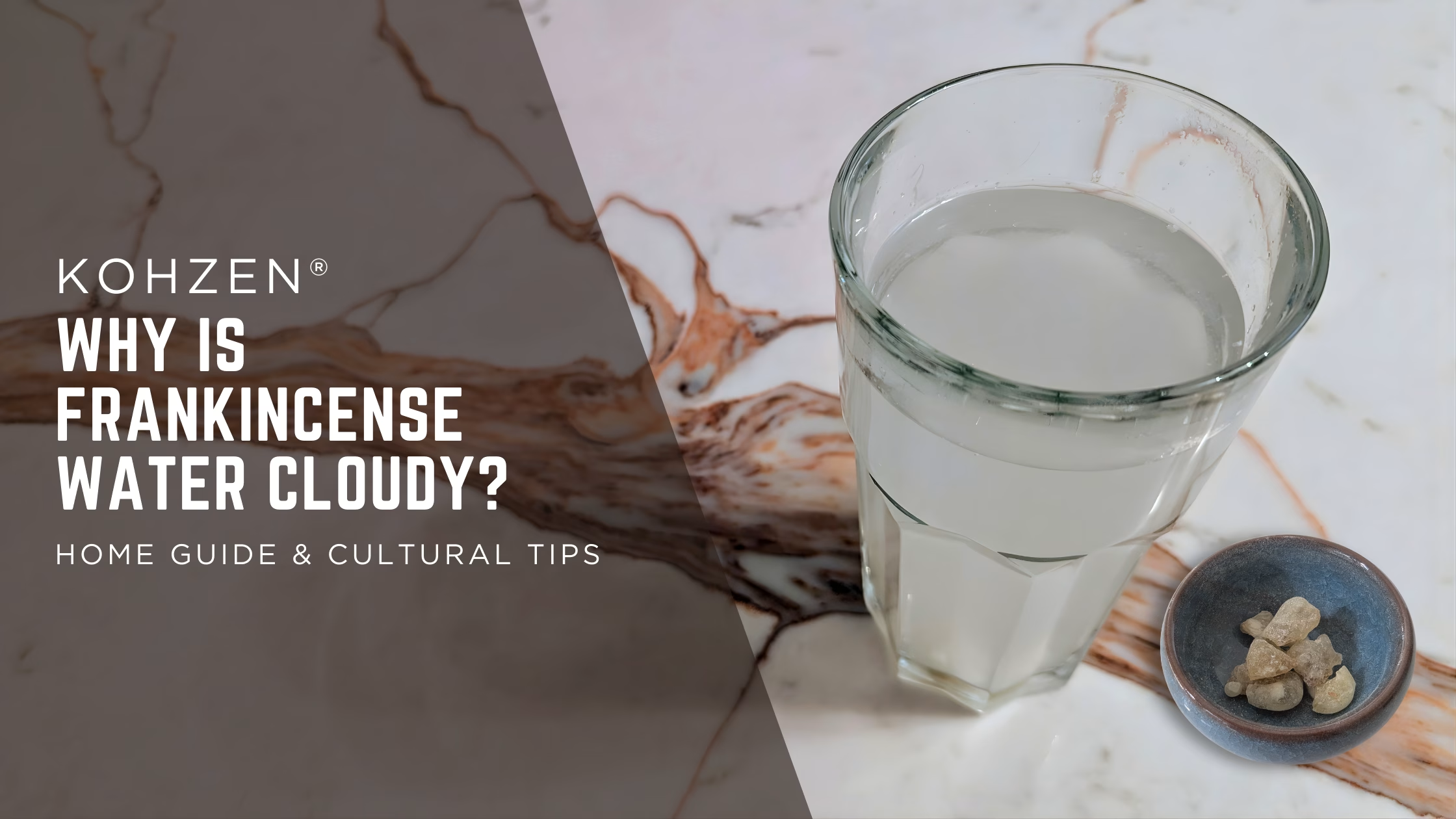
  • Why Is Frankincense Water Cloudy? Home Guide & Cultural Tips

    Why Is Frankincense Water Cloudy? Home Guide & Cultural Tips

    What Is Frankincense Water? Tradition in a Cup

    Frankincense water is simply a homemade herbal infusion made by steeping frankincense resin in water herbaldimensions.com. Traditionally popular in West Asia (especially Oman, Yemen, and Arabia) and parts of South Asia and Africa, this practice turns centuries old knowledge into a modern ritual. As one source explains:

    “Frankincense water is an infusion of Frankincense resin in water. It is a traditional Middle Eastern preparation…” herbaldimensions.com.

    Why is frankincense water cloudy? In practice, you take pure frankincense “tears” – the natural sap resin of the Boswellia tree – and let them sit in warm (or sometimes cool) water. Over hours or even overnight, the water absorbs some of the resin’s aromatic oils and water-soluble compounds, producing a lightly fragrant drink.

    This method has humble roots: for generations, people from Bedouins to yogis have prepared simple frankincense water as a soothing beverage, a spiritual offering, or a cleansing rinse for the skin. While it’s not a commercial product, it connects modern wellness with a cultural tradition of using incense resins for refreshment. (For more on these traditions, see our post “7 Traditional Uses of Frankincense Water”.)

    Cultural & Historical Significance

    Frankincense (often called lubān al-dhakar in Arabic) is more than an ingredient; it’s a heritage. The UNESCO World Heritage site “Land of Frankincense” in Oman commemorates how this resin fueled ancient trade routeswhc.unesco.org. For centuries the incense trade was one of the world’s most important commoditieswhc.unesco.org, and frankincense figured in religious offerings, royal ceremonies, and daily rituals. Today in Dhofar (Oman) and beyond, frankincense is still valued as a sacred gift – and drinking frankincense water can be seen as part of that living tradition.

    Even outside the Middle East, many Ayurvedic and traditional medicine systems recognise boswellia (frankincense) resin. Traditionally it was used in teas or decoctions (often post-fasting or after a meal) for general well-being. In some cultures, for example, elders might sip a bit of frankincense water as a digestive aid or to soothe tension at the end of the day. Though we won’t make medical claims here, it’s worth noting that these folk uses reflect a respect for frankincense’s aromatic and potential soothing properties. The key takeaway: frankincense water is embedded in tradition and ritual, valued for its sensory experience as much as anything else.

    Curious about how to use frankincense resin in different ways?
    Explore our Ultimate Guide to Frankincense to learn about its rich history, spiritual uses, and practical rituals.

    Why is Frankincense Water Cloudy?

    The signature cloudiness is a very common outcome of making frankincense water, and it has straightforward causes:

    • Natural Resin Composition: Frankincense is an oleo-gum-resin, meaning it contains aromatic oils, hard resins, and sticky gummy polysaccharides. When you soak the resin in water, the water-soluble gums (polysaccharides) dissolve and swell. These form tiny suspended particles (a mucilaginous suspension), which scatter light and make the liquid look milky ayublab.comresearchgate.net. In fact, analysis of Boswellia sacra (Omani frankincense) shows about 27–35% of its weight is water-soluble gum. Those polysaccharides make the frankincense more cloudy, as one source notesayublab.com.
    • Temperature: Hot water helps release more of the resin’s gums and oils, which can accelerate cloudiness. If you pour boiling water over the resin, you’ll often see a rapid milky cloud form as the resin “dissolves.” Cooler water steeped overnight will turn cloudy more slowly but will still usually end up milky as the gums diffuse. Either way, some cloudiness is normal in a frankincense infusion.
    • Resin Quality and Type: Not all frankincense resins behave the same. For example, Boswellia frereana (sometimes called Maydi incense) is unique in that it lacks significant water-soluble gumresearchgate.net. An infusion with frereana resin may stay surprisingly clear, whereas other types (like B. sacra, B. carterii, B. serrata, or B. papyrifera) contain more gums and cloud up more. In other words, the specific species and even the grade of resin will influence cloudiness. Traditional sources often note that lighter-colored resins (like “Royal” or “Green” Hojari) are preferred for drinking because they yield a cleaner infusionherbaldimensions.com.
    • Water Minerals: Hard water or very mineral-rich water can introduce its own cloudiness (from calcium or other particles). If your tap water is very hard, you might see a white film or sediment from the minerals alone. Using filtered or distilled water can help clarify whether the murkiness is from the frankincense itself.
    • Other Particulates: Sometimes tiny fragments of resin (fine powder or grit) remain suspended. As you pour in water or stir, some resin bits may float around before settling. Over time they will sink or can be strained out. Shaking the container after adding water is a common step (as in one guide) and indeed “you should see your water go cloudy as the frankincense resin dissolves into the water”herbaldimensions.com.

    In summary, the cloudiness usually comes from the gum components of the resin slowly releasing into the waterayublab.comresearchgate.net. It’s a natural, even expected phenomenon – not a fault.

    New to frankincense infusions?
    Our guide Frankincense Tea vs Water: What’s the Difference? explains how to prepare both gently and mindfully.

    Myths and Misconceptions: Is Cloudy Frankincense Water Bad?

    It’s natural to worry that a cloudy drink might be spoiled or unsafe. Rest assured, in the case of frankincense water, milky cloudiness is not a bad sign (assuming the resin was clean to start with). It’s simply the resin’s benign plant gum at work. For example, chemistry experts explain that frankincense gums dissolve and create an “immiscible suspension (mucilage)” ayublab.com. This suspension is just like a herbal slurry – similar to how mint or ginger infusions might have tiny floaters.

    Some people also confuse frankincense infusion with “oil in water” emulsions. However, frankincense oil itself is not very water-soluble; it tends to separate as a film. The cloudy part is primarily the polysaccharides and small resin particles. In fact, if you let frankincense water sit, you may eventually see a clearer layer and some sediment at the bottom – again, nothing harmful.

    As long as you use clean glassware and fresh resin (without contamination), a milky frankincense infusion is as normal as tea turning a deep color. Many practitioners embrace the cloudiness as a sign that they’ve extracted the full essence of the resin. You can also use a fine cloth or coffee filter to strain the liquid – though you will also strain out some gum in the process, which many consider part of the experience and flavour.

    Beginner-Friendly Tips for Making Frankincense Water

    If you’re new to this infusion, a simple step-by-step approach can help:

    1. Choose a Clean Container: Glass or ceramic is ideal. These won’t react with the frankincense oils. A clear glass jar lets you watch the infusion turn color or cloudyherbaldimensions.com. Make sure it’s well rinsed so no leftover soap or residue clings.
    2. Use Whole “Tears”: Select high-quality, whole lumps of frankincense resin (see below). Start with about ½ to 1 teaspoon of resin per cup (200–300 ml) of water. You can break the resin into smaller pieces to fit, but whole pieces are easier to strain out later.
    3. Pour Hot (or Warm) Water: Many people use boiled water that’s been allowed to cool slightly (to avoid scorching the resin). Pour over the resin in the jar and swirl gentlyherbaldimensions.com. A quick shake or stir helps wet all the resin. You’ll immediately see the water begin to cloud as the resin “dissolves” (really, disperses its gums)herbaldimensions.com.
    4. Cover and Steep: Let the mixture infuse. You can steep for 2–4 hours on the countertop, or even overnight in the fridge. A gentle cover (like a lid or cloth) keeps dust out but allows a little air – but don’t seal an air-tight lid on hot liquid. The longer it sits, the more compounds release and the cloudier it may become. Many people find 8–12 hours (overnight) is convenient and yields a full-flavored brew.
    5. Strain and Store: After steeping, strain the liquid into another container (glass pitcher or jar). You’ll likely see some sediment or soft white bits left behind. That’s normal – you can discard or even chew the leftover resin pieces to enjoy every bit (yes, people chew frankincense!). The strained water can be kept in a clean bottle. Store it in the fridge to preserve freshness. It will keep at least 2–3 days chilled; some say up to a week, but it’s best when fresh. Always give it a smell test: if it smells off or vinegary, discard it.
    6. How to Drink: Enjoy your frankincense water cool or at room temperature. It has a light, zesty scent (similar to its resin’s citrusy aroma) and a slightly resinous taste. Some people sweeten it lightly with honey or a splash of fruit juice to balance the earthiness. Others add a slice of lemon or ginger to complement the flavor (though those ingredients will add their own cloudiness and taste). Remember this is a sensory experience – inhale the fragrance as you sip, and drink slowly.
    7. Ongoing Use: Frankincense resin can be reused for multiple batches. After straining, add fresh hot water to the same resin again. It will still infuse but usually weaker each time. Continue until the water no longer turns milky or loses aroma.

    Storage and Safety

    • Refrigeration: Keep the infused water refrigerated if not drinking immediately. This prevents any chance of unwanted bacteria growth. The cool temperature may slightly reduce cloudiness (polysaccharides can gel when cold) but that’s reversible when warmed back to room temp.
    • Cleaning: Always use a clean, dry spoon or ladle to scoop resin out, and wash your hands before handling. Treat the resin respectfully.
    • No Plastics: Acidic or oily resin components can leach plastics. Use glass or stainless vessels for storage.
    • Sunlight: Store in a dark place or amber bottle; sunlight can degrade fragrance and cause unwanted algal growth.
    • Warning: While frankincense is generally safe for most adults, avoid this drink if you have specific allergies or medical conditions without checking with a knowledgeable practitioner. (We won’t make health claims here – just enjoy it as a special aromatic drink.)

    Want to go deeper into the cultural traditions behind frankincense water?
    Discover historical and everyday uses in our post 7 Traditional Uses of Frankincense Water.

    Choosing Quality Frankincense Resin

    The experience starts with the raw resin. For a clear (and clean-tasting) infusion, quality matters:

    • Species/Origin: The finest frankincense for drinking typically comes from Boswellia sacra (Oman, Yemen) or B. carteri (Somaliland). These are often labeled “Hojari” (especially the pale-green or white grades from Oman) or “Sookia”. Somali B. frereana (“Maydi”) is rare and pricier, but yields a very clear infusion because it has almost no water-soluble gumsresearchgate.net. Less expensive resins include B. serrata (India) and B. papyrifera (Ethiopia); these are still lovely but may be darker and cloudier.
    • Color and Appearance: Look for light-colored, translucent tears. High-grade Hojari is white, pale yellow or olive-green. Avoid resins that look very dark brown or have a burnt smell – those can be from over-heating or mixing with inferior frankincense (or other resins). Also avoid very dusty or powdery offerings; the high-quality tears are solid, glassy, and uniform. When broken open, a good piece often has a crystalline sheen inside.
    • Scent Test: True frankincense has a fresh, sweet-citrus aroma with piney, woodsy notes. Even before it’s in water, sniff a small piece. It should smell clean and uplifting. If it smells musty, moldy, or strongly perfumey (like artificial), that suggests impurities or additives.
    • Additive-Free: Always use 100% pure resin. Sadly, some cheaper products are “frankincense blends” or fillers. Genuine resin should dissolve only when powdered, not crumble into foreign particles. Buying from reputable incense dealers or herb shops (especially those transparent about origin) helps. Some sellers offer USDA Organic Boswellia or COP (certified Oman product) labels; these can give extra confidence.
    • What to Avoid: Do not use “ground frankincense” powders or resin stuck in oil (that’s for perfumes). Also skip any resin soaked in synthetic fragrance – the goal is a pure botanical infusion.

    Selecting good resin not only improves taste, but also reduces unwelcome cloudiness from dirt or extraneous plant bits. As one source notes, “lighter resin is more pleasant” for consumptionherbaldimensions.com. Think of it as choosing the finest herb for tea – it matters!

    Respectful Preparation Practices

    In many frankincense-using cultures, preparing incense or water is a mindful act. While we won’t prescribe religious rituals, here are some respectful practices drawn from tradition:

    • Cleanliness: Start with clean hands, clean tools, and a clear mind. Frankincense is often called a “gift of the gods,” so handle it with care. Use dedicated tea/coffee utensils if possible.
    • Mindful Setting: Brew your infusion in a peaceful environment. Some people play soft music or say a few gratitude words as it steeps, turning it into a mini-ceremony. This aligns with the mindful aspect of enjoying a natural drink.
    • Proper Vessel: Traditionally, people might use a copper or brass vessel for boiling water (like making tea) because copper is said to bring out the herbs’ flavors. If you do heat it gently, a simple glass pot or ceramic is fine.
    • Offering: In Middle Eastern hospitality, serving frankincense tea/water to guests (sitting in a majlis or living room) is a gesture of welcome. You can follow that custom: pour small amounts into tiny glasses, and share it with friends or family as a special treat.
    • End with Gratitude: After brewing, some traditions invite you to inhale the steam or smoke a tiny pinch of leftover resin for an aromatic finish. Keep in mind no excess heat is needed – simply letting the spent resin warm on a hot plate to release final scent is enough. Always carry on the sense of respect for the plant source.

    The key is intention: treat frankincense water not just as a drink, but as an experience that connects you to centuries of human tradition. Take a moment to appreciate the aroma and the ritual, even if it’s just you alone.

    Frankincense Water Cloudy Takeaways

    Cloudy frankincense water is usually just a sign that you’re extracting the good, sticky part of the resin – the very essence that centuries-old traditions have prized ayublab.com. Instead of seeing milky turbidity as a flaw, many call it the frankincense cloud and drink around it or sip despite it. With proper preparation and quality resin, you’ll find your frankincense infusion to be a fragrant, meditative beverage rather than a cause for alarm.

    By learning a little of the history (e.g. Oman’s Land of Frankincense whc.unesco.org) and following these simple home tips, anyone can enjoy frankincense water respectfully. If you want to explore related topics, check out our posts 7 Traditional Uses of Frankincense Water, The Ultimate Guide to Frankincense, or Frankincense Tea vs Water for more cultural insights and practical advice.

    Frequently Asked Questions

    Q: Why does my frankincense water become cloudy or milky?

    A: The cloudiness comes from natural components in frankincense resin. Frankincense contains sticky gum (polysaccharides) that dissolve into the water. These water-soluble gums form a fine suspension, making the liquid look milky. The aromatic oils from frankincense are mostly not water-soluble, so the visible cloud is mostly the gum and fine resin particles, not the essential oils. It’s normal – many users actually expect this cloud.

    Q: Is cloudy frankincense water safe to drink?

    A: Yes. Cloudiness in frankincense water is not harmful. It’s simply the resin’s natural gum. As long as you started with pure, clean resin and clean water, there’s nothing toxic in the cloudiness. People have used frankincense water for generations. To stay safe, use filtered water, clean jars, and refrigerate the brew. If unsure, you can strain the liquid through a cloth to remove particulates. The filtered water will still contain dissolved extracts and remains safe to drink.

    Q: How long should frankincense resin soak for making water?

    A: For a good infusion, soak frankincense resin in warm water for at least a few hours. Many people steep it overnight (8–12 hours) to maximise extraction of aroma and gums. Even 2–4 hours will give some flavor, but the longer soak (or repeated infusions) pulls out more scent. After straining the first brew, you can add fresh hot water to the same resin and steep again until the cloudiness diminishes.

    Q: Can I filter or clarify frankincense water to remove cloudiness?

    A: Yes – if the cloudiness bothers you, pour the cooled infusion through a very fine cloth or coffee filter. This removes the suspended polysaccharides and fine resin pieces. The filtered water will be more clear but will also lose some of the natural thickness and texture. Some enthusiasts prefer leaving the cloud for the “full” experience, but it’s a personal choice. Storing the strained water in the fridge also causes some gums to gel and settle, naturally clearing the liquid a bit.

    Q: How do I store frankincense water and resin?

    A: Store finished frankincense water in a sealed glass jar in the fridge. It will keep a few days safely, though it’s best enjoyed fresh. The remaining resin (after straining) can be left in the jar and re-used for another batch: just add more hot water to the old resin and steep again. Discard the resin once it no longer clouds the water or loses scent. Always label the jar with the date, and give it a sniff before drinking each day to ensure it still smells fresh.

  • 7 Traditional Uses of Frankincense Water (Infusion) and How to Make It at Home

    7 Traditional Uses of Frankincense Water (Infusion) and How to Make It at Home

    Frankincense water is a simple, traditional infusion made by steeping Boswellia sacra (Hojari) resin—often called “frankincense tears”—in hot water. Unlike essential oils or distilled products, this is a gentle resin tea, valued for its aroma and clarity rather than its strength. For centuries, it has been part of daily life and trade in regions such as Oman, Arabia, the Levant, Cyprus, India, and Egypt, where people prepared it as a refreshing drink, a household ritual, or a cultural offering.

    Historical records even trace its presence back to ancient Egypt, where frankincense held a place of honor in both sacred and everyday life. In Ayurvedic tradition as well, resin infusions were woven into practices of balance and well-being. Across these cultures, frankincense water has been seen less as a cure and more as a way to connect body, mind, and spirit through a natural, calming ritual. (For more on frankincense itself, see our Ultimate Guide to Frankincense and Kohzen About page.)

    What Is Frankincense Water (Infusion)?

    Frankincense water – sometimes called a frankincense infusion – is a simple and traditional way of enjoying the fragrant resin of the Boswellia tree. Small pieces of resin, often referred to as “tears,” are placed in warm water and left to steep. As the resin softens, the water takes on a cloudy, milky appearance and a gentle aroma. This is not an essential oil or distilled product, but more like a light herbal tea.

    For centuries, frankincense has held a place of reverence in many cultures – from temples to traditional households. In various parts of the world, people have sipped infusions made from the resin, often as part of rituals of relaxation, hospitality, or spiritual practice. High-quality resin, such as the pale “Hojari” variety from Oman, has long been prized for its purity, delicate taste, and uplifting fragrance.

    Today, many continue this old custom, not for medical treatment, but as a way to connect with tradition and enjoy the soothing qualities of a warm, aromatic drink. Frankincense water is often appreciated as a calming, grounding ritual – something to sip slowly, much like tea – that carries with it centuries of cultural heritage.

    7 Traditional Uses of Frankincense Water

    For centuries, people across different cultures have turned to frankincense water as a gentle, everyday ritual. Whether sipped slowly, used as a rinse, or applied in simple home remedies, this aromatic infusion has long been cherished for the sense of balance and comfort it brings. Below are some of the traditional ways it has been enjoyed:

    • Easing Aches and Discomfort: In folk practices, frankincense resin has often been prepared in water to help ease stiffness, sore joints, or general body tension. Many people would drink a small cup daily, believing it supported movement and comfort as they went about their day.
    • Supporting Digestion: Frankincense water has been used as a calming drink after meals, thought to help settle the stomach and soothe the digestive system. Traditional households sometimes relied on it to bring relief after heavy or rich foods.
    • Comforting the Breath: In West Asian and African traditions, frankincense steam and water were valued for easing the chest and opening the breath. Families would sip the infusion or breathe in its fragrant steam when dealing with seasonal changes, coughs, or congestion.
    • Oral Care Rituals: In many places, cooled frankincense water was used as a gentle rinse or gargle to freshen the breath and soothe the gums. This practice continues today as a natural addition to oral care, complementing—but never replacing—modern dental hygiene.
    • Skin and Wound Care: Applying frankincense water to the skin is a long-standing practice. Traditionally, it was dabbed on minor cuts, blemishes, or areas of irritation, with the belief that it could help calm and purify the skin. A cool compress soaked in frankincense water was also a common way to refresh tired or sun-warmed skin.
    • Relaxation and Mindfulness: Beyond its practical uses, frankincense water has always been appreciated for the tranquility it brings. Drinking it slowly, especially in the evening, can serve as a grounding ritual—a moment of calm and reflection in a busy day.
    • A Tonic for Vitality: Many cultures see frankincense water as a gentle tonic, believed to support overall well-being. Just as people turn to herbal teas for everyday nourishment, frankincense infusion is seen as a way to invite balance, clarity, and resilience into daily life.

    By weaving frankincense water into a lifestyle—whether through a morning cup, a soothing rinse, or a quiet evening ritual—you connect with traditions that have spanned generations. At Kohzen, we source only the highest-grade frankincense to honour this heritage and bring its timeless benefits into modern living.

    How to Make Frankincense Water at Home

    Making frankincense water is easy and inexpensive. You don’t need special gear, just high-quality resin and clean water. Follow these simple steps using Kohzen Hojari frankincense tears:

    Making frankincense water at home is simple and rewarding. You’ll need Kohzen Hojari frankincense resin and water.

    1. Gather ingredients: Use about 1 teaspoon of Hojari frankincense resin per 750–1,000 ml of water. One teaspoon is roughly 2–3 grams of resin. We recommend Kohzen’s light-coloured Hojari tears (Royal Green or Pure White grade) for the purest taste. Ensure your glass jar is clean; a 500–1000 ml jar or bottle works well.
    2. Add the resin: Place the measured frankincense tears into the jar. You can use them whole. If any pieces are very large, break them into smaller chunks so they infuse more fully. The resin will sink to the bottom.
    3. Pour hot water: Boil fresh water and let it cool for a minute to avoid cracking the jar. Carefully pour the water over the resin, filling the jar almost to the top. You’ll immediately see the water turn cloudy or milky as the resin releases its compounds. Do not fill completely; leave a little headspace to shake.
    4. Seal and steep: Screw on the lid and give the jar a gentle shake to mix the resin and water. Then set the jar aside. It should steep and cool naturally. For best results, leave the infusion at room temperature or in the fridge for about 8–12 hours (overnight is ideal). Longer steeping extracts more of the resin’s benefits. During this time, the water will gradually take on flavour and colour.
    5. Strain and serve: After steeping, pour out a glass (200–250 ml) of the infused water. (You can use a fine strainer or simply decant, since any floating bits are harmless.) The taste will be very mild – perhaps slightly piney, citrusy or resinous. Some people like to add a little honey or lemon for flavour. Drink in sips, as you would herbal tea, preferably on an empty stomach or between meals for best absorption.
    6. Reuse the resin: Don’t throw away the resin after one cup! You can refill the jar with fresh hot water and steep again 1–2 more times. The resin gradually softens with use. Eventually, you may even chew on the softened bits gently (they become more gelatinous) to get the very last of the boswellic acids. After 2–3 infusions, the resin will be fully spent and can be composted.

    Following these steps lets you easily brew a personal supply of frankincense water. Store any unused infusion in the fridge and use within 24–48 hours. Always use clean containers to prevent contamination. (For extra convenience, you can prepare multiple jars and label them by date.)

    Traditional Internal and Topical Uses of Frankincense Water

    Frankincense water has been cherished for generations in many parts of the world, valued for both its refreshing taste and its versatile everyday uses. Below are some of the ways people traditionally enjoy it, both inside and out:

    • As a Daily Drink: Many families sip a cup of frankincense water in the morning or evening as a simple wellness ritual. Some prefer it on an empty stomach, others throughout the day as a soothing, caffeine-free alternative to tea or coffee. Beyond hydration, this gentle practice is often seen as a way to bring clarity, calm, and balance to body and mind.
    • As a Mouth Rinse: In some traditions, cooled frankincense water is swished in the mouth after brushing as a natural rinse. It is believed to freshen the breath, comfort the gums, and leave the mouth feeling clean. The practice is simple—swish, gargle, and spit—offering a natural complement to modern oral care.
    • For Skin Care: Frankincense water has long been applied externally to refresh and soothe the skin. A cotton pad soaked in the cooled infusion can be used as a gentle toner for the face, or dabbed onto areas of redness, blemishes, or insect bites. In folk remedies, it was also used on small scrapes or irritations. As with all natural preparations, it’s wise to test a small patch first.
    • As a Warm or Cool Compress: Soaking a cloth in warm frankincense water and placing it on tired muscles or stiff joints has been a traditional way to bring comfort and ease. In hot climates, cooled frankincense water has also been sprayed or applied to the skin to refresh and cool, especially after sun exposure.
    • As Aromatic Steam: The rising fragrance of freshly prepared frankincense water has always been part of its charm. Inhaling the gentle vapors is thought to open the breath and quiet the mind. Leaning over the warm infusion with a towel draped over the head is an old household remedy for clearing the head and encouraging relaxation.

    Used in these ways, frankincense water weaves into daily life as more than just a drink—it becomes a ritual of care and connection with tradition. Its effects are subtle, but many find that, over time, this ancient practice helps create moments of peace, comfort, and balance.

    Safety and Precautions

    Frankincense water is not a medicine or a treatment—it is a traditional beverage that has been enjoyed in different cultures for its fragrance, flavour, and place in daily rituals. It should never be viewed as a substitute for medical care or used to treat health conditions. Like any natural preparation, some people may find the taste strong or may prefer not to use it if they have sensitivities, especially on the skin. The best way to enjoy frankincense water is as part of a cultural or personal ritual, in moderation, and purely for its sensory and traditional value.

    FAQs

    Q: What is frankincense water?

    A: Frankincense water is a traditional infusion made by soaking frankincense resin in water. It’s discussed in cultural contexts across parts of Asia and Africa.

    Q: What are traditional, non-medical uses of frankincense water?

    A: Frankincense water is used in cultural and mindful rituals such as welcoming guests, scent-based grounding, and seasonal practices. These are heritage uses, not for use in any medical contexts.

    Q: How do you make frankincense water at home?

    A: Frankincense water is usually made by soaking a few clean resin “tears” in hot water, then cooling and storing for several hours or overnight, then straining. Keep volumes small and freshly brew; this is the traditional way of making.

    Q: How long does frankincense water keep?

    A: Frankincense water is best used within 1–2 days; keep it covered in the fridge to maintain aroma.

    Q: Is it safe to drink frankincense water?

    A: Frankincense water appears in cultural practice and is typically sipped in small amounts, but it should not be treated as a remedy. When in doubt, avoid or seek professional guidance.

    Summary: Key Takeaways

    • Traditional infusion: Frankincense water is made by steeping Boswellia sacra resin in hot water, creating a fragrant, resin-based tea that has been enjoyed in traditional cultures for centuries. It is not an oil, extract, or medicine—just a simple preparation of resin and water.
    • A sensory ritual: Families have long used it as a daily drink or shared it during special moments. Its aroma, taste, and gentle character make it a soothing part of cultural and personal rituals.
    • Easy to prepare: Brew with 2–3 g high-quality Hojari frankincense per 750 ml water. Let it steep 8–12 hours, then drink plain or lightly sweetened. You can reuse the resin for multiple brews.
    • Mindful Enjoyment: Because every person responds differently to natural substances, some may prefer smaller amounts or external use only. It’s best appreciated moderately and as a cultural practice rather than something taken in excess.
    • Quality matters: The experience is only as good as the resin itself. Pure, high-grade Hojari frankincense creates the cleanest, most enjoyable infusion, while lesser-quality products may not carry the same fragrance or clarity.

    Frankincense water is best seen as a way to connect with heritage, ritual, and the timeless pleasure of simple natural practices. It is not a drug, remedy, or substitute for professional care—just a gentle tradition to be enjoyed with mindfulness.

    Ready to try making your own frankincense tea? Visit the KohzenOfficial Etsy shop to find our premium Hojari frankincense resin and begin brewing this ancient wellness infusion today. Prefer scent rituals instead? Learn to burn resin cleanly in How to Use Frankincense Resin Like a Pro.

    Kohẓen Disclaimer:

    The information provided on Kohzen.com and affiliated platforms is for educational purposes only and is not intended to substitute professional medical advice, diagnosis, or treatment.

    While frankincense water (infusion) made with Boswellia sacra resin has a long tradition of use, its internal consumption may not be appropriate for everyone. We strongly recommend that you consult your doctor or qualified healthcare professional before ingesting frankincense water, especially if you:

    • Are pregnant or breastfeeding
    • Have a medical condition
    • Take medications (including blood thinners or anti-inflammatories)
    • Are considering giving it to children

    Kohẓen (unlike other frankincense purveyors) does not claim that frankincense water treats, cures, or prevents any disease. Use is at the discretion and responsibility of the individual. If any adverse reaction occurs, discontinue use and seek medical attention.

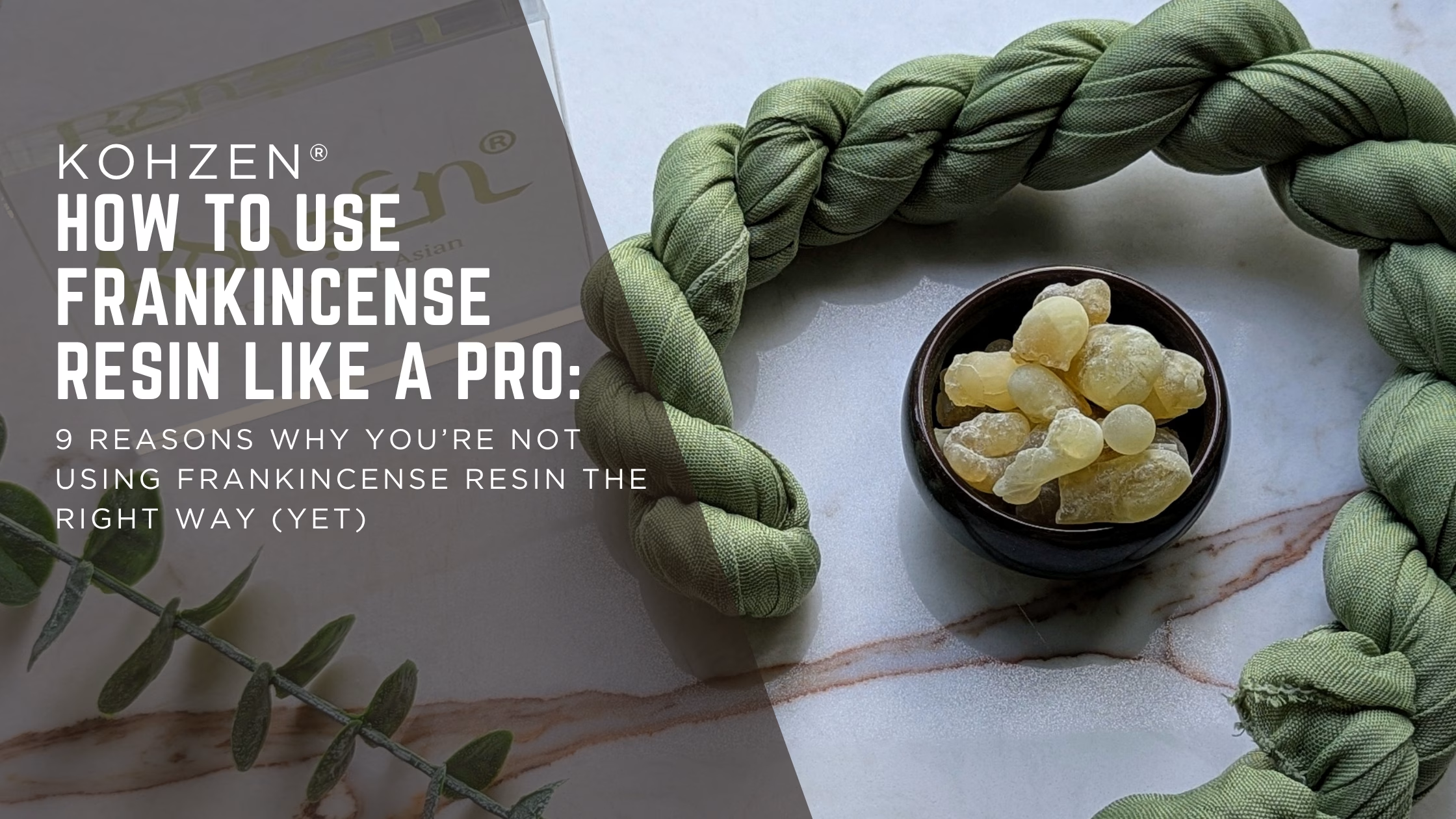
  • How to Use Frankincense Resin Like a Pro: 9 Reasons Why You’re Not Using Frankincense Resin the Right Way (Yet)

    How to Use Frankincense Resin Like a Pro: 9 Reasons Why You’re Not Using Frankincense Resin the Right Way (Yet)

    Are you a beginner or wellness enthusiast wondering how to use frankincense resin effectively? Frankincense resin has been cherished for millennia for its extraordinary fragrance and spiritual significance. Yet many people aren’t unlocking its full potential. In this guide, we’ll explore nine powerful reasons you might not be using frankincense resin the right way (yet) – and how to fix that. From traditional burning techniques to understanding its rich West Asian heritage, you’ll learn how to use frankincense resin like a pro, in a friendly, beginner-friendly way.

    1. You’re Not Using the Charcoal Method (The Traditional Way)

    One common reason people miss out on the true experience of frankincense resin is avoiding the traditional charcoal burning method. The charcoal method might seem intimidating at first, but it’s a time-honoured way to use frankincense resin and release its full aroma. Burning frankincense is a simple ritual that can transform a room’s atmosphere. By not using charcoal, you could be missing the deeply aromatic, ancient aromas frankincense is known for.

    Why Charcoal? Using a small charcoal disc as a heat source is the classic technique used for centuries across West Asia. When you place frankincense resin on hot charcoal, it smoulders and releases thick, fragrant smoke – the “right way” to get that rich scent. If you’ve tried lighting frankincense resin directly (or using an inappropriate burner), you might have gotten poor results. The charcoal method ensures the resin burns at the correct temperature, fully releasing its sacred aroma just as it was done in temples and caravanserais of old​.

    How to use frankincense resin with charcoal (step-by-step):

    1. Prepare a Heat-Proof Burner: Choose a fire-proof incense burner (a traditional censer) or a ceramic dish. Place a small layer of sand or salt at the bottom to absorb heat. Have on hand a self-igniting charcoal disc, tongs (to handle hot charcoal), and a few pieces of high-quality frankincense resin. (Tip: Never burn charcoal on a flammable surface! Use a dedicated incense burner or metal dish.)
    2. Light the Charcoal: Using the tongs, hold the charcoal disc and light its edge with a match or lighter. The disc will start to spark and glow. Once it crackles and a grey ash layer forms on top (usually after a couple of minutes), it’s ready. Place the charcoal in your burner on the sand/salt.
    3. Add a Layer of Salt (Optional Trick): Before adding the resin, some experts sprinkle a thin layer of salt over the hot charcoal. This creates a buffer so the frankincense resin doesn’t burn too fast or harshly. It helps the resin release its scent more slowly and prevents charring.
    4. Place the Frankincense Resin: Using your fingers or tweezers, place a small piece of frankincense resin (start with a pea-sized “tear”) onto the hot centre of the charcoal. In seconds, it will begin to smoulder and release billowing, mystical smoke filled with the signature frankincense aroma​. You’ll see the resin melt and bubble, releasing its oils as smoke. If you’re indoors, begin with a small piece to avoid overwhelming smoke.
    5. Enjoy the Aroma Mindfully: As the resin burns on the charcoal, it will fill the air with a sweet, citrusy, and pine-like incense smoke. Breathe deeply and savour the aroma. This is a perfect time to sit quietly or meditate, watching the wisps of sacred smoke curl through the air. Many people find that frankincense’s aroma has a calming, grounding effect on the mind and body – almost like an invitation to mindfulness.
    6. Stay Safe: Always ensure you have ventilation – keep a window slightly open so the room doesn’t get too smoky. Never leave the burning charcoal unattended, as it remains hot for a long time. When you’re done, allow the charcoal to fully cool (or extinguish it in sand/water) before disposing. Keep your resin and charcoal stored in a dry place for next time.

    By mastering this traditional method, you’ll experience frankincense resin in its most authentic form. If you’ve been avoiding it, try it now – you’ll understand why this ancient technique remains so popular. (For more details, see our in-depth guide on burning Hojari frankincense on our site complete with handy videos.)

    2. You Haven’t Tried the Tealight Burner Method (Low-Smoke Alternative)

    Another reason you might not be using frankincense resin the right way is sticking only to charcoal or thinking charcoal is the only way. In fact, there’s a gentler, modern alternative: the tealight oil burner method. If the intensity of charcoal smoke is too much for you or you want a more controlled, subtle fragrance, a tealight-based resin burner is the answer.

    The tealight resin burner (sometimes called an oil burner or frankincense stove) uses a small candle as the heat source instead of direct charcoal. This method heats the frankincense more gently, releasing fragrant vapours rather than thick smoke. It’s perfect for beginners, small spaces, or those who prefer a lighter scent while still enjoying authentic frankincense resin.

    How to use frankincense resin with a tealight burner (step-by-step):

    1. Set Up Your Tealight Burner: Use a ceramic or metal tealight resin burner – it typically has a base for a candle and a small bowl on top. Place the burner on a stable, heat-resistant surface (to protect your table from heat). Ensure the area is well-ventilated but free of strong drafts. Insert a tea-light candle in the base, but don’t light it yet.
    2. Prepare the Frankincense Resin: For this method, it helps to use smaller granules or even powder. Take a few pieces of frankincense resin and grind them into a coarse powder using a mortar and pestle (or even wrap them in cloth and gently crush with a hammer). You don’t need a super-fine powder; just break the resin into small bits. This increases the surface area and helps the resin release its aroma slowly.
    3. Add Water or Oil: Fill the top bowl of the burner with a little water or a neutral base oil (like jojoba or sweet almond oil)​. This liquid will heat up and help diffuse the resin’s scent. Using water will vaporise the resin’s essential oils into the air; using oil will create a frankincense-infused oil that also gives off aroma. (Both methods work, but never let the bowl dry out completely while the candle is lit.)
    4. Mix in the Resin: Gently sprinkle your crushed frankincense resin into the water/oil in the bowl. You can use your finger or a small spoon to stir it so it’s evenly dispersed. Don’t overload it – a pinch or two of powdered resin is enough to start. You can always add more later if the scent is too light.
    5. Light the Tealight & Warm the Resin: Now light the tealight candle and let it burn underneath the bowl. As the flame heats the water or oil, the frankincense resin will slowly start to warm and release its fragrance​. You might see a gentle wispy vapor rise, carrying the resin’s scent, rather than dense smoke. This slow-release can make your resin last much longer than on charcoal, and the aroma will be milder and more constant.
    6. Enjoy and Adjust: Sit back and enjoy the gentle aroma that fills your space. This method provides a more subtle experience – ideal for mindfulness or meditation sessions where you want the scent to linger softly in the background. If the scent is too weak, add a bit more resin or light a second tealight after the first burns out. If it’s too strong, use less resin next time or a larger bowl with more water.
    7. Stay Safe: As with any candle, never leave it unattended. Periodically check that the water/oil hasn’t all evaporated – you don’t want the resin to burn onto a dry hot bowl. The burner itself can get hot, so allow it to cool before touching or moving it. After use, you can wash out the bowl (once cooled) to remove any residue.

    Many people new to frankincense resin find this tealight method much more approachable. It produces minimal smoke (great if you’re sensitive or indoors) and lets you appreciate the scent in a calmer way. If you’ve only been using incense sticks or avoided resin due to smoke, give this method a try. It’s an easy way to use frankincense resin daily without the intensity of charcoal. (Our burning guide also covers this easy method in detail​).

    3. You’re Sticking to Incense Sticks or Oils Instead of Real Resin

    Are you using frankincense-scented incense sticks or essential oils and thinking you’ve experienced frankincense? This could be a reason you’re not using frankincense resin the right way. Many people have only ever encountered frankincense in the form of church incense, perfumed sticks, or diluted oils. While those can smell nice, they often contain other additives or are missing the depth of pure frankincense resin—unlike Kohẓen’s Real Frankincense Incense Sticks, available on Etsy.

    Experience the warm, grounded clarity of true Frankincense resin. Limited Offer: Save 25% when you buy 3 or more packs of Real Frankincense Incense Sticks at KohẓenOfficial

    Using the raw frankincense resin is a completely different experience. When you burn real resin tears, you’re getting the full spectrum of its aroma compounds – nothing beats the authenticity. Incense sticks labeled “frankincense” may only have a bit of frankincense oil or a synthetic fragrance. They won’t give you the same rich, layered scent or the traditional experience of burning resin. If you’ve been underwhelmed by a frankincense stick or oil diffuser, it’s time to switch to the real thing.

    Why resin rocks: Frankincense resin (the dried sap of the Boswellia tree) has been revered for over 5,000 years – it was once worth more than its weight in gold in ancient trade. When burned, real resin releases a complex aroma: balsamic and woody with citrus top notes, something you just can’t fully bottle in an oil or stick. By sticking to convenient alternatives, you might be missing out on the profound calming and spiritual atmosphere that only burning resin provides.

    If you’re a beginner, it might seem easier to light an incense stick or use an essential oil diffuser. But part of learning how to use frankincense resin is enjoying the ritual: lighting the charcoal or candle, watching the resin smoke curl, and inhaling that pure scent. It engages you more than simply lighting a stick. So don’t be afraid to get some real frankincense resin and try the methods in this guide. You’ll likely find the experience far more rewarding and “right” than any pre-made incense product.

    (Not sure where to start? High-quality resin, like Hojari frankincense from Oman, is a great choice – more on that below. And if you need a refresher on resin-burning basics, check out our internal guide​ for help.)

    4. You’re Using Low-Quality Frankincense (Quality Matters!)

    Another reason you might not be getting the most out of frankincense resin: the quality of the resin itself. Not all frankincense is equal. If you’ve bought very cheap resin or old stock of unknown origin, it may smell faint, musty, or char unpleasantly. Using high-grade frankincense resin is key to using it the right way – the aroma and benefits will be much more pronounced.

    Frankincense comes in different grades and even different species (such as Boswellia sacra, B. carterii, etc.). The most famous high-grade variety is Hojari frankincense from Oman’s Dhofar region, often considered the finest in the world​. Within Hojari resin, there are further grades: for example, Royal Green Hojari and Superior White Hojari are top tiers, prized for their large, translucent tears and sweet citrus aroma. Lower grades might be brown or yellowish pieces that are more common and used for everyday burning.

    If you’re not using a good resin, you might think frankincense isn’t that great – when in fact, a premium resin can be a totally different experience. High-grade resin burns cleaner and more fragrantly. For example, Royal Green Hojari has a bright, almost lime-like sweet scent with undertones of pine and honey, while lower grades might just smell one-dimensional or slightly bitter when burnt. One wellness blogger notes that Hojari frankincense is known for its unmatched purity and citrusy top notes, often reserved for royal use in Oman. In other words, it’s the crème de la crème of frankincense.

    So, if you’ve been using frankincense resin but not loving it, consider that it might be the resin quality at fault, not you. Always buy from a reputable source (more on ethical sourcing later) and look for fresh, light-coloured resin tears that have a strong smell even unburnt (you can usually catch a hint by sniffing the jar). Using high-quality resin will dramatically improve your experience – the smoke will be more aromatic, and even the after-scent in the room will be pleasant rather than acrid.

    Investing a little more in quality frankincense is absolutely worth it for a better aroma and greater wellness benefits. You’ll find it produces a more soothing environment, which is exactly what you want when using frankincense for mindfulness or spiritual practice.

    5. You’re Rushing the Burning Process (Patience Makes Perfect)

    Burning frankincense resin is a ritual that rewards patience. If you’ve tried it and found it didn’t work well, you might have rushed through the steps. Perhaps you didn’t let the charcoal fully heat up, or you dumped a big chunk of resin on before the coal was ready, resulting in a quick char and bitter smoke. Using frankincense resin the right way means taking your time with the process.

    Common mistakes include: not waiting for the charcoal to develop that grey-white ash layer (which indicates it’s hot throughout), using too much resin at once, or placing the resin directly on a flame. These can all lead to a subpar experience. Frankincense that’s burned too fast can smell harsh or burn up before you get much aroma. Remember, a small piece of resin on properly heated charcoal will release scent for several minutes. If you toss a large piece on an insufficiently heated coal, it may just melt and smoke in a thick cloud, then scorch. The result? Wasted resin and a strong burnt smell instead of the heavenly fragrance you expected.

    Slow down and do it right: think of burning frankincense as a form of mindfulness practice itself. Take a moment to prepare your space – have everything ready (charcoal, resin, burner, maybe some sand). Light the charcoal and wait – use those 2-3 minutes while it heats to breathe, set an intention, or read a calming quote.

    Once the coal is ready (glowing red with that light ash coating), add just a small pinch of resin. You can always add more later. Enjoy how gradually the resin starts to smoulder, and resist the urge to stir or move it. If it seems to burn too quickly, next time use the salt-on-charcoal trick we mentioned in the charcoal method above to moderate the heat​.

    Also, consider the environment: close windows to avoid gusts (which can cause the charcoal to burn too fast) but keep a window cracked for ventilation. If outdoors, ensure the wind isn’t causing the resin to flare up. Essentially, treat the process with care and attention. When you don’t rush, the frankincense will last longer and smell better, filling your space with a gentle continuous aroma rather than a short-lived cloud of smoke.

    In short, patience is part of the how to use frankincense resin equation. The resin itself takes time to release all its goodness. When you honour that, you transform a simple act of burning incense into a soothing ritual. The right way to use frankincense resin is also the slow way – and that’s a unique feature.

    6. You’re Neglecting Safety and Proper Tools

    Using frankincense resin properly isn’t just about the resin and method – it’s also about safety and having the right equipment. If you’ve ever had a mishap (like a cracked dish or too much smoke), it might be because proper precautions weren’t taken. Don’t worry, it’s easy to burn resin safely; you just need to pay attention to a few details.

    The right tools: Make sure you have a dedicated incense burner or censer that can withstand high heat. A common mistake is to grab a normal plate or bowl not meant for charcoal – which can lead to burnt surfaces or even accidents. Traditional burners are usually metal or ceramic and often you put sand or foil inside to insulate.

    If you don’t have one, you can use an old ceramic/glass dish with sand in it, but never something that could melt or scorch. Tongs are a must for handling charcoal discs; don’t attempt to pick up lit charcoal with your fingers (obvious, but worth stating!). Also, keep some kitchen tongs or a metal spoon for placing or removing resin if needed.

    Ventilation and surroundings: Always burn frankincense in a well-ventilated area. It’s easy to get excited and light up a bunch of resin in a small closed room – only to find the smoke overwhelming. Crack a window open, or burn near a door where air can flow. This ensures you enjoy the fragrance without feeling smoked out. Plus, a little airflow helps the resin smoke disperse more evenly. On the flip side, avoid strong drafts that could knock over your burner or direct smoke alarm sensors to go off unexpectedly.

    Never leave it unattended: It might sound like a no-brainer, but once you start enjoying frankincense, you might get so relaxed you forget it’s a burning coal! Treat it like a candle or stove – never leave the room with charcoal still burning. If you need to leave, extinguish it (you can carefully transfer the coal to a metal bowl of water or sand to put it out faster, or simply let it burn out while you watch). Safety first, always.

    Lastly, consider using a heat-resistant mat under your burner if the surface below is delicate. And keep resin and charcoal out of reach of children or pets. Little nuggets of resin might look like candy to a child or pet, and the charcoal disc could be knocked over by a curious cat. So ensure your setup is stable and supervised.

    By not neglecting these safety measures and tools, you’ll ensure every frankincense session is pleasant and worry-free. The right way to use frankincense resin is also the safe way – a little preparation goes a long way to give you peace of mind, allowing you to fully immerse in the aromatic experience.

    7. You’re Not Making It a Mindful Ritual

    One of the most powerful aspects of using frankincense resin – and one reason it’s been used for thousands of years – is the mindful ritual around it. If you’re just burning it without intention (for example, lighting it while distracted or on the go), you’re missing out on a huge part of the experience. Frankincense has long been associated with meditation, prayer, and deep relaxation​​. The act of burning it can itself be a form of mindfulness.

    Consider incorporating frankincense resin into a daily or weekly ritual for wellness. For instance, you could make it a practice to burn a small piece before your meditation or yoga session. As you light the charcoal or candle, set an intention (such as letting go of stress, or inviting calm). As the resin smokes, focus on your breath and the scent. The rich earthy-sweet aroma of frankincense can help you feel calm and grounded, almost immediately signalling to your brain that it’s time to relax. In fact, studies have indicated that aromatic resins like frankincense may help reduce cortisol (the stress hormone) levels, which supports why people feel so tranquil when using it.

    If you’ve been treating frankincense just as a room fragrance, try shifting your approach to treat it as a mindful ritual. Even the simple steps – choosing a resin tear, lighting the coal, watching the smoke – can be done slowly and intentionally. This process can become a cherished routine that reduces anxiety and enhances mental clarity. Frankincense for mindfulness is a natural partnership: many users report that the scent helps them enter a meditative state more easily. It’s been used in monasteries, temples, and mosques for this very reason.

    What’s more, by making it a ritual, you give yourself permission to take a break. In our busy lives, the few minutes spent burning frankincense can become a mini-retreat. The aroma builds gently, filling your space and creating a sanctuary-like atmosphere. Perhaps play some soft music or enjoy silence as you do this. You might find that over time, just the smell of frankincense can instantly bring your mind into a calmer state, because you’ve trained yourself to associate it with relaxation and spiritual practice.

    So, if you haven’t been tapping into the mindfulness benefits of frankincense, you’re not using it to its full potential. Next time you use your resin, approach it as a slow, sacred ritual rather than a quick perfuming task. You’ll likely notice a deeper appreciation for the practice – and for the sense of peace it can bring into your life.

    8. You Haven’t Explored Its Rich History (West Asian Heritage)

    Frankincense isn’t just another wellness trend – it’s a substance with a rich history and cultural heritage, especially rooted in West Asia. If you haven’t explored the background of frankincense, you might not fully appreciate why using it in the traditional ways matters. Understanding its story can actually enhance how you use it, making the experience more meaningful.

    Frankincense resin has been traded and treasured for thousands of years. In fact, ancient caravans once crossed the Arabian deserts (in today’s Oman, Yemen, and beyond) carrying sacks of frankincense as valuable cargo. It was burned in temples from Babylon and Egypt to Greece and Rome to honour the gods and purify spaces​. In West Asia – the region often called the Middle East – frankincense was at the heart of commerce and spiritual life. The Dhofar region of Oman, in particular, is famed as the source of the finest frankincense (Hojari) and has a frankincense tree culture going back millennia.

    By learning about this history, you begin to see that when you burn frankincense resin, you’re participating in a very old human practice. For example, in Oman today, burning frankincense (locally known as luban) is not only for rituals but also a daily act of hospitality. It’s common for Omanis to light frankincense in their homes to welcome guests, and even pass the fragrant smoke over clothing and hair as a respectful gesture. This cultural context reminds us that frankincense is about connection – connecting people, and connecting the earthly to the divine through its smoke.

    West Asia’s influence is woven through frankincense usage. The resin was a key part of the incense trade routes that linked Arabia with the Levant (Eastern Mediterranean)​. Places like the ancient city of Gaza were bustling hubs where frankincense from South Arabia was shipped to Europe​. Knowing this, you might feel a deeper connection when you burn a piece of resin, imagining how its scent has been enjoyed in desert tents, churches, and monasteries across continents for ages.

    So why does this matter for you using it the right way? Because appreciation enriches experience. When you understand the heritage, you might treat the resin with a bit more reverence and curiosity. You might experiment with traditional methods (like we’ve outlined) because that’s how it was meant to be used. You could even incorporate historical tidbits into your practice – for instance, recalling that frankincense was one of the gifts of the Three Wise Men in the Nativity story, symbolising divinity, as you watch the smoke rise​.

    In essence, exploring frankincense’s West Asian roots and history will give you a greater respect for this aromatic resin. It transforms the act of burning it from a simple aromatic exercise into a cultural experience. By not knowing the history, you’re missing context that could make using frankincense resin far more profound. So do a little reading (our About page has a detailed history section), and let that knowledge deepen your next burn. You’re not just making your room smell nice – you’re carrying on an ancient tradition.

    9. You’re Not Choosing Ethically Sourced Premium Resin (Try 2025 Kohẓen Hojari)

    Finally, even if you’ve mastered the burning techniques and know the history, using frankincense resin the right way also means being mindful of where it comes from. Ethical sourcing and premium quality go hand in hand. If you’re buying any old frankincense from unknown suppliers, you might unknowingly support unsustainable practices or low wages for harvesters. The right way to enjoy this gift of nature is to choose ethically sourced, high-grade resin – this ensures purity of the product and fairness to the communities who produce it​.

    Kohẓen (our brand) is Proudly West Asian and committed to quality frankincense and ethical sourcing​. We directly source from Omani suppliers who harvest frankincense resin in traditional, sustainable ways – respecting both the trees and the local communities. By choosing premium Hojari frankincense, you’re not only getting the best aroma, you’re also supporting an age-old livelihood and helping preserve frankincense groves for future generations.

    Spotlight: Premium Hojari Frankincense Resin (Oman) – If you haven’t treated yourself to top-grade frankincense yet, now is the time. Our batches of Premium Hojari resin comes straight from Dhofar province in Oman, a UNESCO site dubbed the Land of Frankincense famed for producing the world’s finest resin. This selection includes a mix of Royal Green and Pure White Hojari tears (A* grade), which are the most sought-after grades of Boswellia sacra resin.

    • Aroma Profile: Bright and uplifting citrus notes at first, followed by deep amber, pine, and slightly honey-like sweetness. Royal Green Hojari is known for an especially exquisite scent – often described as heavenly. When burned, expect a clean, pure smoke with no sharpness, just smooth sacred incense that lingers pleasantly.
    • Origin: Harvested in Dhofar, Oman, from wild Boswellia sacra trees. These trees have been cared for by generational harvesters. The resin is collected in the dry season when its fragrance components are most concentrated. Oman’s frankincense has a pedigree dating back to the Queen of Sheba and beyond – and you’ll be experiencing that legendary quality with this resin.
    • Ethical Commitment: By purchasing this resin, you are supporting ethical trade.
    • ensures our suppliers use sustainable tapping methods (so trees are not harmed or over-tapped) and fair labour practices. We also donate 10% of every purchase to humanitarian aid in West Asia’s communities​, supporting organisations like the Red Crescent. So your enjoyment of frankincense also contributes to a good cause – truly wellness for you and for others.
    • Packaging: Our Premium Hojari comes simply and thoughtfully packaged. We use minimalistic, eco-friendly packaging that keeps the resin fresh and is plastic-free. The resin is stored in a sealed envelope within a hessian pouch to protect those precious aromas. It’s ready to be gifted too – we designed it to make a great conscious gift for wellness lovers. No excessive frills, just the authentic product in a lovely, mindful presentation.

    When you choose high-quality, ethically sourced resin like Kohẓen’s, you elevate your entire frankincense experience. The scent is noticeably richer and cleaner, and you can feel good about its origins. It’s the right way to use frankincense resin in the modern world – with respect for the tradition, the environment, and the people behind it.

    FAQs

    Q: How to use frankincense resin without charcoal?

    A: How to use frankincense resin without charcoal: place a small piece on a mica plate (or resin burner) over a candle, or use an electric incense burner. Both release aroma with minimal smoke.

    Q: Can you melt frankincense resin?

    A: How to use frankincense resin correctly means knowing it softens and releases aromatic oils when heated; it doesn’t melt like wax.

    Q: What’s the best way to store frankincense resin?

    A: How to use frankincense resin long-term: store in airtight glass jars, cool and away from light/humidity, to preserve aroma and prevent stickiness.

    Q: How long does a piece of resin last?

    A: How to use frankincense resin efficiently: a pea-sized piece lasts ~15–20 minutes on charcoal; on an electric or tealight burner it diffuses more gently and can last longer.

    Ready to experience the difference? We invite you to explore Kohẓen’s offerings on our Etsy shop. Check out KohzenOfficial on Etsy where you can find our Premium Hojari Frankincense Resin (Royal Green & Pure White). Treat yourself to the crown jewel of frankincense and discover why quality and ethics matter. With the tips in this guide and the right resin in hand, you’ll be well on your way to burning frankincense resin the right way – a truly enriching wellness ritual.