Frankincense oil is the aromatic oil extracted from the resin (gum) of Boswellia trees. For thousands of years, people have prized frankincense (also called olibanum or luban) for its rich, incense-like scent and cultural significance kohzen.combritannica.com. In many traditions frankincense is valued as a sacred aroma – Omanis call it the “tears of the gods” and burn it to symbolise purity, prayer and a link to the divine kohzen.com. Today, people are drawn to frankincense oil for its woody-citrus fragrance and its calming, grounding presence. Whether used in home rituals, aromatherapy, or as a natural perfume, a high-quality frankincense oil can evoke centuries of heritage and create a soothing atmosphere kohzen.combritannica.com.
In this guide, we’ll explain the different types of frankincense oils (infused, essential, fragrance), why traditional resin-infused oils are special, and exactly what to look for when choosing a safe, pure frankincense oil. We’ll also cover how to use it mindfully and safely.
If you’re completely new to resin and want the bigger picture, start with our Ultimate Guide to Frankincense, where we explore origins, types, and everyday uses in more depth.
Infused, Essential, and Fragrance Oils: What’s the Difference?
When shopping for frankincense oil, you may see terms like infused oil, essential oil, or fragrance oil. These are very different products:
Essential Oil: This is the volatile essence of frankincense, obtained by steam distilling the resin. It is highly concentrated and potent. In distillation, steam forces the resin’s fragrant compounds into vapor, which are then collected as oil droplets. Only a very small amount is extracted: e.g. it can take dozens of pounds of resin to produce a single ounce of essential oilemsherbals.com. The resulting essential oil is colorless or pale yellow and is extremely aromatic and concentrated. Essential oils carry the bright, top notes of the resin’s aroma (often light and piney for frankincense), but because of the heat and process, they may lack some of the heavier, deeper aroma compounds etsy.com. While essential oils are prized in aromatherapy, they must be used with care (see Safety below).
Fragrance Oil: Often just called “frankincense fragrance,” this is not a true plant product. Fragrance oils are man-made scent blends designed for strong, long-lasting smell. They may contain some natural extracts, but usually they include synthetic chemicals to mimic frankincense aroma. Fragrance oils have no therapeutic or botanical properties, only the added scent vinevida.com. They are engineered to hold up in candles or soap and are often cheaper than natural oils. For example, one aromatherapy guide notes that “fragrance oils… have no therapeutic benefits beyond their scent” vinevida.com. If you want a genuine frankincense oil experience (for aroma and any subtle natural qualities), avoid fragrance oils.
In summary, infused frankincense oil is made from the actual resin in carrier oil, essential oil is the volatile extract of that resin, and fragrance oil is a synthetic aroma. Each has its place: infused oils are gentle, carry the full character of the resin etsy.com; essential oils are highly concentrated and aromatic; fragrance oils serve perfumery. A beginner looking for authentic frankincense should focus on infused or pure essential oils, not fragrance blends.
Modern distillation is convenient, but there are benefits to the old-fashioned infusion method:
Full Spectrum Aroma: By steeping the whole resin in oil, an infusion captures more of the frankincense’s depth and warmth. Kohzen explains that its 6-week infusion “allows the fragrant compounds of the resin to release gradually into the oil, capturing depth, warmth, and complexity that distilled essential oils alone cannot provide” etsy.com. In other words, infusion oil retains heavier, woody notes that might be lost in distillation etsy.com. The result is a rich, multi-layered scent – often described as warm, citrusy, and woody for Omani Hojari resin etsy.com.
Gentler and Holistic: Infused oils mix the essence of the resin with a nourishing carrier oil (like grapeseed). This means they are ready for safe topical use (with even slight dilution), whereas essential oils often need further dilution. Because they are less concentrated, many people find infused oils more skin-friendly and gentle. An herbalist notes that infusions “utilise all the plant’s benefits… in a liquid form that you can now apply topically, safely” emsherbals.com. You don’t need to be a chemistry expert to enjoy a resin-infused oil – it’s simply warm, naturally scented oil.
Traditional Method & Integrity: Infusion mirrors how frankincense was historically used. Boswellia sap (“tears”) was often soaked or warmed in oil in old rituals. By preserving the whole resin pieces, infusion honors the tree’s true aroma. Kohzen’s infusion is labeled “Whole-Resin Infusion,” highlighting that the powder of Royal Hojari frankincense steeped in grapeseed oil yields a scent “ideal for home fragrance, meditation, and ritual settings” etsy.com. This method avoids chemical solvents or high heat that might strip certain compounds. As one seller notes, unlike steam-distilled oils, a resin infusion keeps the resin whole, allowing the oil to absorb a “broader spectrum of frankincense character over time” etsy.com.
In short, a traditional frankincense-infused oil connects you more directly to the plant’s heritage. It provides a richly authentic scent and a gentler oil base. (For example, Kohzen’s infusion is golden and grounded – perfect for slow, mindful use etsy.com. If you prefer a very light scent, you might still like a distilled essential oil. Both are natural choices, but infusion offers the full botanical experience.)
Curious about the symbolism behind this scent? In The Spiritual Meaning of Frankincense, we explore how communities across West Asia and beyond understand its role in prayer, purification, and protection.
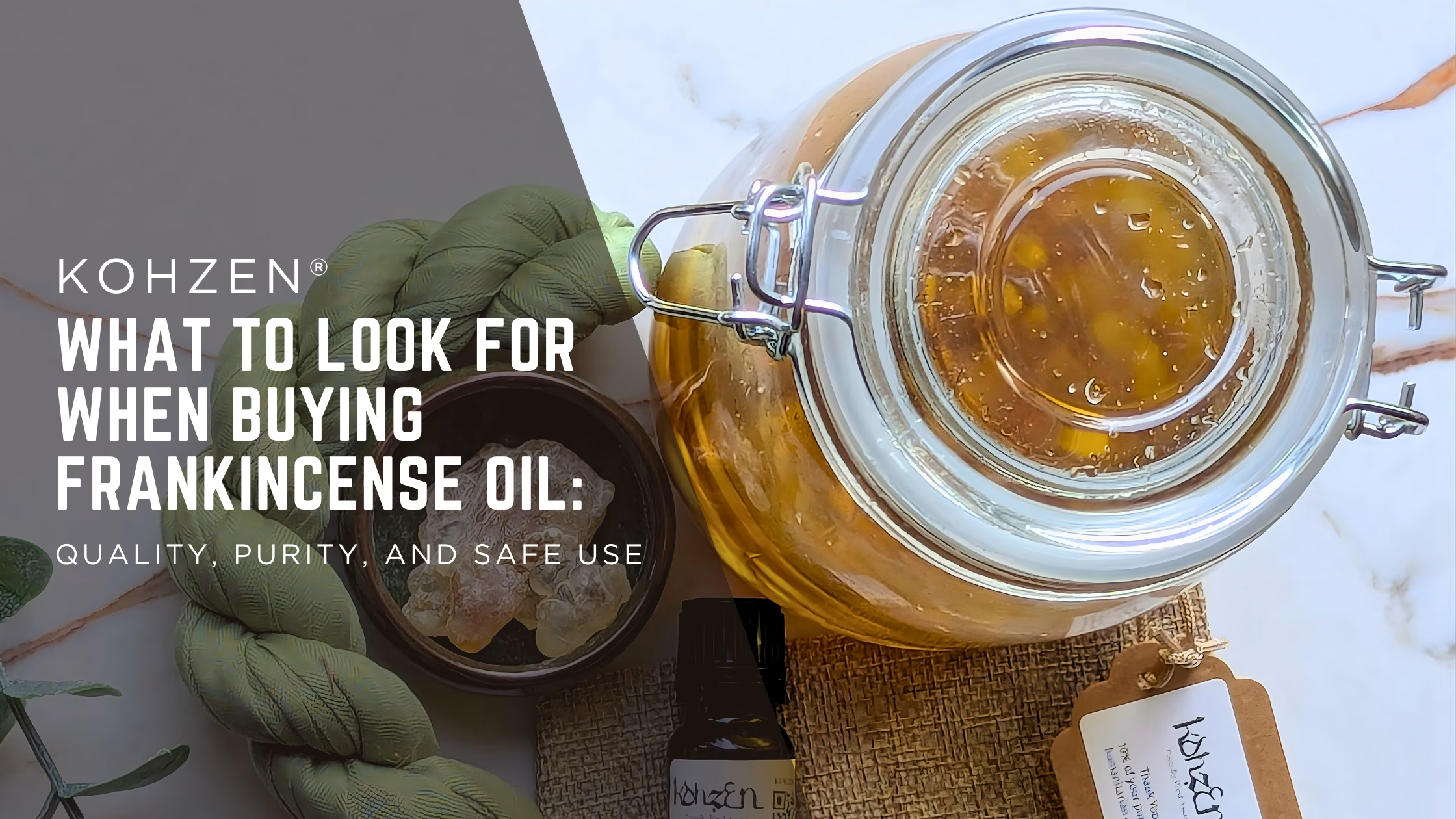
What to Look for When Buying Frankincense Oil
When you’re ready to purchase frankincense oil, here are key factors to check:
Purity of the Oil: The label should clearly say “100% frankincense oil” (or “infused with frankincense resin,” etc.), not just a vague “scent.” Avoid products that mix frankincense with other essential oils (unless you want a blend), and never buy something labeled as “frankincense fragrance oil” if you want the real thing. Genuine frankincense oil will have Boswellia resin or Boswellia sacra listed. Some brands specify the species or grade (e.g. Boswellia sacra from Oman, “Hojari grade”). This matters: Boswellia sacra (Omani frankincense) is highly valued and has a distinct aroma, whereas cheaper Boswellia carterii (Somali frankincense) smells different. Ideally, the label should mention the variety or origin of the resin. Kohzen’s products, for example, emphasise “Royal Green Hojari frankincense” and even note the harvest year, showing transparency of source etsy.com.
Ingredients List: Even if it’s an infused oil, check the ingredients. A pure infused oil will have something like “frankincense resin (Boswellia sacra) and grapeseed oil.” No other fillers or “aroma” additives should be listed. If it’s an essential oil, ideally it should say “100% steam-distilled Boswellia (species) essential oil.” If anything else is in the bottle (synthetic stabilisers, fillers, colorants), it’s not pure. Good companies will list exactly what’s in the bottle. As a rule, fewer ingredients is better, so you can trust what you’re getting.
Packaging: Frankincense oil, like all plant oils, is light- and heat-sensitive. Look for oil sold in dark amber glass bottles (often with droppers or roller-ball tops). Dark glass blocks UV rays and helps preserve the oil’s quality. Also, the cap or dropper should seal well. Kohzen, for example, seals each bottle with a special logo seal “as a mark of our commitment to purity” etsy.com. Seals, tamper-evident caps, and lot numbers show attention to quality. Avoid oils sold in clear plastic or without proper labeling. Remember: cheap retail stores sometimes repurpose containers; true essential or infused oils come in properly labeled containers.
Transparency and Sourcing: The seller should be open about where and how their frankincense is sourced. Best-case: the company harvests Boswellia trees sustainably and can say from which region and year the resin came. Trusted brands often share details – for example, Kohzen notes that their resin is wild-harvested in Oman’s Dhofar region, home of the UNESCO “Land of Frankincense” etsy.com. Look for information like “ethically wild-harvested” or “fair trade” if available. Transparency can also mean testing: some sellers provide a certificate of analysis (GC/MS) showing the oil’s composition, which proves purity. If a product page or seller FAQ shows testing results, that’s a good sign. If the brand hides details or just claims “premium” without backing, be cautious.
Price and Brand Reputation: Quality frankincense oil is not extremely cheap. If a “100% pure” frankincense oil is priced near $5-$10 for a large bottle, that’s too good to be true. Pure essential oil is expensive to produce. Compare prices and reviews from multiple sources. Established brands with good reviews and clear practices are safer bets. Kohzen, for instance, are a company specialising in authentic Omani frankincense products (you can see their mission and product details on our About page.
In summary, good frankincense oil is clear (or light golden if infused), comes in a proper dark bottle, lists only natural ingredients (Boswellia and a carrier), and is made by a transparent seller who tells you the origin. Check for any vague language: if it doesn’t explicitly say “pure Boswellia oil,” ask questions or look elsewhere. When in doubt, the combination of an honest ingredients list, secure packaging, and a reasonable price from a reputable source is the safest bet for quality.
Frankincense oil has deep roots in cultural rituals and is still used today in mindful ways. Here are some gentle, traditional uses:
Aromatherapy and Diffusion: Perhaps the simplest way is to add a few drops of frankincense oil to an essential oil diffuser or a pot of simmering water. The warm, woodsy aroma can fill the room. In many faiths, frankincense incense is burned to create a sacred atmosphere kohzen.combritannica.com. You can emulate this by gently diffusing frankincense oil during meditation, yoga, prayer, or quiet reflection. Its soothing smell can help you breathe deeply and focus your mind. (For example, in Oman and other Arabian cultures, frankincense is often burned to “purify the air and heart” and welcome guests kohzen.com. Diffusing oil is a modern way to honor that tradition at home.)
Personal Fragrance or Anointing: Once diluted with a carrier oil (see Safety below), frankincense oil can be applied to pulse points or the back of the neck like a natural perfume. Its gentle floral-woody aroma can be grounding. In spiritual or energy practices, frankincense might be used to anoint the body before meditation or to reinforce intention. Remember: always dilute first, and do a patch test for skin sensitivity.
Mindful Massage or Body Oil: Many people add frankincense-infused oil to massage blends for a calming effect. Because infusion oils are already mixed with a carrier, you can often use them directly for massage. For essential oil, mix a few drops with a carrier like jojoba or sweet almond oil. Massage onto the hands, feet, or temples for relaxation (avoiding mucous membranes). This can become a ritual of self-care – the act of slow, mindful massage combined with the scent can help relieve tension. (Historically, Boswellia resin was used in topical healing balms in Eastern medicine britannica.com, but today we use it more for its comforting scent and the skin’s nourishment from the carrier oil.)
Ritual Cleansing and Calm: Apart from direct use on body, you can incorporate frankincense oil into home rituals. Some people add a few drops to their bathwater (never add essential oil directly, only mixed in bath salts or lotion to avoid irritation). Others anoint candles or incense sticks by wiping them with a bit of oil to enhance the spiritual atmosphere. Because frankincense has long been a symbol of prayer and purification in churches and temples kohzen.combritannica.com, even lighting a candle with a drop of frankincense oil nearby can feel meaningful.
DIY Products: Frankincense oil is sometimes used in homemade aromatherapy products – for example, in a homemade room spray (mixed with water and a bit of alcohol to disperse) or in a linen spray. It’s also an ingredient in some natural skincare recipes (always heavily diluted, since it’s potent). Just remember any use should be mild and mindful. For beginners, it’s best to start with very simple uses: just breathing the scent or applying a drop of diluted oil on the skin.
Traditional Note: In many cultures, frankincense was used in special practices but not as a medical cure. For example, Kohzen’s blog explains that frankincense water (an infusion) was traditionally sipped as part of rituals for relaxation and hospitality kohzen.com, not as a medicine. Modern uses follow this pattern: frankincense oil is primarily about scent, ritual, and atmosphere. It can support mindfulness (for example, using it in a calming tea ritual or a meditation space) without claiming to cure ailments. Always enjoy frankincense oil in the spirit of these traditional practices – as a fragrant companion to your self-care and intentions.
Frankincense oil is natural, but as with any concentrated plant oil, safe handling is important:
External Use Only: Frankincense oil is meant for smelling or topical use (diluted). Do not ingest essential frankincense oil, and be cautious even with infusions – they are not a beverage like frankincense water. Keep oils out of reach of children and pets. Label warnings like “for external use only” are there for a reason.
Dilute Before Applying to Skin: Pure essential oils are very strong and can irritate skin if undiluted emsherbals.com. Even infused oils (which are already milder) should be used sparingly. A common dilution is 1–2% (for example, 1 drop of frankincense essential oil per teaspoon of carrier oil). Good carrier oils include jojoba, sweet almond, grapeseed, or coconut oil. Always do a patch test: apply a small amount of the diluted oil to your forearm or wrist and wait 24 hours to check for any reaction. If you notice redness or irritation, stop using it.
Avoid Sensitive Areas: Do not put frankincense oil near your eyes, inner ears, or on broken skin. After using it, wash your hands so you don’t accidentally touch your face. If you’re pregnant, nursing, or have a serious medical condition, consult a healthcare professional before using any essential oils. When in doubt, treat frankincense oil with respect as you would any potent natural product.
Shelf Life and Storage: Store your frankincense oil in a cool, dark place – for example, a cabinet away from heat or sunlight. The dark amber glass bottles help protect the oil. When properly stored, frankincense oil can remain good for a long time. Aromatherapy sources suggest most essential oils last at least 1–3 years. You can even refrigerate oils if you use them slowly. Over time, oils do oxidise: an expired bottle may smell harsh or look cloudy. To be safe, label your oil with the purchase date and try to use it within a couple of years.
Other Precautions: Because oil is flammable, keep it away from open flames or high heat sources. Use oil-infused candles or diffusers according to their instructions and in a well-ventilated area. Never heat oils near an open flame. Finally, always purchase enough oil to meet your needs over a year or two, rather than buying in huge bulk – fresher is always better.
By following these guidelines, you can safely enjoy frankincense oil’s wonderful scent and ambiance for as long as it lasts.
For a gentle, resin-based oil that’s been traditionally infused over weeks rather than rushed, take a look at the Royal Green Hojari Frankincense Infusion Oil in the Kohzen Etsy shop.
Frequently Asked Questions
Q: What is frankincense oil and why is it popular?
Frankincense oil comes from the resin of the Boswellia tree. It’s popular for its warm, woody-citrus aroma and its rich history in spiritual and cultural traditions. People use it for its fragrant scent in incense, aromatherapy, and relaxation practices. It’s often associated with purification and meditation due to its long use in religious rituals.
Q: How do infused, essential, and fragrance frankincense oils differ?
Infused oil is made by soaking actual frankincense resin in a carrier oil, capturing the resin’s gentle aroma and plant compounds. Essential oil is the concentrated steam-distilled extract of the resin – very potent, clear, and aromatic. Fragrance oil is a man-made scent (often synthetic) that only smells like frankincense but has no natural plant components. Infused and essential oils are true plant products; fragrance oils are artificial.
Q: What should I look for to ensure my frankincense oil is pure and high-quality?
Check that the oil is 100% frankincense (Boswellia) with no additives. The ingredients list should say frankincense resin or essential oil plus the carrier (if infused). Look for proper labeling: dark glass bottles, lot number, country of origin, and any quality seals. Verify the source – Oman’s Boswellia sacra (Hojari) is a prized species. Don’t be fooled by “frankincense fragrance” or cheap blends. A reputable brand will be transparent about sourcing and production.
Q: How can I safely use frankincense oil?
Always dilute frankincense essential oil in a carrier before applying to skin, and do a patch test first. It’s meant for external use only, not ingestion. You can inhale it via diffusion, add a drop to a bath (mixed with bath salts or milk to disperse), or use it in massage (mixed with a carrier oil). Keep it out of your eyes and off sensitive skin. If you experience any irritation or have health concerns (pregnancy, pets, etc.), consult a professional before use.
Q: How should I store frankincense oil and how long does it last?
Store the bottle tightly closed in a cool, dark place. Kept properly, frankincense oil can last at least 1–3 years. Refrigeration can extend its life. Over time, the aroma may weaken or change. If the oil becomes thick, cloudy, or smells off, it’s best to replace it. It’s a good idea to write the purchase date on the bottle and use it within 1–2 years for maximum freshness.
Q: Can I use frankincense oil on my skin or in my skincare routine?
Yes, but with care. Always dilute frankincense essential oil (a few drops per teaspoon of a carrier oil) before applying to the skin. Some people apply it to pulse points or trouble areas for its soothing scent. Because frankincense infused oil is already mixed with a carrier, it can often be used directly for massage or as a gentle facial oil (patch test first!). Avoid broken skin, and if you have sensitive skin, stick to low dilution. Remember, frankincense oil is more for fragrance and mindfulness than for “treating” anything.
Frankincense and myrrh have been cherished for millennia as sacred aromatics at the heart of spiritual life. Across ancient Egypt, Mesopotamia, the Arabian Peninsula, the Greco-Roman world, and early Christianity, these fragrant resins played pivotal roles in ritual and religion. In fact, as far back as Egypt’s Old Kingdom (c. 2500 BCE), temple reliefs depict pharaohs offering incense to the gods. Archaeologists have found traces of frankincense resin in pharaonic tombs like Tutankhamun’s, silent evidence of its ritual use to sanctify the dead. From temple altars to palace ceremonies, frankincense and myrrh spiritual uses were remarkably widespread.
These “tears of the gods,” as ancients poetically called them, were burned, buried, and applied in ways meant to bridge the human and the divine. In this in-depth exploration, we take an anthropological and historical journey through seven major spiritual uses of frankincense and myrrh – revealing how these substances’ sacred power was expressed across different civilizations.
(Before we dive in, you can learn more about our mission at Kohẓen on our About page, or explore related topics on our blog and in our Ultimate Guide to Frankincense.)
1. Sacred Temple Offerings: Fragrant Gifts to the Gods
Across the ancient world, frankincense and myrrh were quintessential offerings in temples – their smoke seen as a sacred conduit between mortals and deities. In ancient Egypt, priests burned frankincense at dawn and myrrh at dusk before temple statues of gods. Tomb and temple inscriptions dating over 4,500 years ago show pharaohs presenting cones of incense to gods like Ra and Osiris. The Egyptians believed the fragrant smoke purified the air and delighted the gods, creating a blessed atmosphere for ritual.
In Mesopotamia, similarly, incense was part of daily devotions: Babylonian and Assyrian priests burned imported aromatics on their ziggurat altars to appease the pantheon. A Mesopotamian wisdom text even proclaims that “reverence begets favor” and incense offerings earn divine approval. This ritual of burning incense was so universal that stone altars and incense burners have been found across the Near East. In the incense-rich kingdoms of South Arabia (modern Yemen/Oman), temples housed carved limestone burners inscribed with the names of different aromatic resins – evidence that multiple kinds of incense were offered to the gods. Archaeologists note that from the 5th century BCE to the 1st century CE, such cuboid incense altars were popular in Arabian and Levantine temples.
Not only did incense please the gods; it symbolized prayer itself. The rising smoke was often interpreted as a visible prayer carrying wishes to heaven. Greek and Roman pagans adopted this practice enthusiastically. In the Greco-Roman world, no sacrifice was complete without a handful of frankincense thrown onto the altar fire. The fragrance served a practical purpose – masking the odor of animal sacrifice – but also a spiritual one: to honor the deity with a “noble” scent and smoke offering.
The Roman author Pliny the Elder noted that frankincense was burned at nearly every public temple and state occasion as part of the pax deorum (“peace of the gods”), reflecting the belief that Rome’s prosperity depended on keeping the gods pleased. From humble household shrines to the grand temples of Jupiter or Zeus, incense was the aromatic language of worship. As one historian aptly put it, frankincense in particular became a “technology of communication, a medium for mortals to speak with the gods” – its sacred smoke blurring the line between the material world and the spiritual realm.
2. Funerary Rites and Embalming: Scenting the Journey to the Afterlife
Frankincense and myrrh also held a sacred role in death rituals – employed to honor the dead, preserve the body, and guide the soul’s passage to the afterlife. Nowhere was this more evident than in ancient Egypt, where myrrh and frankincense were indispensable in mummification and burial ceremonies. Egyptian embalmers incorporated these resins into their mysterious recipes for preserving flesh. Modern chemical analyses of mummification balms have detected ingredients like frankincense, myrrh, elemi and dammar resins in New Kingdom and Late Period mummies.
The antimicrobial properties of these substances helped slow decay, while their rich perfume masked odors – a practical benefit noted by Egyptian sources. But beyond practicality, the Egyptians attached deep spiritual meaning to these aromatics. Myrrh, with its blood-like red tincture and antiseptic quality, was associated with the lifeblood and rebirth. Frankincense’s burning smoke, often called the “scent of eternity,” was thought to purify the soul.
During funerals and the 70-day mummification process, priests burned copious frankincense to sanctify the space and invoke the gods’ protection. The Egyptian Book of the Dead includes formulas for “fumigating the deceased with incense” to cleanse them for the journey. Indeed, embalmers were also priests performing rituals: as they wrapped the corpse, they anointed it with perfumed resins and intoned prayers, consecrating the body for eternal life.
Egyptian expedition to Punt during the reign of Hatshepsut. (Hans Bernhard/CC BY SA 3.0)
Figure: Relief from Queen Hatshepsut’s mortuary temple (c. 1480 BCE) depicting the transportation of incense and myrrh trees from the Land of Punt. Egypt’s pharaohs launched expeditions to obtain these sacred resins for temple and funerary rituals, calling Punt “God’s Land”.
Other cultures likewise used frankincense and myrrh to dignify death. In the Greco-Roman world, frankincense was burned during funerals and cremations as a sign of honor and to neutralize the odor of decay. The Romans, especially, were notorious for extravagant use of incense in send-offs for the elite. Ancient historians recount that Emperor Nero reportedly burned an entire year’s harvest of frankincense at the funeral pyre of his wife Poppaea in 65 CE – an act meant to show both love and imperial splendor (though likely an exaggeration).
Roman funeral rites often included myrrh as well: myrrh was sometimes added to the funeral pyre or tomb as an embalming unguent and to symbolize the sweetness of the afterlife. In Greek tradition, myrrh (called muron, from which the word “myrrh” derives) was a common ingredient in burial oils. It was used to anoint the body of the deceased, a practice that later carried into early Christian burial customs.
Early Christians, for their part, inherited many of these aromatic practices, even as they gave them new meanings. In the first centuries CE, Christians sometimes burned frankincense in tombs and catacombs – ostensibly to purify the air and cover the stench of decomposition, but also as a reverent offering for the dead. (In fact, in antiquity the line between ritual and medicinal use was blurry – incense could be used “for ritual or medicinal purposes,” and often both at once.)
According to the Gospel of John, Jesus’s body was embalmed with myrrh and aloes after the crucifixion – a striking biblical example of myrrh’s funerary importance. Symbolically, early Christians saw myrrh as foretelling mortality and burial, and frankincense as a symbol of divinity (as per the Magi’s gifts).
Many Church Fathers allegorized the rising incense smoke as the prayers of the faithful for the souls of the departed. Thus, through late antiquity, burning incense and myrrh at gravesites or during memorial liturgies became an enduring Christian practice. The spiritual uses of frankincense and myrrh in funerary rites show how deeply these resins were woven into beliefs about death and the hope of something beyond. To ancient peoples, the sweet smoke and balm of these substances were not only temporal deodorants, but sacred tools to cleanse the soul and ensure safe passage to the realm of the divine.
3. Healing and Medicine: Ritual Remedies and Sacred Perfumes
Beyond worship and burial, frankincense and myrrh were highly valued in ancient medicine – often serving as spiritual healing agents in a world where medicine, magic, and religion intertwined. Ancient healers from Egypt to Greece included these resins in dozens of remedies, believing they were gifts of the gods to cure illness. The Ebers Papyrus (c. 1550 BCE), a famous Egyptian medical text, lists myrrh (bal) and frankincense (antyu) in treatments for ailments ranging from wounds and skin infections to stomach disorders.
For example, translations of Ebers indicate myrrh was used to stop diarrhea, ease headaches, and soothe sore gums and toothaches, among other uses. Frankincense (called lebona in some texts) was prescribed to treat throat infections, asthma, and to stop bleeding and vomiting. These prescriptions were often part of incantations or holistic rituals – an ill person might be fumigated with frankincense smoke to expel the “evil spirit” of disease or given a myrrh tincture to drink as both physical medicine and spiritual purification.
The dual spiritual and medicinal role of incense was especially noted in classical sources. The Greek physician Dioscorides (1st century CE) wrote extensively on both myrrh and frankincense in his Materia Medica, describing their healing virtues in almost reverential terms. He noted that myrrh has warming, drying properties, induces calm sleep, soothes inflammation, and can “glue together” wounds. Frankincense, he added, is similarly astringent and useful for treating ulcers, coughs, and stopping bleeding.
(Amazingly, modern science has validated some of these ancient insights: myrrh indeed has antibacterial and wound-healing effects, and frankincense compounds have shown anti-inflammatory and even anti-cancer properties.) Roman encyclopedist Pliny the Elder likewise praised frankincense as a cure-all – he documented that frankincense smoke could be used to counteract hemlock poison and that salves made from frankincense were applied to tumors and sores. The celebrated Persian physician Avicenna (Ibn Sina, 11th century) later recommended frankincense for a “wide range of bodily ailments” as well, reflecting its continuous reputation in the Old World pharmacopeia.
Crucially, in antiquity medicine was not secular – healing rituals often invoked divine help. Incense and holy resins were used to spiritually cleanse the sick and please gods or spirits for a cure. In Mesopotamia, for example, medical texts suggest burning aromatic woods and resins during healing rites to drive out the demon thought to cause the illness. The Greeks and Romans believed in the miasma theory – “bad air” caused disease – so they burned frankincense and other incense to purify the air as a protective measure. Temples of healing, like the Asklepieia in Greece, burned incense to create a sacred, clean environment for patients to sleep and receive dream-healings from the god Asklepios.
The smoke was both a physical disinfectant and a spiritual offering. As one modern historian notes, in the Roman Empire “it was not clear if the burning of incense was for ritual or medicinal purposes… these were not mutually exclusive”. A single frankincense fumigation could be an act of worship, a sanitary measure, and a medicinal therapy all at once.
Myrrh, similarly, was used in antiseptic balms for wounds – such as by Greek soldiers to prevent infection – but applying myrrh could also be accompanied by prayers to healing gods. The spiritual uses of frankincense and myrrh thus extended into healthcare: these resins were seen as sacred gifts that healed the body by means of the divine. Their sweet scent was the aroma of both holiness and health, a bridge between the physical and spiritual aspects of wellbeing.
4. Purification and Protection: Cleansing Spaces, Warding Off Evil
Another key use of frankincense and myrrh across cultures was purification – cleansing people, places, and objects of any defilement or evil influence. Long before germ theory, ancient people sensed that incense smoke had purifying power, both materially and spiritually. In Egyptian religion, incense was called the “fragrance of the gods” and was burned to consecrate sacred spaces. Temple rituals included incensing the altar, statues, and ritual implements to rid them of any negative energy before communing with the divine.
The Egyptians also burned frankincense and myrrh in daily life for protection: for instance, during the mummification process incense smoke was used to neutralize impure forces and sanctify the corpse. Myrrh’s antiseptic properties likely gave it a reputation for “driving away rot,” not just of flesh but of spiritual corruption. Texts indicate that Egyptians believed incense smoke could expel malign spirits – one reason it was commonly used in funerals and tombs, to ensure no evil clung to the tomb that might disturb the deceased.
Mesopotamian rituals also show incense employed as a protective charm. In Babylonian exorcisms, juniper resin (a local stand-in for frankincense) was burnt to chase away demons or ghosts afflicting a person. One Babylonian ritual text prescribes fumigating a house with aromatics to cleanse it of any evil presence. The idea that pleasant fragrance repels evil appears in many cultures – possibly a psychological association of foul odor with decay/evil and sweet odor with divinity/good.
Frankincense and myrrh’s spiritual uses in protection are even recorded in folklore: the ancient Greek historian Herodotus wrote that the Arabians burned storax resin to ward off the “winged serpents” guarding frankincense trees (a mythic explanation for the aromatic smoke). While mythical, it underscores the belief in incense as a protective smoke-screen against dangers.
In the Greco-Roman world, incense was used to purify everything from homes to battlefields. The Romans would fumigate their houses with incense after a death or illness, in the belief it cleansed the air of both disease and malevolent spirits. Temples and civic buildings were regularly perfumed with incense to maintain sacred purity. Notably, frankincense was thought to repel snakes and pests – Pliny mentions that the fumes drive away reptiles – which gave it an added aura of protective power in a literal sense. Incense was also utilized in rituals of oath and covenant; the purified air was seen as a witness to honest intentions, where any lie would be an “impurity” in the holy atmosphere.
These practices continue in some form to this day. In many Asian cultures (hearkening back to ancient Arabian custom), people burn frankincense or myrrh in the home to dispel negativity and invite blessings. For example, in Oman – one of frankincense’s native lands – families still burn frankincense resin daily not only as an air freshener but explicitly “to protect from evil” influences. The resin is placed on hot coals and carried through the house, a tradition reflecting the belief that the aromatic smoke chases away malign spirits or envy.
This enduring custom is a direct descendant of antiquity’s purification rituals. Whether in a Pharaonic temple or a modern living room, the logic is the same: burn incense, clear the air – literally and spiritually. The high frequency of frankincense and myrrh in ancient purification rites solidifies their status as sacred substances that could banish evil, purify the unclean, and create a shield of divine aroma against harm.
5. Royal and State Ceremonies: Symbols of Power and Sanctity
Frankincense and myrrh were not only tools of priests and physicians – they were also entwined with kingship and statecraft in the ancient world. Because of their great value and sacred aura, these resins featured prominently in royal ceremonies, diplomatic gifts, and displays of political power. Rulers used frankincense and myrrh to associate themselves with divine favor and to elevate the pomp of state occasions.
In ancient Egypt, pharaohs – regarded as divine kings – made lavish use of incense in state rituals to underscore their connection to the gods. During the pharaoh’s coronation (Heb-Sed festival or other jubilees), large quantities of incense would be burned before the statues of deities and the new king, symbolically “anointing” the king with the same fragrance pleasing to the gods. Some scholars suggest that the Egyptian pharaoh’s crown may have been perfumed with myrrh oil as part of the installation, though direct evidence is scant.
What is clear is that pharaohs celebrated victories and jubilees by offering incense to the gods on a grand scale, thereby legitimizing their rule as sanctioned by divine scent. Queen Hatshepsut, for example, not only imported live frankincense trees from Punt to plant at her temple, but her inscriptions claim the expedition was commanded by the god Amun and that incense from Punt was offered to Amun as a thanksgiving for her successful reign. In other words, incense served as a royal tribute to the gods for political success.
In Mesopotamia, incense was integral to royal pageantry as well. Cuneiform records from Assyria and Babylon mention kings donating massive amounts of aromatics to temples on the occasion of their coronation or the New Year festivals. The Assyrian King Ashurbanipal listed “containers of frankincense and myrrh” among the treasures he received and offered after military victories. These resins were sometimes part of tribute from vassal states – indicating that to give frankincense or myrrh to a king was to acknowledge his exalted status (since those gifts were fit for gods). When foreign dignitaries met, the exchange of expensive incenses was a common gesture of goodwill and mutual respect in the Near East.
The Greco-Roman world provides many vivid examples of incense in state ceremonial use. Roman emperors adopted the Eastern custom of requiring offerings of incense as a test of loyalty and reverence. Subjects throughout the empire were expected to burn a pinch of frankincense before the emperor’s image or altar of the Imperial cult, as a token of allegiance to Rome.
In the 3rd century, refusal to offer incense to the deified emperor was one trigger for the persecution of Christians – illustrating how incense had become entwined with politics. For instance, under Emperor Decius (250 CE), citizens had to obtain a certificate proving they had sacrificed (often just by burning incense) to the Roman gods and the Emperor’s genius. Those who would not burn incense (e.g. many Christians) were deemed disloyal. Thus, a simple resin became a political litmus test and symbol of the state religion.
At the same time, Roman rulers themselves embraced incense as part of their majestic image. Triumphal processions that celebrated military victories featured brazier after brazier of exotic incense carried by priests – enveloping the parade in divine-smelling smoke to signal the gods’ approval of the new conquests. During imperial audiences or banquets, censers burning frankincense would announce the presence of the emperor, almost like a perfumed aura of authority. Some ancient writers describe how entering the throne room of an Eastern king or Roman Caesar was accompanied by a whiff of incense, giving the impression that the ruler literally breathed a more rarefied air than ordinary mortals.
Myrrh, too, had its place in royal ritual, often in the form of sacred anointing oils. While the practice of anointing kings is best documented in the Israelite tradition (which we are excluding), other cultures had variants: for example, in Hittite and Mesopotamian rituals, the consecration of a new statue or regalia involved oils that may have contained myrrh or similar aromatics. The continuity of anointing with myrrh is seen later in the Byzantine Empire, where emperors were anointed with holy myron (chrism oil containing myrrh) during coronation – a practice rooted in earlier uses of myrrh as a sign of sanctification and kingship.
Finally, frankincense and myrrh were prime commodities of diplomacy and tribute. The legendary Queen of Sheba (likely a Sabaean or Himyarite ruler) is said to have brought “camels loaded with spices” as gifts to King Solomon – undoubtedly including frankincense and myrrh in that fragrant haul. Classical historians note that when Alexander the Great captured Babylon, he was presented with gold and aromatics from the temples. And when the Romans made contact with Indian and Arabian princes, exchanges of incense and perfume were customary.
All of this underscores that these resins were seen as worthy of kings. Roman writers even lamented how much gold was flowing out of Rome to Arabia to purchase frankincense, pepper, and silk. Pliny estimated the frankincense trade to be so lucrative that the Arabian merchants “valued it equal to its weight in gold”. This drove strategic state actions: the Roman Empire under Emperor Augustus even launched a military expedition (the Aelius Gallus expedition in 25 BCE) to try (unsuccessfully) to take control of the frankincense-growing regions of Arabia. In short, entire wars and alliances could revolve around the incense trade – a testament to how vital these “sacred scents” were to the economy and prestige of ancient states.
6. The Incense Trade Network: A Sacred Commodity Connecting Cultures
The spiritual demand for frankincense and myrrh was so great in antiquity that it gave rise to one of the world’s first global trade networks. In effect, these resins were the economic lifeblood linking Arabia, Africa, and the Mediterranean – often dubbed the Incense Trade Route or Incense Road. By examining this trade, we see how the spiritual uses of frankincense and myrrh conferred immense material value, turning them into commodities as precious as gold and jewels.
The aromatic resin trade dates back at least to the 3rd millennium BCE. The ancient Egyptians, unable to grow frankincense or myrrh in their own land, undertook long voyages to the fabled Land of Punt (likely in the Horn of Africa, e.g. Somalia/Eritrea) to secure these resources. An inscription from around 2500 BCE during Pharaoh Sahure’s reign records an expedition returning from Punt with 80,000 measures of myrrhpbs.org – myrrh being “the most prized commodity from Punt” – alongside ebony, gold, and exotic animals.
The myrrh was destined for making incense and perfume for temples. To the Egyptians, Punt was literally “God’s Land”, known for its sacred incense treespbs.org. Hatshepsut’s famous expedition around 1480 BCE is illustrated in detail on her temple walls: we see rows of frankincense and myrrh trees being transported, massive sacks of resin, and the Puntite chiefs presenting these “marvels” to the Egyptian queen. This shows that by Hatshepsut’s time, obtaining incense was a state-sponsored enterprise of high importance – effectively a holy import to sustain Egypt’s spiritual economy.
As centuries passed, the locus of the incense trade shifted to Arabia. The trees that produce frankincense (various Boswellia species) and myrrh (Commiphora) grew chiefly in southern Arabia and the Horn of Africa, with Oman, Yemen, Somalia and Ethiopia being prime sourcing areas. From around 1000 BCE through 600 CE, the ancient kingdoms of South Arabia – Saba (biblical Sheba), Qataban, Hadramawt, and later Himyar – grew fabulously wealthy by monopolizing the frankincense and myrrh trade. They controlled the caravan routes that carried resin over vast distances.
Classical geographers called this region Arabia Felix (“Fortunate Arabia”) due to its prosperity from aromatics. The incense trade route was not a single road but a network of difficult overland trails and sea passages stretching some 2,000 miles. Typically, camel caravans would haul the dried resin northward from the Arabian coast through inhospitable deserts. One branch went through the Kingdom of Nabatea (with Petra as a major caravan city) and then to the Levant and Egypt. Another branch went east towards Mesopotamia. There were also maritime routes: incense was shipped from South Arabian ports across the Indian Ocean to India, and up the Red Sea to Egyptian ports.
This trade was truly trans-cultural and high-stakes. Greek and Roman authors marveled at how the incense route created booming desert cities in Arabia where none should thrive. The Nabateans, for example, grew rich as middlemen by taxing caravans – the great rock-cut city of Petra owes its existence largely to frankincense profits. Pliny the Elder wrote that frankincense cost its weight in gold in Rome, and lamented the drain of Roman silver to Arabian merchants.
At its height, Roman demand was enormous – it’s estimated that thousands of tons of frankincense per year were imported to satisfy the empire’s rituals and perfumeries. One Roman account claims the South Arabians held annual frankincense auctions, guarded by their priests, and that only a special guild was allowed to tend the incense harvest (to prevent theft of the “divine” commodity). This hints that harvesting incense was itself a sacred duty.
The impact of the incense trade went beyond economics; it facilitated cross-cultural exchange. As the caravans traveled, they carried ideas, art, and religions along with resin. Some historians describe the Incense Road as an early information superhighway linking the Mediterranean world with South Arabia, East Africa, Persia, and India. For instance, the spread of certain deities and symbols (like the Arabian fertility goddesses or the use of incense altars in new cults) can be traced along these routes.
The diffusion of incense itself into Greek and Roman religious practice occurred because traders brought it to new markets; before Alexander the Great, frankincense was a luxury in Greece, but by Hellenistic times it had become mainstream in Greek temples – a direct result of the trade network.
By 600 CE, the incense trade’s golden age waned (due to changes in Roman demand and new sea routes), but its legacy was profound. The sacred resins had, in a very concrete way, linked the spiritual traditions of multiple civilizations. A temple in Thebes, a shrine in Babylon, a church in Constantinople – all could be burning frankincense coming from the same frankincense groves in Oman or Somalia.
This ancient globalism underpinned by spiritual demand is a fascinating chapter in economic and religious history. As one exhibition on the incense trade noted, “for over a thousand years… frankincense and myrrh were the most sought-after forms of incense in the Mediterranean world”, fueling a vast exchange of wealth and culture. The reverence for these resins literally paved the way for international commerce and cultural connectivity in the ancient era. Little wonder the ancients often wrote of frankincense in reverent terms – it was not just a commodity, but a sacred substance that built and bridged empires.
7. Mythology and Symbolism: Divine Origins and Sacred Legends
Finally, to truly grasp frankincense and myrrh’s spiritual significance, we must look at the myths and symbols surrounding them. Ancient peoples wove these resins into their cosmologies and sacred stories, attributing them divine origins and deep metaphorical meaning. Through myth and lore, frankincense and myrrh were characterized as substances not of this world, but gifts from the gods imbued with magical properties.
In ancient Egypt, a beautiful legend held that frankincense was born from the tears of the gods. One epithet for incense was “the sweat of Ra” or the “tears of Horus.” As one modern source recounts, in Oman frankincense is still poetically called “the tears of the gods”. The Egyptians believed that when the sun god Ra first wept, his tears upon hitting the earth transformed into frankincense resin – a divine concretion of sunlight and sorrow.
By burning those “tears,” the Egyptians symbolically returned Ra’s essence back to the heavens with prayers. Myrrh too had mythic status: the deity Osiris was sometimes called Lord of Myrrh, and myrrh resin was associated with Isis’s powers of healing and resurrection. In temple rites, the aroma of incense was literally thought to manifest a god’s presence. One temple inscription calls incense the “breath of the gods,” illustrating how intimately scent was linked to divinity.
Greek and Roman mythology also incorporated these aromatics. The most famous example is the legend of the Phoenix, a mythical bird that dies and is reborn from its ashes. According to Greco-Roman accounts (e.g. by Ovid, Pliny, and later early Christian writers like Clement of Rome), when the Phoenix felt its death approaching, it would build a nest of frankincense, myrrh, and other spices, set it on fire, and be consumed in the flames – only to rise anew from the fragrant pyre.
In this story, frankincense and myrrh are not incidental; they are the essential substances of rebirth. The choice of these resins in the Phoenix myth vividly conveys their symbolic link to immortality and resurrection. The sweet smoke of frankincense and myrrh in the Phoenix’s funeral nest exemplifies purification and transformation – the bird’s soul literally riding the incense smoke to heaven to be reborn. It’s a powerful image that resonated in antiquity; even some early Christian texts adopted the Phoenix as a symbol of Christ’s resurrection, complete with the detail of a nest of myrrh and frankincense.
Meanwhile, various cultural legends explained the origin of frankincense and myrrh trees as miracles or divine acts. The Greeks told one tale of a beautiful mortal woman named Myrrha who was transformed into a myrrh tree; her tears became the myrrh resin, eternally weeping. This myth (recorded by Ovid) assigned a tragic, sacred quality to myrrh – born of love and sorrow, appropriate for its use in burials and lamentations. In South Arabian lore, the gods were said to favor certain mountain groves, causing frankincense to grow there as a sign of blessing.
The fact that frankincense trees grew in remote, harsh environments (rocky cliffs of Dhofar and Socotra) led to beliefs that they were protected by divine or mystical forces. Harvesters in antiquity often performed religious rituals before cutting the tree’s bark, asking forgiveness from the spirit of the tree for taking its “blood.” Thus even the act of obtaining these resins was ritually charged.
In early Christianity (outside the Israelite Temple context), frankincense and myrrh gained new layers of symbolism while retaining their aura of sacredness. The Gospel of Matthew famously narrates how the Magi from the East brought gifts of gold, frankincense, and myrrh to the infant Jesus. Christian tradition interprets these gifts allegorically: gold for Christ’s kingship, frankincense for his divinity (as incense for God), and myrrh for his mortality (as it was used to anoint the dead). This interpretation shows that by the first century CE, people clearly recognized frankincense as emblematic of priestly or divine status and myrrh as a symbol of suffering and healing.
The Book of Revelation later depicts heavenly worship with incense: “the smoke of the incense, with the prayers of the saints, rose before God” – a direct continuation of the old idea that incense smoke = prayers. Church fathers like St. John Chrysostom emphasized that incense itself wasn’t needed by God (in a literal sense) but was a symbol of the pure prayer and the presence of the Holy Spirit. Interestingly, even as early Christians downplayed actual incense burning (due to its pagan associations), they richly spiritualized the concept of incense.
Martyrdom accounts describe the scent of frankincense miraculously filling the arena when a saint died, signifying divine approval. Holy relics were said to exude sweet fragrances of myrrh. And when regular use of incense returned to the Church in later centuries, it was with full symbolic force: the incense at Mass represents the rising of prayers to God and the sanctification of the congregation.
Across these various myths and symbols, certain themes stand out. Frankincense and myrrh are consistently associated with divine presence, purity, sacrifice, and life beyond death. Whether it’s gods weeping resin tears, mythical birds renewing in perfumed flames, or saints leaving a trace of incense in death – the message is that these substances are not ordinary. They occupy a space between the physical and spiritual realms. The ancients experienced their intoxicating aroma and saw a metaphor for the transcendent. In a real sense, frankincense and myrrh were media for storytelling about humanity’s relationship with the sacred.
They told of humans yearning to connect upward (the smoke to heaven) and of gods reaching downward (heavenly “tears” solidified on earth). In the great tapestry of world mythology and religion, frankincense and myrrh are golden threads that symbolize the sacred power to heal, to protect, to honor, and to transform. Their enduring presence in spiritual rites across so many cultures speaks to a universal human intuition: that a simple fragrance can contain profound meaning, and that through ceremony with these gifts of nature, one might draw a little closer to the divine.
FAQ
Q1. What are the main spiritual uses of frankincense and myrrh?
Frankincense and myrrh were used in ancient rituals for worship, purification, healing, funerary rites, and royal ceremonies. Their smoke symbolised prayers rising to the divine, while their oils and balms were applied to cleanse and protect both body and spirit.
Q2. Why were frankincense and myrrh considered sacred in ancient cultures?
Ancient peoples believed the fragrance of frankincense and myrrh connected humans with the divine. Their rarity, uplifting scent, and ability to purify spaces gave them deep symbolic meaning as gifts fit for gods and kings.
Q3. How were frankincense and myrrh used in ancient Egypt?
In Egypt, frankincense and myrrh were essential in temple offerings, mummification, and healing. They were burned to honour the gods and used in balms to preserve the body for the afterlife, symbolising purification and rebirth.
Q4. Did the Greeks and Romans use frankincense and myrrh?
Yes. In the Greco-Roman world, frankincense and myrrh were burned during sacrifices, state rituals, and funerals. They were also key ingredients in perfumes and medicines, valued for both their fragrance and healing properties.
Q5. What is the difference between frankincense and myrrh?
Frankincense comes from the Boswellia tree and produces a bright, citrus-woody scent used for uplifting and purification. Myrrh, from the Commiphora tree, has a deep, resinous aroma associated with healing, grounding, and protection.
Q6. How did frankincense and myrrh shape ancient rituals?
They served as universal symbols of sanctity, healing, and kingship. Burning incense or anointing with myrrh created sacred space and affirmed the presence of the divine in temples, royal courts, and homes alike.
Q7. Where did ancient civilizations source frankincense and myrrh?
Both resins originated from the Arabian Peninsula and the Horn of Africa, especially modern Oman, Yemen, Somalia, and Ethiopia. They were traded along the ancient Incense Route, connecting Arabia to Egypt, Mesopotamia, and Rome.
Q8. Are frankincense and myrrh still used spiritually today?
Yes. They remain central in religious traditions around the world. Many people burn frankincense or myrrh during prayer, meditation, or cleansing rituals, continuing a practice that dates back over 5,000 years.
Final Reflections on Frankincense and Myrrh Spiritual Uses Across Civilisations
From the foregoing journey through ancient civilizations, it is evident that frankincense and myrrh were far more than commodities – they were pillars of spiritual life that left an indelible mark on human history. These aromatic resins served as a common thread weaving together diverse cultures’ approaches to the divine. In temples, they were the medium of prayer; in tombs, a promise of rebirth; in sickrooms, a purifier of body and soul; in royal courts, a fragrant mantle of authority; and along trade routes, a bridge between far-flung peoples.
The frankincense and myrrh spiritual uses we have explored reveal how deeply these substances satisfied the human longing for connection to something higher. Their smoke carried aspirations, their balm healed and preserved, and their very existence in harsh climes spoke of nature’s miracles.
Even after the ancient empires fell, the legacy of frankincense and myrrh continued. They found a lasting home in religious traditions – from Catholic and Orthodox incense rites to Ayurvedic and Chinese medicine – proving that their appeal transcends time and culture. Today, when you light a piece of frankincense or catch a whiff of myrrh, you are participating in a ritual act that unites you with pharaohs, priests, and physicians of ages past.
It’s a reminder that the sacred power of scent is one of humanity’s oldest shared experiences. As modern research begins to validate some of their medicinal benefits and psychological effects (calming the mind, elevating mood), one might say science is finally catching up with what ancient wisdom long held: these resins uplift the spirit.
In a modern secular world, the rich anthropological and historical tapestry of frankincense and myrrh invites us to rediscover a sense of wonder. They ask us to slow down and experience the sensory bridge between material and spiritual. This is perhaps their greatest gift – the ability to transform a simple act (burning incense, anointing with oil) into something imbued with meaning and mindfulness. As you have seen, empires literally rose on the smoke of frankincense. And while times have changed, the mystique of these aromatics remains. Whether you are drawn by their biblical fame, their exotic origin, or their therapeutic qualities, engaging with frankincense and myrrh can be a way to connect with a profound heritage of spiritual practice.
In summary, frankincense and myrrh’s story is one of continuity amid change – a story of how two humble tree resins captivated the human spirit across continents and millennia. The ancients may have described them as divine tears, but perhaps it is we who are moved to tears by the sublime fragrance and history they carry. Their sacred power endures in every waft of incense smoke curling toward the heavens.
Key Takeaways:
Universal Sacred Use: Frankincense and myrrh were used in almost every ancient civilization’s spiritual rituals – from Egyptian temples and Mesopotamian ziggurats to Greek and Roman altars – as offerings to deities, symbolizing prayer and devotion. Their smoke was viewed as a divine conduit, carrying prayers to the heavens.
Funerary and Afterlife Rites: Both resins played critical roles in death and burial practices. Egyptians used myrrh and frankincense in mummification balms and burned incense during funerals to purify the dead and aid the soul’s journey. Greco-Roman elites likewise burned incense at cremations (e.g. Nero’s legendary use of frankincense) to honor the dead and mask odors, while early Christians continued using incense and myrrh to anoint bodies, signifying resurrection hope.
Healing and Medicine: Ancient medical texts show frankincense and myrrh were prized remedies for many ailments – used to disinfect wounds, treat infections, calm digestion, and more. They were often employed in spiritual healing rituals, fumigating the sick to expel “evil” and invoking divine help. Notably, Dioscorides and Pliny lauded frankincense as a panacea, and modern science has confirmed antibacterial, anti-inflammatory properties in both resins.
Purification and Protection: Across cultures, these aromatics were burned to cleanse sacred spaces and ward off malign forces. Egyptians and Mesopotamians believed incense smoke dispelled demons and impurity. The practice of smudging with frankincense continued in folk traditions (e.g. burning frankincense in homes to protect against evil in Arabia). The resins’ pleasant fragrance was thought to create a holy environment that negative entities could not tolerate.
Royal and Ritual Power: Frankincense and myrrh were symbols of prestige, used in royal ceremonies and state religion. Ancient kings offered incense to legitimize their rule under divine favor, and incense frequently accompanied coronations, treaties, and victory parades. In Rome, incense became entwined with emperor worship – a political tool of loyalty (subjects had to burn incense to honor the Emperor). The great value of these resins made them diplomatic gifts and tribute items fit for kings, reinforcing their image as “gifts of kings and gods.”
Incense Trade and Cultural Exchange: The high spiritual demand led to the Incense Trade Route, connecting Arabia, Africa, and the Mediterranean for over a millennium. South Arabian kingdoms grew rich as suppliers, and caravans carried frankincense and myrrh thousands of miles. This trade spread not only goods but also religious ideas (e.g. incense-burning practices) between cultures. Frankincense was literally worth its weight in gold, motivating expeditions and even military conflicts for control of the source regions.
Mythology and Symbolism: Ancients wrapped these resins in mythic origins – calling frankincense the “tears of the gods” and featuring them in legends like the Phoenix myth of renewal in a nest of frankincense and myrrh. Such stories highlight their symbolism of divinity, immortality, and sacrificial offering. In Christian tradition, frankincense and myrrh gained allegorical meanings (frankincense for Christ’s divinity, myrrh for his mortality), cementing their sacred status. Throughout lore, they represent a bridge between the mortal and divine – physical materials carrying spiritual significance.
Frankincense and myrrh’s enduring legacy in spiritual practice is a testimony to their unique capacity to inspire reverence. If you’re interested in experiencing these ancient aromatic treasures yourself – whether for meditation, ceremonial use, or personal wellness – consider bringing them into your own life. Discover the purest Hojari frankincense, myrrh resins, and related products at our KohẓenOfficial Etsy shop, where we offer sustainably sourced incense worthy of its storied history. Embrace the sacred smoke and find a moment of connection with the timeless rituals of our ancestors.
(Ready to explore or purchase authentic frankincense and myrrh? Visit the KohẓenOfficial Etsy shop for premium resin incense and more!)