
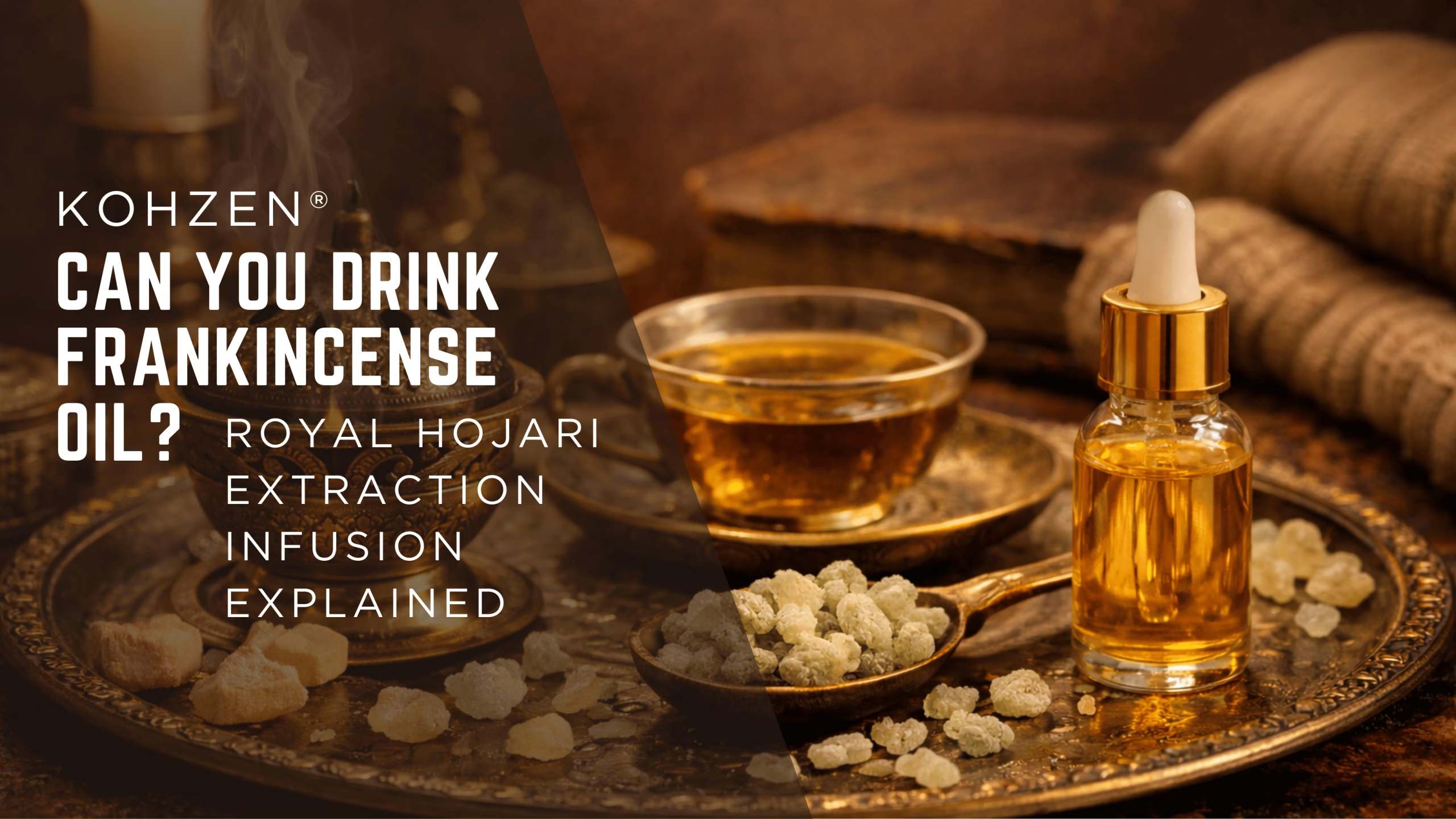
Can you drink frankincense oil? It’s a question many wellness enthusiasts ask when exploring this ancient resin’s benefits. Frankincense has a fabled history as sacred incense and traditional remedy, so it’s natural to wonder if sipping a drop of its oil might capture those benefits. In this lifestyle-ritual guide, we’ll delve into that exact query – with a friendly yet informed tone.
Spoiler alert: while frankincense resin has been consumed in cultural rituals (think frankincense water or tea), frankincense essential oil is not something you should drink. We’ll explain why, compare Royal Hojari (the finest frankincense from Oman) vs extracts vs infusions, and show you safe, sacred ways to enjoy frankincense in your routine. (Disclaimer: This post is for educational purposes only – it’s not medical advice. Kohẓen does not recommend ingesting frankincense oil.)
A Sacred Tradition Meets Modern Curiosity
Imagine a calm morning in Oman: the sun is rising, and you’re sipping a glass of cool frankincense water infused overnight with resin tears. The drink is cloudy and lightly fragrant – a gentle ritual enjoyed for centuries in parts of Arabia and Africa. In these cultures, frankincense resin (often Royal Hojari, the highest grade) is occasionally steeped like tea or chewed as gum, not as a “medicine” but as a way to connect body and spirit through a soothing daily practice. This cultural backdrop is important. When people today ask “can you drink frankincense oil?”, they’re often seeking to tap into that traditional wellness experience.
However, there’s a big difference between drinking frankincense resin infusion (a mild tea-like beverage) and ingesting frankincense essential oil (a highly concentrated extract). In modern aromatherapy, experts strongly caution against drinking essential oils. Frankincense oil can be a wonderful ally for aromatherapy or skincare, but ingesting it can be risky, potentially causing irritation or toxicity due to its potency. So, where does that leave someone wanting to safely enjoy frankincense’s benefits? Let’s explore the nuances:
- Frankincense Water & Resin – A mild traditional infusion (more on this soon).
- Frankincense Infused Oil – A gentle oil infusion that captures resin’s fullest properties, including Boswellic Acid.
- Boswellia Extracts & Supplements – Concentrated resin compounds in capsules.
- Frankincense Essential Oil – distilled extract (handle with care!).
Each form has its place. By understanding these, you can mindfully incorporate frankincense into your lifestyle in a safe, sacred way – without putting your health at risk.
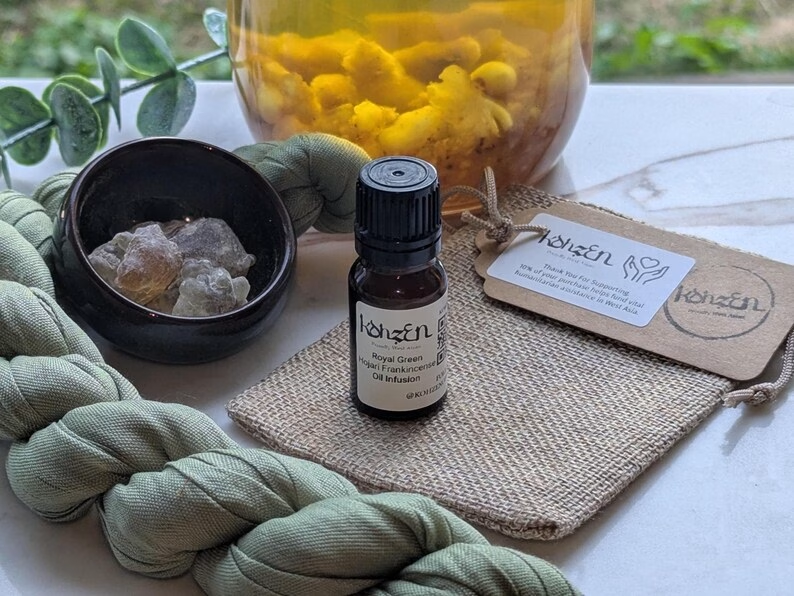
Product Ritual Invitation: Curious to experience frankincense in your daily routine? Discover the ancient essence with our Royal Green Hojari Frankincense Oil – a slow-infused ritual oil made from Oman’s finest resin. This premium infusion preserves boswellic acids and the rich aroma of frankincense, inviting you to elevate your meditation or self-care rituals with a touch of tradition.
Can You Drink Frankincense Oil? (Safety First)
Let’s address the core question head-on: Can you drink frankincense oil? In plain terms, drinking frankincense essential oil is not recommended. Frankincense essential oil is an aromatic, highly concentrated substance distilled from resin – it can take pounds of resin to produce just a tiny bottle of oil. This means a single drop contains potent compounds in amounts far beyond what you’d get from a cup of frankincense tea. Ingesting essential oils (including frankincense) can be hazardous: it may irritate your mouth or gut, interact poorly with medications, or even cause toxicity. Health experts and aromatherapists caution that you should never swallow frankincense essential oil directly.
On the other hand, frankincense resin “tea” or water – made by steeping edible-grade frankincense tears in water – has been enjoyed traditionally and is much milder. When you steep resin in water, you get a gentle infusion of some soluble compounds and a light aromatic flavor. Omanis call it “Luban drink”, and it’s sipped for its subtle woody-citrus taste and the ritual of it, not as a pharmacological dose. Importantly, this is not the same as the essential oil – the resin pieces release only tiny amounts of oils and boswellic acids into the water, making it closer to an herbal tea.
So, if your goal is to internally experience frankincense, the only traditionally safe approach is something like frankincense water or a professionally prepared resin extract – NOT dropping essential oil into your smoothie! Even then, moderation and quality are key. High-grade frankincense (like Royal Hojari from Oman) is preferred for infusions because it’s known as “food grade” resin in those regions. People might put a couple of small resin tears in a liter of water, let it sit overnight, and drink the mild, milky-white water the next day. The focus is on ritual and flavor, not dosage.
Safety Disclaimers and Why Ingestion Is Discouraged
To be absolutely clear, Kohẓen does not recommend ingesting frankincense oil (or any essential oil) in our products or guides. While frankincense resin itself has been used in traditional remedies and even some modern supplements, the essential oil is a different beast. It contains volatile compounds like alpha-pinene and others that can irritate mucous membranes. Moreover, frankincense essential oil lacks a crucial group of compounds – boswellic acids – that are only present in the resin, and infusion oil like our Kohzen Royal Green Hojari Infusion Oil, not distilled or essential oil.
(Boswellic acids are heavy molecules revered for anti-inflammatory properties, but they don’t come over in steam distillation or essential oils you buy in health stores, so you won’t ingest them by drinking the oil anyway.) If someone is seeking purported health benefits of frankincense (like joint support or gut health), those typically come from resin extracts, infusions or capsules, not essential oil.
In summary, can you drink frankincense oil? Technically, you could swallow a drop, but you absolutely shouldn’t. The risks outweigh any potential benefit. Instead, if you’re drawn to internal use, consider traditional frankincense water or professional boswellia supplements, and even then use caution:
- Frankincense Water: A few resin pieces infused in water – aromatic and gentle. This is generally considered safe in small amounts because it’s so dilute. Many find it calming and stomach-soothing in folk use, but it’s not a medicine or cure-all.
- Boswellia Extract Capsules: These are supplements made from resin extracts (not the essential oil), standardized for boswellic acid content. They have been studied for conditions like arthritis and IBS. If interested, use a reputable brand and consult a healthcare provider first.
- Infusion Oil Ingestion: Best avoided unless under guidance of a certified therapist or healthcare professional. And even among professionals, many advise against it. (For example, WebMD and other sources note that not enough is known about internal use, and essential oils can be toxic if overdone.)
Always remember, “natural” doesn’t automatically mean “ingestible.” Poisonous mushrooms are natural too! Treat frankincense oil with the same respect you would any concentrated substance. Enjoy its divine aroma in a diffuser or on your skin (diluted), but think twice before putting it in your mouth.
Royal Hojari vs Extracts vs Infusions: Understanding the Differences
Why do some people even think about drinking frankincense oil? Part of the confusion lies in the different forms frankincense comes in. Let’s break down Royal Hojari vs extracts vs infusions, so you know what each is and how they’re used (or not used) internally:
Royal Green Hojari Frankincense – The Resin & the Infused Oil
Royal Hojari refers to the cream of the crop of frankincense resin. Sourced from Boswellia sacra trees in Oman’s Dhofar region, Royal Hojari (sometimes called Green Hojari for its slight greenish hue) is revered for its purity and aroma. These are the large, pale green-white tears of resin that smell lemony and sweet when burned. In Oman, Hojari is even used to flavor water or chewed occasionally – it’s considered edible grade resin.
Now, when we talk about Royal Hojari Oil in the context of Kohẓen, we mean a resin-infused oil, not a distilled essential oil. Our Royal Green Hojari Frankincense Oil is made by infusing crushed Hojari resin in a carrier oil (like organic grapeseed oil) for weeks, allowing all the resin’s aromatic compounds (including boswellic acids) to dissolve into the oil. The result is a golden, rich oil that smells just like the whole frankincense resin, but in liquid form. This is sometimes called a “whole-resin infusion.”
- Usage: This infused oil is meant for aromatic and topical ritual use – for example, anointing one’s wrists, adding a few drops to a diffuser or oil burner, or rubbing on the chest (diluted) for a comforting scent. It’s gentle and holistic, carrying the full spectrum aroma of frankincense. Because it’s already diluted in grapeseed oil, it’s softer on the skin and safer than pure essential oil (though we still label it “for home fragrance use, not for internal or cosmetic use” as a precaution).
- Ingestion?: Even though this infusion contains food-grade frankincense resin and a food-grade oil, we do not recommend ingesting it. Why? The concentration of resin in the oil is much higher than what you’d get in frankincense water. It’s intended for fragrance and ritual, not as a supplement. A review by an herbalist notes that infused oils “utilize all the plant’s benefits… in a liquid form that you can apply topically, safely” – notice topically, not internally. So enjoy our Royal Hojari Infusion for its scent and energetic qualities in your sacred space, but not in your diet.
Royal Hojari vs Others: Royal Hojari is just one variety (albeit the most famous). There are also White Hojari, Black Hojari etc., and other species like Boswellia carterii (Somali frankincense) or B. serrata (Indian frankincense). Hojari stands out for its superior fragrance and clarity. That’s why we use it in our infusion oil – it yields an aroma that is citrusy, bright, and softly woody, ideal for meditation and ritual. If you’re curious about all the frankincense grades, see our Ultimate Guide to Frankincense which explores varieties like olibanum and luban in depth.
Product Ritual Invitation: Want to welcome the sacred scent of Royal Hojari into your life? Try our hand-crafted Royal Green Hojari Frankincense Oil. Each bottle contains wild-harvested 2025 Hojari resin patiently sun-infused in grapeseed oil for 8+ weeks. The result is a potent, full-spectrum frankincense infusion rich in aroma and tradition – perfect for anointing candles, diffusing during yoga, or simply inhaling for a moment of calm. (Experience frankincense as Oman’s mystics have – gently and reverently.)
Frankincense Essential Oil (Distilled Extract)
This is likely what most people think of when hearing “frankincense oil.” Frankincense essential oil is produced by steam distillation of the resin. It’s a concentrated extract containing the volatile aroma compounds (like alpha-pinene, limonene, etc.). It tends to be a thin, clear to pale-yellow oil with a sharp balsamic scent – capturing the bright top notes of frankincense’s aroma.
- Usage: Essential oil is prized in aromatherapy and perfumery. Just a couple drops can scent an entire room via a diffuser. People also use it (diluted with carrier oil) on skin for its earthy perfume or potential skincare benefits. It’s known for promoting relaxation, focus, and spiritual ambience when diffused, aligning with frankincense’s ancient use in prayer and meditation.
- Internal Use: As discussed, do not ingest frankincense essential oil casually. Some alternative health advocates have experimented with internal use (a drop under the tongue or in water) for ailments, but this should only be considered under professional guidance – and even many certified aromatherapists advise against it. The essential oil simply doesn’t contain the water-soluble boswellic acids that give resin extracts their anti-inflammatory reputation, so drinking it is more likely to cause upset than deliver benefits. Plus, essential oils aren’t water-soluble; if you drop frankincense oil into water, it will float and hit your tissues at full strength – not pleasant for your mouth or throat!
To put it in perspective, frankincense essential oil is very strong – far stronger than any traditional frankincense preparation used internally in history. Our ancestors drank frankincense water, not frankincense oil. So we honor that wisdom by using the oil for what it’s best for: aroma, atmosphere, and topical ritual, not as a beverage.
If you’re interested in using frankincense oil safely, check out What to Look for When Buying Frankincense Oil – it covers how to choose pure oils and gentle infused oils, plus safe ways to enjoy them (like diffusion and proper dilution). Always remember to dilute essential oils before applying to skin, and do a patch test to check for sensitivity.
Frankincense Infusions & Extracts (Water Infusion vs Resin Extracts)
Here’s where things get interesting, because “infusion” and “extract” can mean different things in the frankincense world:
- Frankincense Water / Tea (Infusion): This is the traditional drink we described earlier. It’s made by soaking frankincense resin in water. Think of it as an herbal infusion or tisane. The water typically turns whitish (sometimes called “milk of frankincense” because of that hue). The taste is very mild – a slight pine-lemon bitterness, often improved by adding a bit of honey or mixing with regular tea. Culturally, people drink it for general wellbeing – for instance, Omani families might serve frankincense water to guests as a sign of hospitality and for its refreshing qualities. In folk medicine, it’s been used to “soothe the stomach” or as an morning tonic. Modern research on frankincense suggests anti-inflammatory benefits for joints and gut when taken in certain forms, which perhaps echoes why traditional users felt it “eased aches” or aided digestion. However, frankincense water is not a cure-all – it’s more like a comforting ritual drink. It carries far fewer active compounds than a lab-made extract or essential oil. And that’s actually why it’s safer – it’s almost like homeopathic levels of the resin, just enough to be gentle and aromatic. If you’d like to try making it, we have a detailed guide: 7 Traditional Uses of Frankincense Water and How to Make It. In that guide, we emphasize that frankincense water is enjoyed as a connecting ritual and not a replacement for medical treatment.
- Frankincense Resin Extract (Supplement): In modern herbal medicine, Boswellia serrata (Indian frankincense) resin is often made into an extract (via alcohol or other solvents) and put into capsules. These are marketed for joint health, inflammatory bowel support, etc., because they contain high levels of boswellic acids and other compounds. If you see “frankincense extract” as a product, it usually refers to these supplements. They are intended for internal use, but you must use them according to instructions – typically a certain milligram dosage per day. They are not the same as frankincense essential oil (they’re closer to a powdered resin concentrate). Clinical studies have indeed used Boswellia extracts internally and found benefits for conditions like osteoarthritis and ulcerative colitis. That said, these are treated like herbal medicine – always consult a healthcare provider before starting them. They can have side effects and contraindications.
- Oil-based Infusions vs Tinctures: There are also home-made or artisanal infusions where frankincense resin is soaked in a solvent:
- Oil Infusion: (This is what we do with grapeseed oil for our product.) Good for topical/aromatic use, not really for drinking.
- Alcohol Tincture: Some herbalists make a tincture by dissolving resin in high-proof alcohol, yielding a solution that can be taken by drops under the tongue or in water. This is quite potent and again, only to be done by those who really know what they’re doing, as it’s easy to overdo. We mention it here just to complete the picture – not to suggest you try it without guidance.
In essence, “extracts” and “infusions” of frankincense aim to capture the resin’s goodness in different ways. If your goal is internal use:
- Go for water infusions (frankincense water) or reputable resin extract supplements, not essential oils.
- Start small – even with frankincense water, a small cup is enough to experience the ritual. Listen to your body; frankincense water in excess can cause a slight stomach upset in some people (resin is resin, after all).
- Quality matters: use pure, high-grade resin. Inferior or adulterated frankincense could have contaminants. Royal Hojari is ideal for water infusions because it’s known to be collected cleanly and is high in the soluble gum that gives the nice cloudy infusion.
And for any internal experiment, remember our mantra: when in doubt, consult a doctor or herbalist. Especially if you are pregnant, breastfeeding, or have underlying health conditions – do not ingest frankincense in any form without medical approval.
Frankincense as a Lifestyle & Ritual – Safe Ways to Enjoy It
Now that we’ve been adequately stern about what not to do, let’s celebrate what you can do! Frankincense is called “the king of oils” in some traditions, not because people drank it, but because of its profound effect on the senses and spirit. Here are some wonderful, intentional ways to use frankincense in your daily life that carry on the sacred tradition without any risky chugging of oils:
1. Aromatic Rituals for Mindfulness
One of the simplest and most fulfilling ways to use frankincense is through its aroma. The act of inhaling frankincense – whether via incense or oil diffusion – has been a cornerstone of spiritual practice for millennia. You can:
- Burn Frankincense Resin: Place a couple of Royal Hojari resin tears on a charcoal incense burner. As the holy smoke curls up, take slow breaths and set an intention (much like sage or palo santo rituals). This smoke has been used to “clear” spaces energetically and invite a meditative mood. Science even suggests compounds in frankincense smoke can have anxiolytic (anxiety-reducing) effects – perhaps explaining why it “feels” so calming.
- Diffuse Frankincense Oil: Add 4-5 drops of frankincense essential oil into an ultrasonic diffuser with water. The room will fill with a gentle woody-citrus fragrance that is grounding and centering. This is fantastic for yoga, meditation, or unwinding after a long day. (Some people like to blend it with a drop of lavender or orange oil for a custom relaxing blend.)
- Personal Inhaler or Diffuser Jewelry: If you want a more personal aromatic experience, put a drop of frankincense essential oil on a diffuser bracelet (lava stone beads) or use an essential oil inhaler stick. Whenever you need a moment of calm, inhale that scent mindfully and let your racing thoughts settle.
The key is to use the scent as a trigger for mindfulness. Every time you smell that familiar ancient aroma, it can remind you to pause, breathe, and reconnect – whether in prayer, meditation, or simple quiet time.
(Fun fact: Even without burning or diffusing, chewing a piece of frankincense resin releases its aroma from the inside. Some cultures chew frankincense like gum – it freshens the breath and has a bitter, piney taste. It’s also believed to help oral health by disinfecting the mouth. If you try this, make sure it’s a clean, edible-grade resin and don’t actually swallow the resin lump; just chew and discard, like chewing gum.)
2. Topical Anointing and Self-Massage
Frankincense has long been used to anoint the body during rituals – think of the Biblical Magi’s gift or priests anointing with holy oil. We can adapt that in a wellness context. Using frankincense-infused oil (like our Royal Hojari infusion) or a very diluted essential oil blend, you can create an anointing practice:
- Meditation Anointing: Before meditation or prayer, rub a drop of frankincense infusion oil between your palms, cup them over your nose and inhale deeply. Then gently press your palms to the center of your chest (heart chakra) or third eye. This simple act can symbolize opening yourself to inner peace. The aroma will linger on your skin, subtly enhancing your focus.
- Self-Massage (Abhyanga): In Ayurveda, frankincense (salai) is sometimes used in massage oils for its joint-soothing properties. You can mix a few drops of frankincense essential oil into a carrier like jojoba or sweet almond oil and use it for a self-massage on tense areas – for example, massaging your feet, neck, or knees. The touch combined with the scent is deeply relaxing. (Note: Keep the dilution around 1-2%. That’s about 1-2 drops of essential oil per teaspoon of carrier oil. Our Royal Hojari infusion oil is already perfectly diluted and enriched with resin, which makes it even better – you can use it directly for this purpose without mixing.)
- Skincare Ritual: Frankincense has a venerable reputation in skincare (you’ll find it in many natural anti-aging creams). You can add a drop of frankincense oil to your moisturizer at night for its calming scent and traditional skin benefits. Many users find it helps promote a healthy-looking complexion. Just do a patch test first to ensure you don’t react, and avoid if you have very sensitive skin. The act of massaging your face gently with a frankincense-scented cream can also double as a nightly ritual of self-kindness.
When anointing or applying frankincense oil, do it mindfully. Set an intention like, “May this bring me peace” or “I honor myself with this sacred scent.” It might sound a bit woo-woo, but combining intention with action is the heart of ritual.
Product Ritual Invitation: Elevate your self-care by incorporating a touch of frankincense. Our Royal Green Hojari Frankincense Infusion Oil is a versatile companion. Try adding a few drops to a warm bath, or use it to anoint your yoga mat or meditation altar – the subtle fragrance creates a sacred ambiance. Because it’s an all-natural infusion (no synthetic fragrances), it resonates with the authenticity of ancient wellness traditions, helping you craft your own modern ritual.
3. Frankincense in Daily Drinks – The Right Way
We’ve emphasized not to guzzle frankincense oil, but you can still enjoy frankincense in a beverage – the traditional way:
- Morning Frankincense Water: Take 2-3 small tears of Royal Hojari resin, rinse them quickly (to remove any dust), and drop them into a pitcher of clean drinking water (about 1 liter). Cover and let sit overnight. In the morning, the water will look milky. Pour a glass and sip slowly. The taste is subtle – you might sense a slight citrus or pine note. Many people, especially in Oman, enjoy this first thing in the morning as a gentle tonic. It’s believed to help clear the mind and support digestion for the day ahead, but more than anything it’s a mindful start to the day. As you drink, you’re literally consuming a piece of ancient tradition. Think about that connection – thousands of years of people doing exactly this. (Just as a precaution: don’t chew/swallow any large resin pieces that remain; if they softened, you can chew them then spit out, or simply discard them after they’ve infused the water.)
- Frankincense Tea with Honey: If you prefer a warm drink, you can make a quick frankincense “tea.” Boil water, then drop a couple of resin pieces in the hot water and let steep 10 minutes. You’ll get a slightly stronger infusion than the cold method. Strain into a cup. Add a teaspoon of honey and maybe a squeeze of lemon. The honey sweetens and complements frankincense’s herbal notes nicely. This can be comforting in the evening or when you have a mild cough (indeed, in Yemen and Somalia frankincense water was sometimes sipped for sore throats and coughs – it’s thought to have soothing properties for the respiratory tract).
- Herbal Blend: Frankincense water can be mixed with other herbal infusions. For instance, mix a half-cup of frankincense water with half-cup of green tea or chamomile tea. This way you get a synergy of flavors and benefits. Ginger and frankincense is another combo some enjoy (since both are used for digestion support in folk medicine).
Always keep your usage moderate. One glass a day of frankincense water is plenty as a wellness ritual. There’s no need to overdo it – more resin won’t necessarily make you more well (and could upset your tummy). And as always, if you have any medical condition, double-check with a doctor if drinking frankincense water is okay for you. It’s uncommon to have allergies to frankincense, but not impossible.
4. Create a Sacred Space with Frankincense
Frankincense is inherently tied to the concept of sacred space. You can use it to transform your environment:
- Home Fragrance Alternatives: Instead of chemical air fresheners, you can make a natural frankincense room spray. Mix 5-10 drops of frankincense essential oil in a spray bottle with 100ml of distilled water and a teaspoon of witch hazel (to help disperse the oil). Shake well and spritz around your room. It gives a light, natural scent that also carries those relaxing vibes. Great before guests come over – it echoes the Omani tradition of burning frankincense to welcome guests and purify the space.
- Meditation Corner: If you have a personal altar or meditation corner, keep some frankincense there. You might have a small dish of resin and charcoal to burn when you start meditation, or use an oil warmer with our frankincense infusion oil. The act of “lighting the incense” or “warming the oil” can become the cue that your sacred time has begun. Over time, your mind will associate that frankincense aroma with deep calm and focus.
- Yoga Practice: Roll out your yoga mat and before practice, put a drop of frankincense oil on each corner of the mat. As you flow through poses, the subtle scent emanating can enhance your concentration and enjoyment. Some yoga practitioners also apply a tiny amount of frankincense-infused oil to their temples or the back of the neck to help keep the mind centered (just avoid dripping sweat into it and causing it to run into eyes).
- Sleep Routine: Incorporate frankincense in your bedtime ritual for better sleep. You could diffuse a mix of frankincense and lavender oils in the bedroom 30 minutes before sleep. Or place a tissue with a drop of frankincense near your pillow. The calming aroma can slow your breathing and quiet the mind, setting the stage for restful sleep. (A little ritual: as you breathe it in, imagine the worries of the day rising away like the frankincense smoke and vanishing.)
All these methods let you benefit from frankincense’s essence safely. Notice none of them require you to consume the essential oil. Yet you’re still “taking it in” in a sense – through your senses, your skin, your environment. This is very much in line with how frankincense has been used historically for well-being. It was more about experience than chemical action: the experience of a holy scent, a soothing flavor, a moment of connection.
FAQs – Frankincense Oil Ingestion & Usage
Q: Can you drink frankincense oil for health benefits?
A: No – drinking frankincense oil (essential oil) is not advised for health benefits. While frankincense resin and infusion oil has healthful compounds, the essential oil is highly concentrated and can be irritating or toxic if swallowed. You won’t get the resin’s boswellic acids from the oil anyway. For health purposes, people use resin extracts or drink frankincense water (a mild traditional infusion) instead of drinking essential oil. Always consult a healthcare professional before using frankincense for any health benefit.
Q: What is frankincense water and is it safe to drink?
A: Frankincense water is a traditional drink made by soaking frankincense resin (usually Hojari) in water, typically overnight. It turns the water cloudy and lightly fragrant. In cultures like Oman, frankincense water is sipped as a refreshing, ritual beverage, believed to aid digestion and overall wellness in folk tradition. It’s generally safe for most people in moderate amounts (like one glass a day), since it’s very dilute. However, it’s not a potent medicine – more a gentle tonic and spiritual practice. Use food-grade frankincense resin and don’t consume the resin sediment. If you have any health conditions or are pregnant/nursing, check with a doctor, but a mild frankincense infusion is usually considered safe as an occasional drink.
Q: Are there any benefits of drinking frankincense water?
A: Traditionally, yes – many folk benefits are attributed to frankincense water. People have used it to soothe stomach troubles, ease arthritis pains, freshen breath, and support breathing. For example, some Omani elders say it “keeps the joints supple” or helps with coughs. Modern science has found that frankincense resin (Boswellia) has anti-inflammatory properties and can support joint and gut health in supplement form. However, the amount of active compounds in frankincense water is quite low – so think of it as a gentle wellness ritual rather than a strong therapy. The biggest “benefit” might be the mindfulness and tradition attached to it: taking time to prepare it, then slowly drinking it in the morning can be a calming ritual that sets a positive tone for your day.
Q: What’s the difference between frankincense essential oil and frankincense infused oil?
A: Frankincense essential oil is a steam-distilled extract of the resin – very concentrated, containing only volatile aromatic compounds. Frankincense infused oil (like our Royal Hojari Infusion) is made by steeping the whole resin in a carrier oil for weeks, transferring a broader range of compounds (including heavier ones like boswellic acids) into the oil. Essential oil is more potent in scent and often used in diffusers or aromatherapy; infused oil is gentler, often used directly on skin or for subtle home fragrance. Importantly, an infused oil carries the full aroma and some resinous qualities (it’s like the “whole herb” version) and is typically already diluted for safe use. We do not ingest either type of oil, but infused oils are generally considered safer for topical use because they’re less concentrated than essential oils.
Q: Is frankincense oil safe to use on skin or to inhale?
A: Yes, frankincense oil is generally safe to use topically or aromatically – with a few precautions. For skin use, always dilute essential oil in a carrier (e.g., 1-2 drops per teaspoon of carrier oil) to avoid irritation. Do a patch test first. Many people use diluted frankincense oil for massage or in skincare and find it beneficial (it’s known for being soothing and rejuvenating for the skin). For inhalation, using a diffuser is a safe method, or simply wafting from a tissue. Avoid directly sniffing from the bottle too aggressively, and of course, never inhale frankincense (or any) oil via steam in a way that could get it in your eyes or lungs in liquid form. Normal diffusing and incense burning are fine. If you have asthma or respiratory issues, start with short inhalation times to ensure it doesn’t trigger anything (though frankincense is often used to help respiratory comfort). As always, quality matters – use pure frankincense oil from a trusted source so you’re not inhaling any nasty additives.
Q: What does “Royal Hojari” mean in frankincense products?
A: “Royal Hojari” refers to the highest grade of frankincense resin from the Boswellia sacra tree, typically harvested in Oman’s Dhofar region. It’s characterized by light-colored (white with a hint of green) resin clumps that have a superior sweet citrus-pine aroma. Historically, Royal Hojari was reserved for royalty and important ceremonies – hence the name. In frankincense products, “Royal Hojari” signifies that the resin used is this top-tier quality. For example, Royal Hojari resin is used in our Kohẓen infusion oil, meaning you get the creme de la creme of frankincense. The term can apply to raw resin, incense, or oils derived from that resin. It’s a mark of purity and excellence in the frankincense world. If you’re exploring frankincense for the first time, Royal Hojari is a wonderful starting point because of its bright aroma and rich cultural heritage.